
Tokyo rooms cost more than they did a year ago. The city’s average daily rate reached ¥33,168 in May 2026, up 12.8 percent on the same month in 2025, and Golden Week rates ran 17 percent above last year’s. The cause is demand: Japan received 42.7 million foreign visitors in 2025, its first year above 40 million.
Cheaper rooms still exist: business hotels at ¥8,000 to ¥15,000 and pod hotels from about ¥4,400. The neighbourhood you choose affects the price and the trip as much as the hotel does.
How this list was put together
These nine are chosen from published rates, hotel and operator information, and guest reviews, not from personal stays. Where a price appears it is the entry rate at the time of writing, and Tokyo rates move week to week. Treat every figure as a starting point and check the date you want.
Pick the neighbourhood first
Shinjuku is the default for a first visit. Shinjuku Station moves about 3.5 million passengers a day, more than any station in the world, which means almost nothing needs a change of line. It is loud, and the west side around the government buildings is calmer than the east.
Tokyo Station and Marunouchi is the choice if you are taking day trips. Every shinkansen leaves from here, the area is quiet after office hours, and Ginza is a walk away.
Shibuya is for people who want to be out late. It has the bars and the live music, and it now has the towers to sleep in.
Asakusa is the cheapest of the four and the best for mornings, because Sensoji is a short walk and the coaches arrive at ten.
Otemachi is one stop from Tokyo Station and holds the top of the market. It is quiet at night and at weekends.
The Millennials Shibuya
Best for: one or two nights on your own Neighbourhood: Shibuya From: about ¥4,400
These are pods with more room than most. Each has a bed that reclines into a sofa, a projector instead of a television, and a curtain rather than a door. There is a shared lounge and free coffee in the mornings. It is one of the cheapest ways to sleep near Shibuya Crossing and suits a single night between flights or before a train.
Pod prices are the most volatile in the city. The same bed that costs ¥4,500 on a normal Tuesday has been listed above ¥20,000 during Golden Week.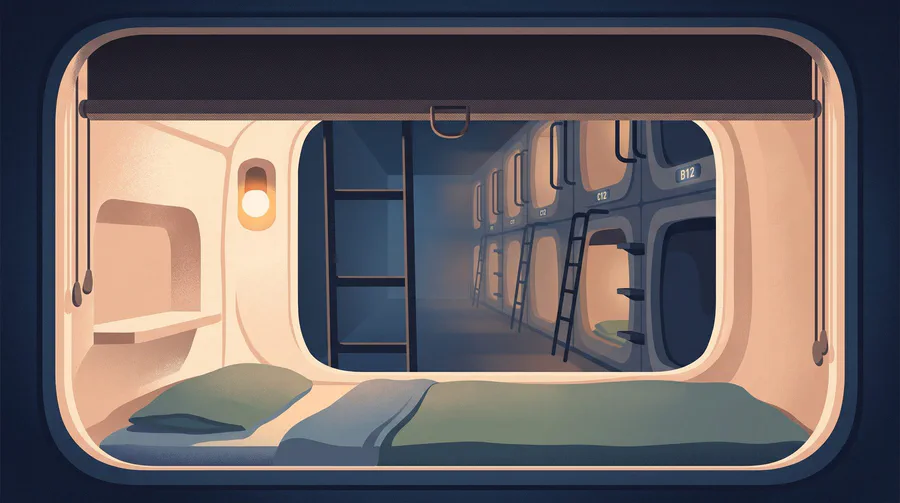
Sotetsu Fresa Inn
Best for: a working week, or any trip where the room is for sleeping Neighbourhood: many, including Kyobashi, Tamachi and Kinshicho From: about ¥8,000
This chain is a typical Japanese business hotel. Rooms are small and immaculate, the bed is good, the bathroom is a moulded unit, and there is a coin laundry downstairs. At the Tamachi branch a wash costs ¥300 with the detergent included and the dryer ¥100 per half hour.
People book them because they sit next to a station, cost about a third of a mid-range hotel, and hold their standard.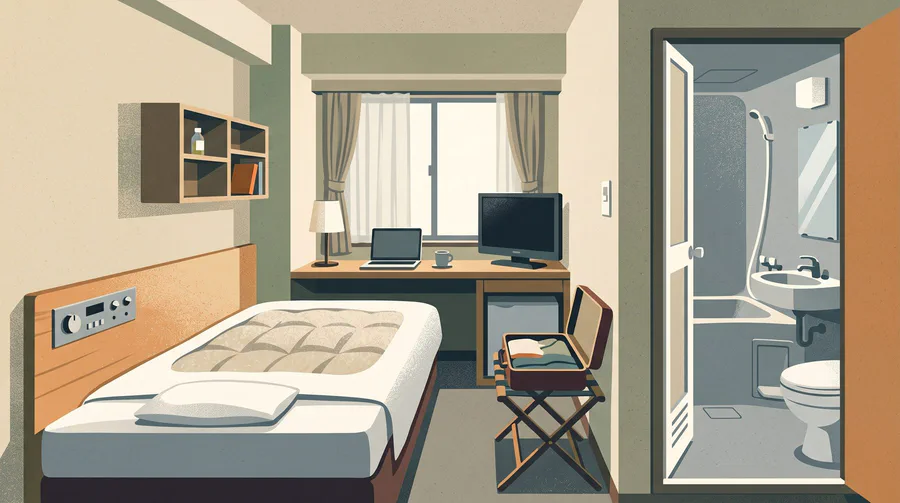
MIMARU
Best for: families and groups who want one room Neighbourhood: several, including Asakusa, Ueno, Shinjuku and near Tokyo Station From: varies widely by branch and season
Apartment hotels with proper kitchens, dining tables and rooms that sleep up to six or eight. That matters because Tokyo hotels usually cap a room at two adults and charge for a second room, which is what makes a family trip expensive here.
Rates per room look high next to a business hotel and low next to two business hotel rooms. If you are four or more, price it both ways before you decide.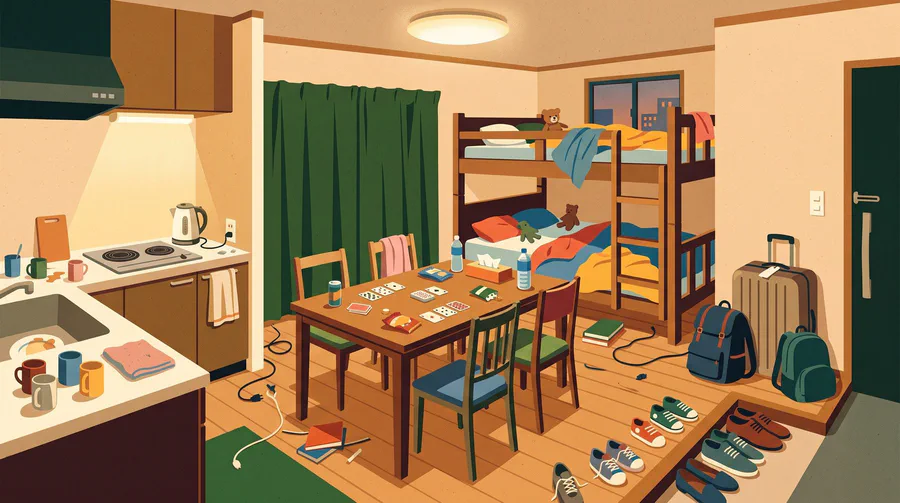
HOTEL GROOVE SHINJUKU
Best for: a new hotel in Shinjuku Neighbourhood: Kabukicho From: mid-range, around ¥30,000
The hotel has 538 rooms inside the Tokyu Kabukicho Tower, the entertainment building that opened in 2023, and its restaurant and bar are on the seventeenth floor. It is three minutes from Seibu-Shinjuku Station and about ten from the JR station.
Kabukicho is Tokyo’s nightlife district, and it stays loud late into the night.
The Gate Hotel Kaminarimon by Hulic
Best for: mornings at Sensoji Neighbourhood: Asakusa From: mid-range
The Kaminarimon gate is at the end of the block, so you can be inside the temple grounds before the tour coaches arrive, and the rooftop terrace looks across to the Skytree. Rooms are contemporary rather than traditional.
Asakusa is far from the nightlife and about twenty minutes on the subway from Tokyo Station, in exchange for lower prices and quiet mornings.
The Tokyo Station Hotel
Best for: day trips out of Tokyo Neighbourhood: Marunouchi From: around ¥45,000
The hotel is inside the Marunouchi station building, which opened in 1914 to a design by Kingo Tatsuno and is a National Important Cultural Property. The hotel followed in 1915, closed in 2006 while the building was restored, and reopened in October 2012. Rooms sit under the brick facade with high ceilings and long windows.
If your trip involves Kyoto, Hakone or Nikko, sleeping above the platforms saves a taxi and an earlier start.
Park Hyatt Tokyo
Best for: the view, and the reopening Neighbourhood: Nishi-Shinjuku From: upper end
The hotel from Lost in Translation closed in May 2024 and reopened on 9 December 2025 after a nineteen-month renovation, the deepest since it opened in 1994. It occupies floors 39 to 52 of the Shinjuku Park Tower with 171 rooms and suites, and the interiors were reworked by the Paris studio Jouin Manku.
The New York Bar on the 52nd floor still takes non-residents and charges them a cover.
HOSHINOYA Tokyo
Best for: the last two nights Neighbourhood: Otemachi From: about ¥155,000
A ryokan stacked into an office tower in the financial district. Shoes come off at the entrance and stay off, floors are tatami, and each floor has a small lounge instead of a lobby. On the seventeenth floor there is an open-air onsen fed by real hot spring water, drilled from beneath the building.
It is expensive, and it runs like a ryokan rather than a hotel, which is why it suits the last two nights of a trip.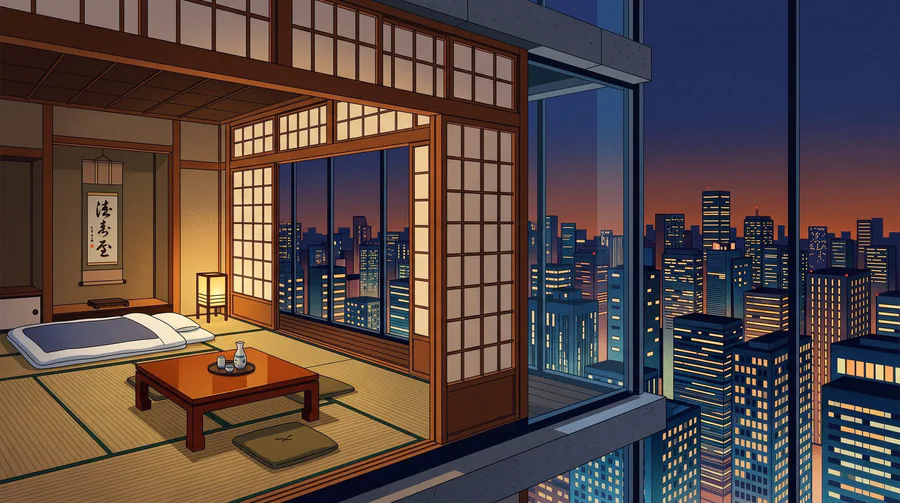
Aman Tokyo
Best for: the top of the market Neighbourhood: Otemachi From: roughly ¥250,000
The lobby occupies the 33rd floor of the Otemachi Tower under a ceiling six storeys high, and the rooms are among the largest in the city. Views run to the Imperial Palace gardens on one side and the bay on the other.
When to book
Book six to ten months ahead for late March and early April, when the cherry blossom brings the year’s highest rates, and for Golden Week at the start of May. Autumn is nearly as busy. For the rest of the year a few weeks is enough, and rates soften in the humidity of June and the cold of February.
If you want to compare rooms and cancellation terms in one place, Booking.com lists most of the properties here apart from the chains that sell mainly through their own sites. Book the flexible rate if your dates are not fixed. With rates rising, a free-cancellation rate lets you rebook if your plans change or a better price appears.
Once you know the area, our Tokyo guide covers what is within walking distance of each one.
Rate data from HotelBank’s Golden Week 2026 analysis and Japan Tourism Agency visitor figures; property details from operator sites and published listings, September 2026. Entry rates are indicative, not quotes, and Tokyo rates move week to week.
FAQ
Which area of Tokyo should a first-time visitor stay in?
How much is a hotel room in Tokyo in 2026?
How far ahead should I book?
Why do Tokyo hotels charge per person rather than per room?
Do Tokyo hotels have rooms for three or four people?
Can I set up my phone before I fly?
The Booking.com link above is an affiliate link. Booking through it costs you nothing extra and helps keep Atli running.


