Travel Tuesday sits directly behind Thanksgiving, Black Friday, and Cyber Monday. In 2026, it falls on December 1. The concept started in 2017 when booking app Hopper reviewed historic fare patterns and noticed that airlines posted significantly more ticket discounts on the Tuesday after Thanksgiving than on the preceding shopping days.
The timing is deliberate. Thanksgiving weekend exhausts consumer budgets on consumer electronics, appliances, and clothing. By Tuesday morning retail spending slows, and travel providers launch promotional sales to stimulate forward bookings for the January, February, and early spring shoulder seasons.
What Travel Tuesday actually discounts
The sales on Travel Tuesday are not universal clearances. Airlines and lodging providers use the day to fill seats and rooms that would otherwise sit empty during the winter post-holiday slump.
- Shoulder-season flights. The largest genuine reductions appear on transatlantic, transpacific, and domestic long-haul routes flying between mid-January and late March. Mid-week departures on Tuesdays and Wednesdays regularly show fare cuts between 20 and 40 percent.
- Shoulder-season hotels. Major accommodation platforms like Booking.com run seasonal promotional sales during this window, frequently discounting room rates by 15 to 30 percent across international cities for stays in the first quarter of the year.
- Multi-carrier routes and regional tickets. Flight aggregators such as Trip.com often surface promotional inventory on Asian routes and multi-airline connections that individual carrier websites do not highlight.
What never goes on sale is peak-season inventory. Airlines do not discount flights for Christmas week, New Year’s Eve, cherry blossom season in Japan, or mid-summer European vacations. If a promotional banner promises holiday travel discounts, check the fare against historical averages. In almost every case, that ticket is priced at standard peak rates with a promotional label placed on top.
Fine-print traps to watch out for
A discounted ticket is only a bargain if the final bill stays below the normal market fare. Several industry pricing habits catch unhurried buyers off guard on Travel Tuesday.
First is the Basic Economy penalty. A transatlantic fare advertised at $380 sounds exceptional until the checkout screen reveals the limitations. Basic Economy tickets routinely forbid overhead roller bags, charge $75 each way for a checked bag, restrict seat selection until check-in, and forfeit any credit if your plans change. Once you add baggage and standard seat assignments, the total price often matches regular economy on a competing full-service carrier.
Second is artificial price anchoring. Because airfares fluctuate constantly, some travel providers quietly increase base fares during mid-November before advertising a 30 percent discount on Travel Tuesday. Unless you tracked the route in October, you cannot verify whether the markdown is real.
Third is the routing compromise. The steepest promotional fares often require inconvenient connections: a seven-hour layover in an unfamiliar hub or an arrival at an outlying secondary airport located sixty miles outside the city center. Ground transit and terminal meals can quickly consume your fare savings.
Finally, non-refundable hotel terms create unnecessary risk. Saving an extra $20 by booking a non-refundable room three months in advance can become an outright loss if your flight schedule shifts.
How to assemble your booking stack
Getting genuine value from Travel Tuesday requires preparation before the sales open. Smart travelers treat the day as a structured shopping routine rather than an impulse spree.
- Track baseline prices in advance. Set price alerts on Google Flights or Hopper at least two weeks before Thanksgiving. When Tuesday morning arrives, you will recognize instantly whether a $450 fare to Lisbon or Tokyo is an actual bargain or standard pricing.
- Book lodging with free cancellation. Use Booking.com to secure discounted hotel rates that allow cancellation up to a few days before arrival. This protects your promotional room rate while leaving room to adjust dates if flight schedules move.
- Turn long layovers into quiet work time. Discounted connecting flights often leave you with four to six hours between gates. Rather than waiting on hard terminal benches or paying high airport cafe prices, a single-visit lounge pass booked through LoungePair gives you showers, hot food, and reliable workspace at hubs like Singapore Changi, Dubai, London Heathrow, or Bangkok. A bargain connecting ticket plus a $35 lounge pass frequently costs hundreds less than a direct flight.

- Cover your medical risk early. Booking travel months ahead exposes your trip to unforeseen illnesses or injuries abroad. Standard domestic healthcare plans rarely provide comprehensive medical coverage outside your home country, and credit card travel insurance often contains narrow benefit caps. A dedicated nomad and travel policy like SafetyWing, which starts around $56 to $63 per four-week period for travelers under 40, covers emergency medical treatment and emergency medical evacuation.
Setting up destination data before you fly
The final expense that catches travelers off guard is mobile connectivity. Home carriers routinely charge $10 to $12 per day for international roaming passes. On a twelve-day trip, carrier roaming adds $120 to $144 to your phone bill, easily eliminating the flight savings you secured on Travel Tuesday. Buying a local SIM card upon arrival is not much better, requiring you to stand in airport kiosk queues after a tiring flight and swap tiny plastic cards.
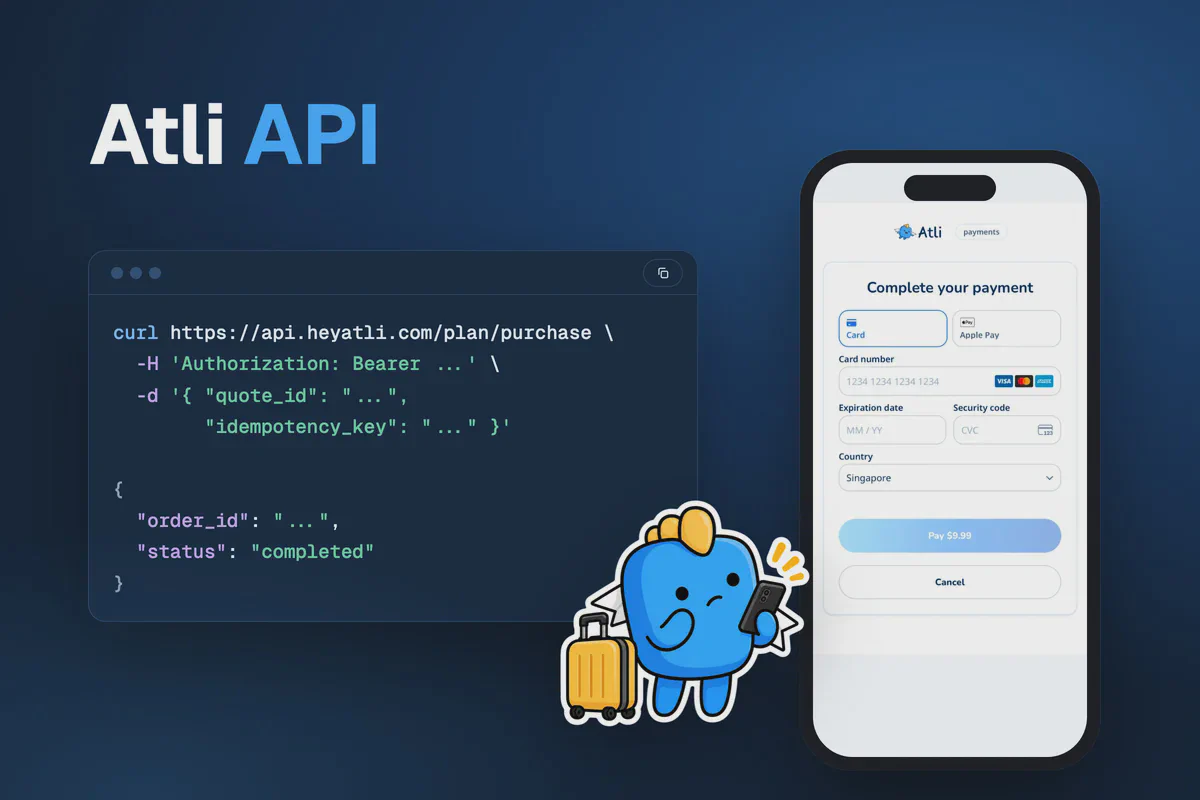
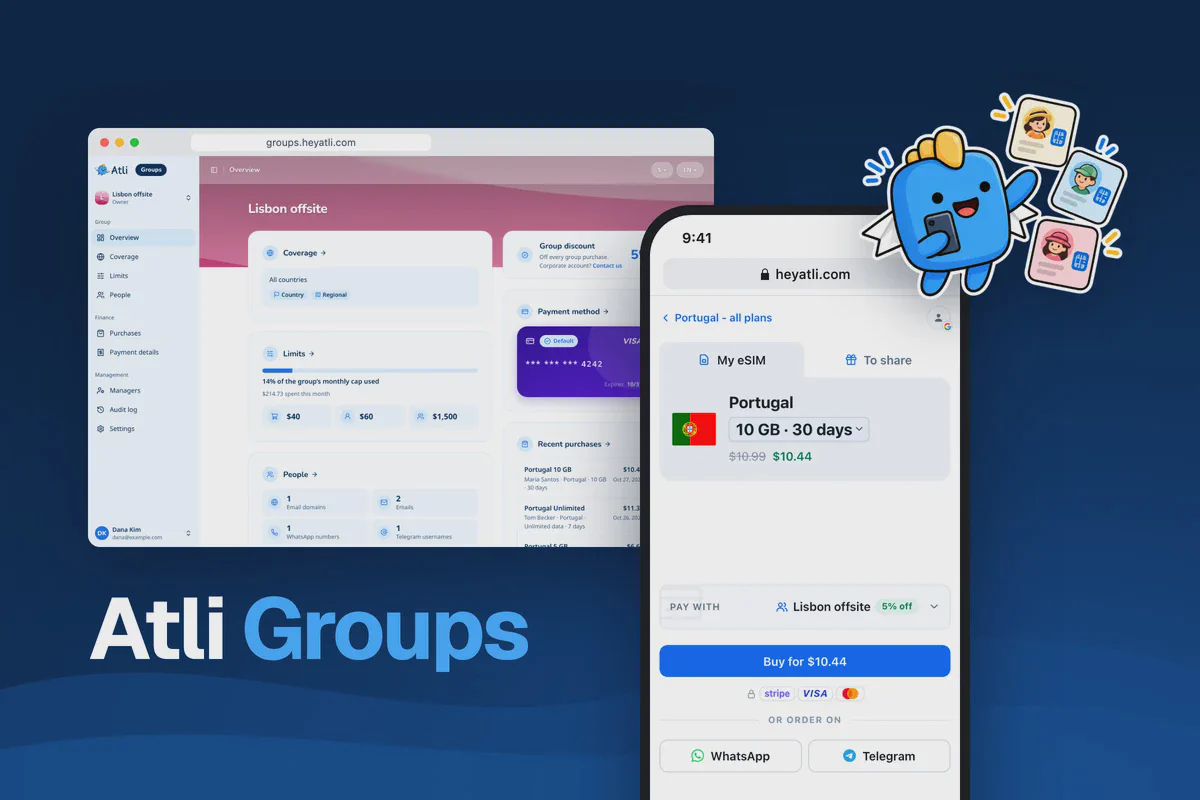
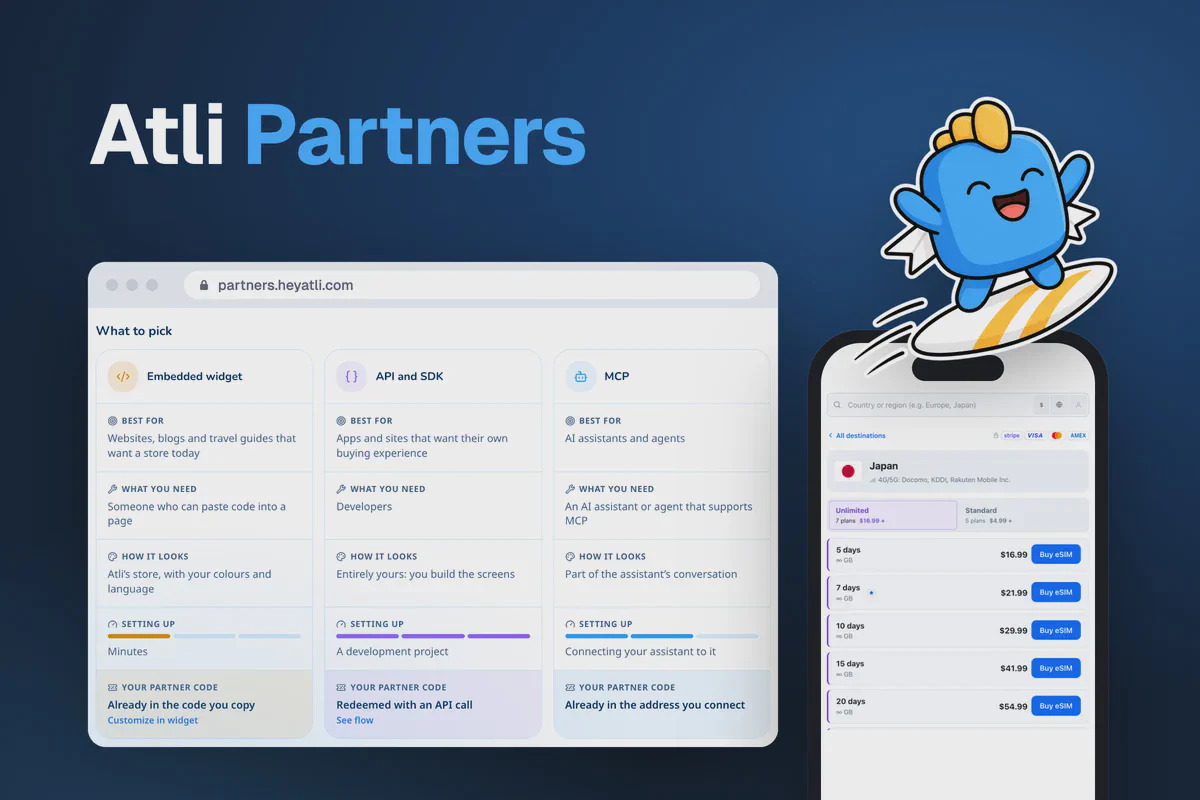
A travel eSIM provides a simpler, cheaper alternative that you can organize from your couch. With Atli, the entire process runs through WhatsApp or Telegram without downloading extra apps.
- Install the profile once at home. Set up your eSIM profile over stable home Wi-Fi before you travel. You scan the QR code once, and the profile remains permanently on your phone.
- Understand when the plan clock begins. Installing your Atli profile does not start your data allowance. The validity countdown begins only when your phone connects to a cellular network in your destination, or 30 days after purchase, whichever occurs first. The practical rule is simple: purchase your package within 30 days of departure, and you can install the profile as early as you like.
- Keep your primary line for bank security codes. Because Atli provides data-only service, your regular physical SIM or primary eSIM stays active for incoming text messages. Turn off data roaming on your home carrier line, select Atli for Cellular Data, and you will continue receiving essential two-factor authentication SMS codes from banks and airlines without incurring roaming data fees.
- Check data usage directly in chat. To see your remaining gigabytes at any point during your trip, text
dataorusageinto your WhatsApp or Telegram chat.
Data and fare patterns verified against Hopper historical pricing reports, US Bureau of Transportation Statistics quarterly airline releases, and published carrier tariff rules, October 2026.
FAQ
When is Travel Tuesday in 2026?
Are Travel Tuesday flight deals actually better than Black Friday?
Can I find Travel Tuesday discounts for summer holidays or Christmas?
Do hotels and vacation rentals also drop prices on Travel Tuesday?
When does an Atli eSIM plan start counting its days?
How do I receive airline and bank text messages while using an eSIM abroad?
The Booking.com, Trip.com, LoungePair, and SafetyWing links above are affiliate links. Booking or signing up through them costs you nothing extra and helps keep Atli running.