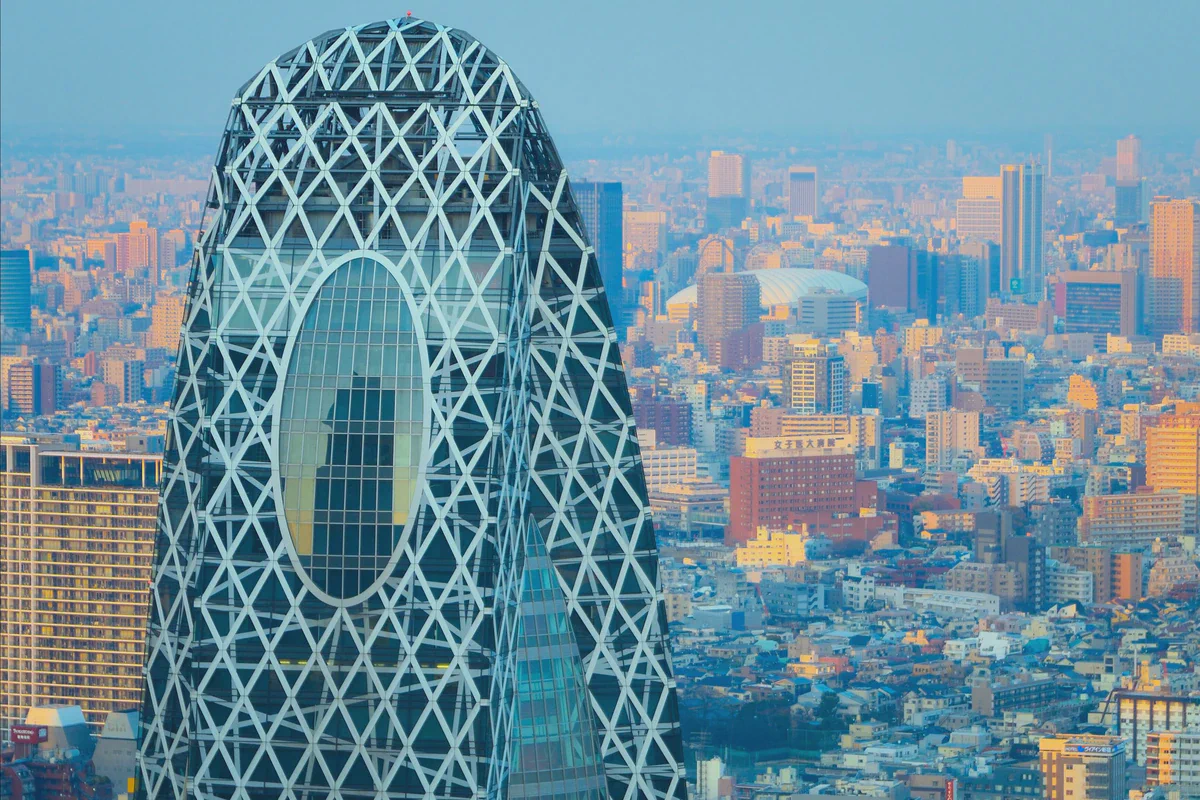
Tokyo runs as a set of distinct neighbourhoods rather than one city. You can eat charcoal yakitori under the Yamanote tracks at six and be drinking coffee in a moss garden half an hour later, and neither feels like a detour.
It also has serious choke points: two-hour queues for pancake shops that went viral, robot shows priced for people who will only come once, souvenir streets three deep by mid-morning. Most of them are avoidable by shifting an hour earlier or one station further out.
Fourteen things worth the time, and what it costs to reach them.
1. Sunset at Roppongi Hills, not the Shibuya Sky queue
While the queues build at Shibuya Sky, the Tokyo City View deck at Roppongi Hills Mori Tower stays comparatively quiet.
- The view. You look straight across at Tokyo Tower with the bay behind it. From October to April, on a clear evening, Mount Fuji sits on the western horizon.
- The free alternative. The 45th-floor deck at the Tokyo Metropolitan Government Building in Shinjuku costs nothing and faces the same way. Mornings are clearer than evenings for Fuji.
- What the ticket includes. Entry covers the Mori Art Museum on the top floor, which is worth the extra hour.
- Booking. Timed sunset entry sells out. Book 48 hours ahead, and check the time, since it moves with the season.
2. Yanaka Ginza, for the Tokyo that survived
Yanaka is one of the few neighbourhoods that came through both the 1923 earthquake and the war, so it still reads as pre-war shitamachi.
- The sunset stairs. Yuyake Dandan drops into a pedestrian market street of wooden toy shops, tea merchants and the cat statues the area is known for.
- What to eat. Minced-meat croquettes from the butcher Niku no Suzuki, 250 JPY, about $1.60.
3. Yakitori under the tracks at Yurakucho
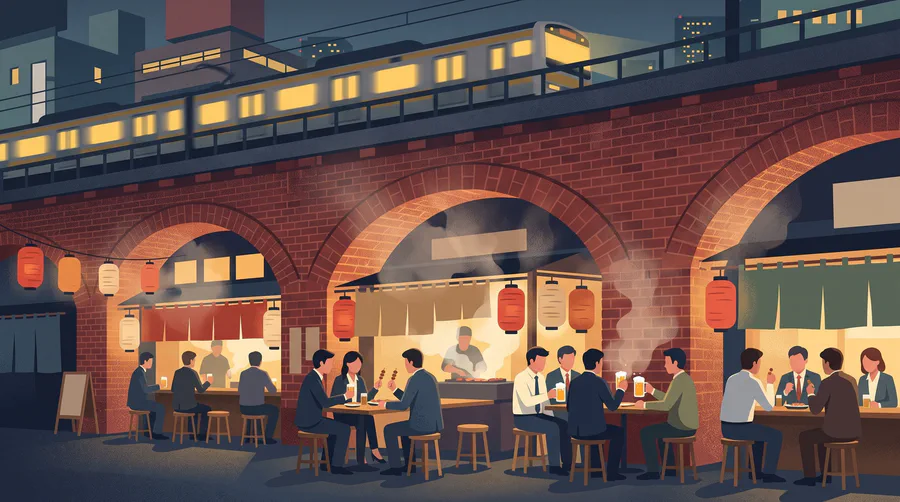
Skip Omoide Yokocho in Shinjuku and walk the brick railway arches between Yurakucho and Shinbashi instead.
- The setting. Gado-shita, “below the girder”, is half a mile of open-fronted izakaya that fill with office workers from about 5:30pm.
- Ordering. Negima and tsukune with a draft beer. Most stalls have picture menus.
4. Vinyl and soup curry in Shimokitazawa
Five minutes on the Odakyu express from Shinjuku, and the scale of the city drops away.
- Second-hand. New York Joe Exchange, in a converted bathhouse, for 1980s Japanese workwear and American vintage.
- Soup curry. The Hokkaido-style spiced version is a Shimokitazawa speciality. Rojiura Curry Samurai does it with charred root vegetables.

5. Asakusa at 7am, before the coaches
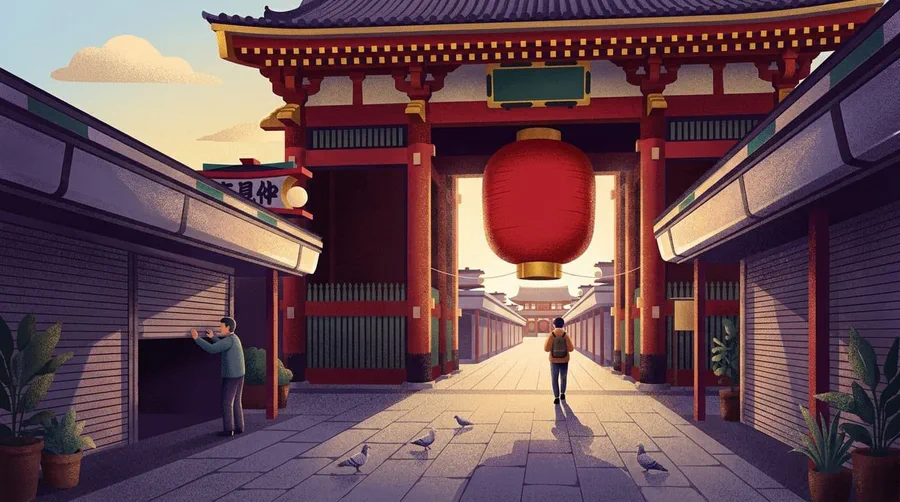
Senso-ji dates from 645 and is Tokyo’s oldest temple. By ten, Nakamise-dori is shoulder to shoulder.
- The timing. Between 6:30 and 7:30am the grounds and outer gates are open and nearly empty. The temple precinct does not close overnight.
- Breakfast after. Misojyu, round the corner, for morning miso and handmade onigiri.
6. The Nezu Museum garden in Aoyama
Ten minutes from the Omotesando boutiques, the Nezu holds pre-modern Japanese and East Asian art. Most people come for the collection and stay for what is behind it.
- The garden. Seventeen thousand square metres of stroll garden sits hidden behind the galleries, with stone paths, bamboo, four tea houses and koi ponds. From the street you would never know it was there.
- The cafe. Glass-walled, facing the bamboo. A reasonable place to lose an hour.
7. Tsukiji outer market or Toyosu
The wholesale tuna auction moved to Toyosu, but the Tsukiji outer market kept the street food.
| Market | What it is good for | Timing |
|---|---|---|
| 🐟 Tsukiji outer market | Uni, tamagoyaki, oysters, eaten standing up | Arrive by 8:30am; stalls close about 1:30pm |
| 🚢 Toyosu | The tuna auction from the glass deck above | Auction viewing is a lottery, booked a month ahead |
For a seated sushi breakfast without a three-hour queue, try Daiwa Sushi at Toyosu, or the smaller counters in Tsukiji’s 4-chome side alleys.
8. Daikanyama T-Site
Daikanyama is the low-rise design district, which is why it gets called the Brooklyn of Tokyo by people who have been to neither.
- Tsutaya Books. Three linked pavilions by Klein Dytham, holding art books, back-issue magazines, vinyl, and seating nobody moves you along from.
- Around it. Tree-lined lanes, coffee roasters, quiet bakeries.
9. TeamLab Planets, if you go prepared
The digital art museum in Toyosu is still one of the busiest tickets in the city. Three things decide whether it works.
- Wear shorts, or trousers that roll. Several rooms are knee-deep in warm water and walked barefoot.
- Mind the mirrored floors. The infinity flooring is exactly what it sounds like. Free shorts are available at the lockers.
- Book the first slot. The 9am opening, reserved a fortnight ahead, gets you the mirror rooms before they fill.
10. Shinjuku Gyoen
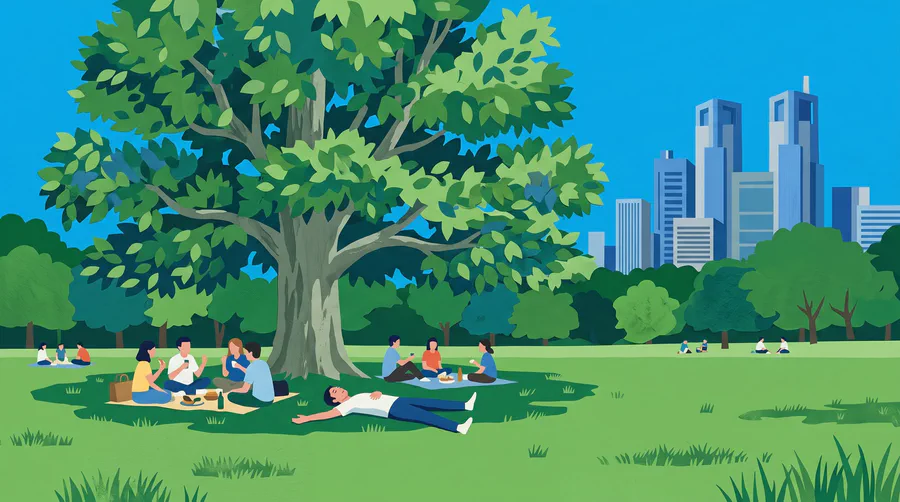
Fifty-eight hectares between Shinjuku and Shibuya, holding a Japanese formal garden, an English landscape park and a French formal garden without them arguing.
- What it is for. Stepping through the Shinjuku gate takes you out of the noise of the world’s busiest station in about thirty seconds.
- Seasons. Blossom in April, lotus in July, maples in November.
- Practicalities. Entry 500 JPY, about $3.20, cash at the gate. Closed Mondays. Alcohol is refused at the checkpoint, which is why the lawns stay quiet. Blossom season now needs an advance reservation.
11. Akihabara’s back alleys
Chuo-dori is billboards. The interesting part is one street back.
- Super Potato. Several floors of retro games, with Famicom, Super Nintendo and Neo-Geo cabinets playable on the top floor.
- Radio Kaikan and Radio Center. Ground-floor stalls under the tracks selling soldering parts, microchips and vacuum tubes to people who know exactly what they came for.
12. Harmonica Yokocho in Kichijoji
Kichijoji comes top of the “where would you most like to live” polls, and Inokashira Park is most of the reason.
- The alleys. A post-war grid named for looking like harmonica reeds. Tailors and fishmongers by day; by night, stand-up bars with six seats each.
- What to eat. Satou Kichijoji for the Matsusaka beef menchi-katsu. Expect a queue, and join it.
13. The Meguro River at Nakameguro
A residential district built along a canal, and better on a weekday.
- The walk. A pedestrian path under several hundred cherry trees, lined with espresso bars, candle makers and streetwear shops.
- The Starbucks Reserve Roastery. A four-storey Kengo Kuma building with siphon coffee and a terrace. Worth seeing as architecture even if you do not want the coffee.
14. Golden Gai or Nonbei Yokocho
The post-war bar alleys are small rooms with rules, and the rules are the point.
| Alley | When | What to know |
|---|---|---|
| 🏮 Shinjuku Golden Gai | 9pm to 2am | Over 200 bars, most seating six. Check the door for the cover charge, usually 500 to 1,000 JPY |
| 🍶 Shibuya Nonbei Yokocho | 7pm to 11pm | Beside Shibuya station. Yakitori and sake, slightly gentler |
Keep your voice down, do not photograph inside a bar without asking, and order a drink an hour. A bar with six seats does not survive on people nursing one.
Getting around
Tokyo’s transit is the best-run part of an extremely well-run city.
| Option | Cost | Best for |
|---|---|---|
| 💳 Suica or Pasmo in Apple Wallet | Pay as you go | Tap the phone on trains, buses and at convenience stores |
| 🚇 Tokyo Subway 72-hour ticket | 2,000 JPY | Unlimited Metro and Toei for three days, from first tap |
| 🚆 JR Yamanote loop | 150 to 210 JPY a ride | Circles Shinjuku, Shibuya, Tokyo Station and Ueno |
The 72-hour ticket runs from the moment you first put it through a gate, not from midnight, so activating it late morning buys you three genuine days.
Which ward you sleep in decides how much of this list is a walk and how much is a train ride. A room near the Yamanote loop keeps Shinjuku, Shibuya and Ueno a few stops away, so it is worth filtering by location and not only by price when you compare places on Booking.com.
One quirk worth knowing before you arrive: Tokyo addresses are not sequential street numbers but a district-block-building system, chome-ban-go, which is why local taxi drivers use GPS too. Offline maps handle most of it. Live platform directions inside a station with two hundred exits are the part that needs a connection, and a Japan eSIM covers that from the moment you arrive.
FAQ
How many days do you need in Tokyo?
Is the Tokyo Subway 72-hour ticket worth it?
What is the best time of year to visit Tokyo?
Do I need cash in Tokyo?
Is Tokyo walkable?
Fares and entry prices checked against operator and garden pages, September 2026. Prices change; confirm before you go.
The Booking.com link above is an affiliate link. Booking through it costs you nothing extra and helps keep Atli running.