Most visitors treat Siem Reap as a base for Angkor and spend every day at the temples. The passes leave room for a day off: the three-day pass can be used on any three days within ten, and the seven-day pass on any seven days within a month. Spend it on a circus, a floating village on the Tonle Sap, APOPO’s landmine rats, the markets or the countryside. The Angkor guide covers the temples.
Phare, the Cambodian Circus
Phare performs every night at 8pm in a red big top south of town. The show is an hour of acrobatics, theatre and live music, and there are no animals in it. The performers trained at Phare Ponleu Selpak, a free arts school in Battambang founded in 1994 by former art students from the refugee camps, and ticket sales keep more than a thousand children in its classes. Seats cost $18 at the sides, $28 in the centre and $38 in the reserved front rows, and about half that for children. The venue opens at 5.30pm and has food stalls. From November to March there are also 5pm shows three days a week.
Floating villages on the Tonle Sap
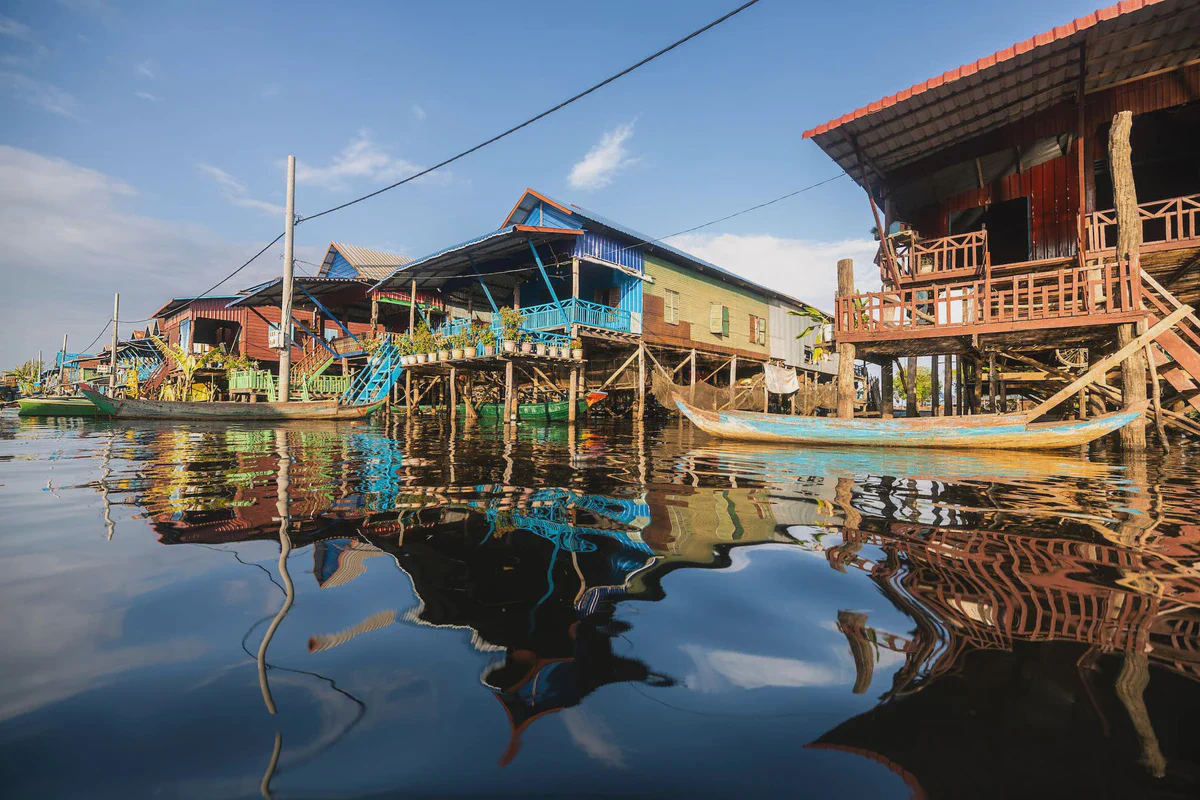
The villages on the Tonle Sap stand on stilts or float on rafts, and the water rises and falls about ten metres a year with the lake. The village you choose makes most of the difference to the trip.
Skip Chong Kneas, the closest. Its boats run on a private concession at $20 a head, visitors are pushed to buy about $30 of rice at inflated prices “for the orphanage”, and many tours add a stop at a crocodile farm. Tour desks sell it because it is 20 minutes from town.
Kampong Phluk has tall stilt houses and a flooded forest you can paddle through for $5 extra. Half-day tours cost from about $24 with pickup, or the boat costs $20 if you get there yourself. At Mechrey the boats are owned by the community and cost $20 including the tourism tax, and birders can add the Prek Toal sanctuary. Kampong Khleang, 50 km out, has the tallest houses and the fewest visitors.
The lake rises through the rainy season and is highest around September and October, when the villages float. Late in the dry season it shrinks, and boats reach the villages along long, muddy channels.
APOPO’s landmine rats
At APOPO’s visitor centre, trainers show how African giant pouched rats find landmines by smell. The rats ignore scrap metal, so they work faster than a metal detector. Cambodia is still clearing mines left by its wars, and the centre explains that history in an hour: tours run every half hour from 8.30am and cost $10. The War Museum, also in Siem Reap, covers more of it.
Markets
The souvenir rows at the night markets sell the same factory goods you find in Bangkok and Hanoi. Three places are better. Psar Chas, the old market from the 1920s, is half tourist stalls and half local food market, and residents do their shopping in the food section. The Made in Cambodia market sells work made in the country, often by artisans working at their stalls. Kandal Village, three streets between the old market and the river, has shophouses turned into studios and shops that sell things designed and sewn in Siem Reap. Prices there are higher, and more of the money stays in Cambodia.

The countryside by bicycle
Flat roads between rice paddies and sugar palms start ten minutes from Pub Street. Guided bicycle day tours, with Grasshopper Adventures the established operator, take care of the logistics, and vintage Vespa countryside tours start at about $84. You can also rent a bicycle and follow the river south. Phnom Kulen, the sacred mountain with a waterfall 50 km out, has its own $20 entry, separate from the Angkor pass, and takes a full day; it has a reclining Buddha and swimming under the falls. Banteay Srei, a carved pink-sandstone temple 35 km out, needs the Angkor pass, and tour desks often combine it with Kulen.
Evenings and getting around
Pub Street closes to traffic at 5pm and fills with bars, with draught beer at 50 cents, cocktails at $3 to $6 and music you can hear a block away. It is a place for a drink rather than a place to sleep. The streets around Kandal Village, and around Wat Bo across the river, have quieter restaurants and hotels. Before you book, check a hotel’s distance from Pub Street on Booking.com.
Short tuk-tuk rides in town cost $1 to $2 through the apps. Drivers outside Pub Street start at $5 and usually settle near $2.50. Grab works for visitors. PassApp, the local ride app, asks for a Cambodian phone number to register, which a data-only travel eSIM does not give you. A Cambodia eSIM covers the data Grab needs.
FAQ
How many days do you need in Siem Reap?
Is the Tonle Sap floating village worth visiting?
What is Siem Reap like in the rainy season?
Phare, APOPO and boat fees checked against the operators’ own sites, September 2026. Tour prices are typical listings, not quotes.
The Booking.com link above is an affiliate link. Booking through it costs you nothing extra and helps keep Atli running.