Lisbon is built on hills and paved in polished limestone, which is lovely to look at and treacherous in the rain. The city rewards walking, then charges you for it in stairs.
It also has a queue problem. The famous tram, the famous lift and the famous custard tarts all have lines attached, and in most cases there is a version half a street away with no line at all.
Fourteen things worth doing, and the way in that does not involve standing still for an hour.
1. Take Tram 12E instead of Tram 28
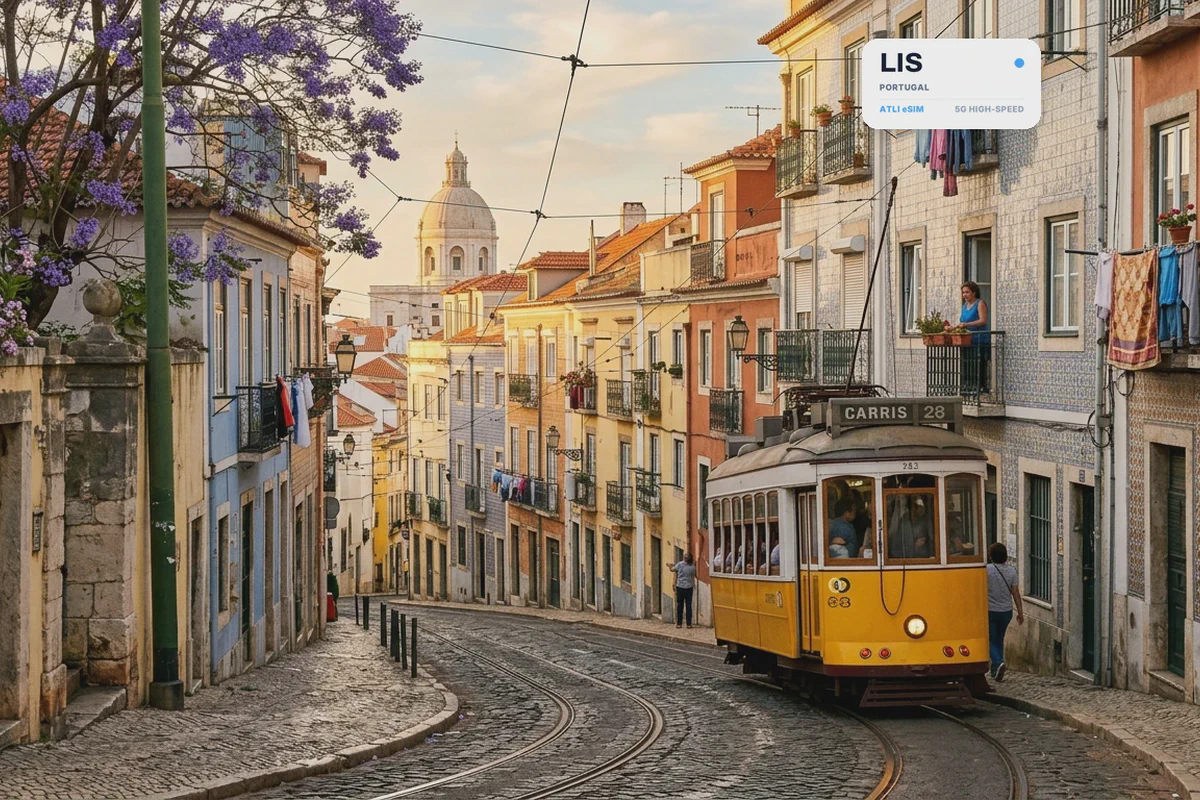
Tram 28 is the yellow tram from the postcards. The queue at Martim Moniz regularly runs past ninety minutes, and the crush inside is where Lisbon’s pickpockets do most of their work.
Tram 12E uses the same 1930s wooden cars and covers the good half of the same route, running from Martim Moniz through Alfama down to Praça Luís de Camões in about 35 minutes. It carries the 28’s best stretch without the 28’s queue. If you specifically want the 28, board before 8am at the Campo de Ourique end, where the line starts and the tram is still empty.
Buy the ticket before you board either of them. A journey on a Navegante card costs 1.72 EUR. Bought from the driver on a tram, the same ride is 3.30 EUR.
2. Pastéis de Belém against Manteigaria
Everyone goes to Belém for the custard tarts. Lisbon argues about whether they should.
| Bakery | What you get | What to know |
|---|---|---|
| Pastéis de Belém | The 1837 recipe, blistered shell, served warm | Skip the takeaway queue; the back dining rooms seat a few hundred and are usually half empty |
| Manteigaria, Chiado | Looser custard, caramelised top, a new tray every few minutes | Stand at the counter and wait for the bell that means a batch is out |
Belém has the older pastry and the longer wait. Manteigaria has the better one to eat standing up, and there is a branch in Chiado, so you do not have to cross the city for it.

3. Sunset at Miradouro da Senhora do Monte
The viewpoints are the reason to climb anything in this city, and Santa Luzia, the one on every itinerary, is where the coaches stop.
Senhora do Monte, up in Graça, is the highest of the classic viewpoints in the historic centre, above the castle and a good deal quieter. From the wall you get the castle, Baixa laid out below it, the 25 de Abril bridge, and the sun going down behind the river.

4. Get lost in Alfama on purpose
Alfama survived the 1755 earthquake because it is built on rock, which is why it is the only part of central Lisbon that still has a medieval street plan.
There is no efficient route through it and looking for one wastes the visit. Put the phone away for an hour and take the stairways between the castle and the river. You will pass tiled house fronts, chapels the size of a garage, washing strung over the alleys, and people who live there having a conversation across the street.
5. The Santa Justa lift, and the cheaper way to the top
The Santa Justa lift is a fine piece of ironwork and a poor ticket. Riding it costs 6.20 EUR, and the queue at the bottom can run an hour for a thirty-second ride.
The terrace at the top used to be reachable free from Largo do Carmo. It is not any more. Carris now sells a 5 EUR viewpoint ticket at the Carmo end, card payment only, with twenty people allowed up at a time. That is still the better half of the transaction: you walk up through Chiado past the roofless gothic arches of the Carmo Convent and skip the lift queue completely. If you only want a view over Baixa and would rather not pay for it, Miradouro de São Pedro de Alcântara is five minutes away and free.
6. Feira da Ladra
The Thieves’ Market has been running behind the National Pantheon in Campo de Santa Clara since the thirteenth century, on Tuesdays and Saturdays, roughly 9am to 6pm.
What is worth carrying home: loose hand-painted azulejo tiles, brass, vinyl, old cameras, and the sort of kitchen tools nobody makes any more. Polite haggling is expected on second-hand goods and pointless on food. Bring coins and small notes; most stalls have no card reader.
7. LX Factory
A site in Alcântara where a textile company set up in 1846, under the deck of the 25 de Abril bridge, now full of the things that follow cheap industrial rent around.
Ler Devagar, the bookshop in the old print hall, keeps its stock on the three-storey presses with a bicycle sculpture flying above the aisle. The open-air market of clothes, jewellery and food stalls runs both weekend days, not only Sunday. Weekday mornings are when you can actually browse.
8. Fado in Mouraria, not a dinner package
The fado houses of Bairro Alto sell a fixed menu with a staged set attached. The going rate starts around 55 EUR a head and reaches 85 at the well-known addresses.
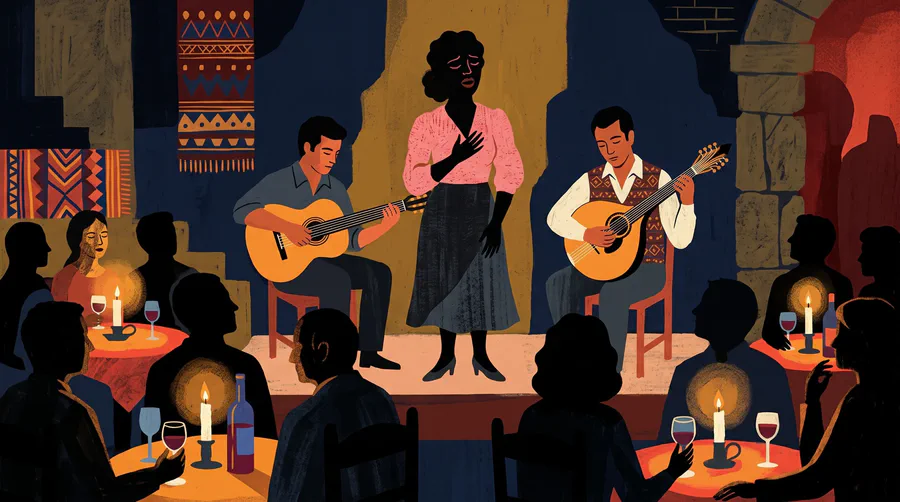
Fado vadio, the amateur kind, still happens in the tascas of Mouraria, where fado came from. At A Tasca do Jaime the singers are whoever is in the room and wants to stand up. Order red Alentejo wine, cheese and presunto, and stop talking when someone starts.
9. Seafood at Cervejaria Ramiro
Three floors, tiled walls, a ticket number and a lot of shouting. Anthony Bourdain’s visit only made the wait longer.
Order garlic prawns, spider crab, and the giant tiger prawns if the price on the board does not stop you. Dessert, by local custom, is a prego no pão, a thin steak sandwich with mustard, eaten after the shellfish rather than instead of it. It closes on Mondays, holds some tables back for walk-ins and takes online bookings for the rest, so the choice is book ahead or arrive at noon.
10. The coastal train to Cascais
From Cais do Sodré, the train runs forty minutes along the mouth of the Tagus to Cascais, and the track is close enough to the water that the sea is the view for most of it. A single is 2.55 EUR, or 2.05 EUR on a Navegante card.
Get off at Carcavelos if you want the beach, or stay on to Cascais for the old town. Boca do Inferno, a collapsed sea cave the Atlantic breaks into, is about 2 km west along the coast, which is a flat twenty-five-minute walk from the centre rather than the fifteen every guide promises.
11. Sintra, with the logistics sorted
Sintra’s palaces are worth the day. The transport around them is what ruins it for most people.
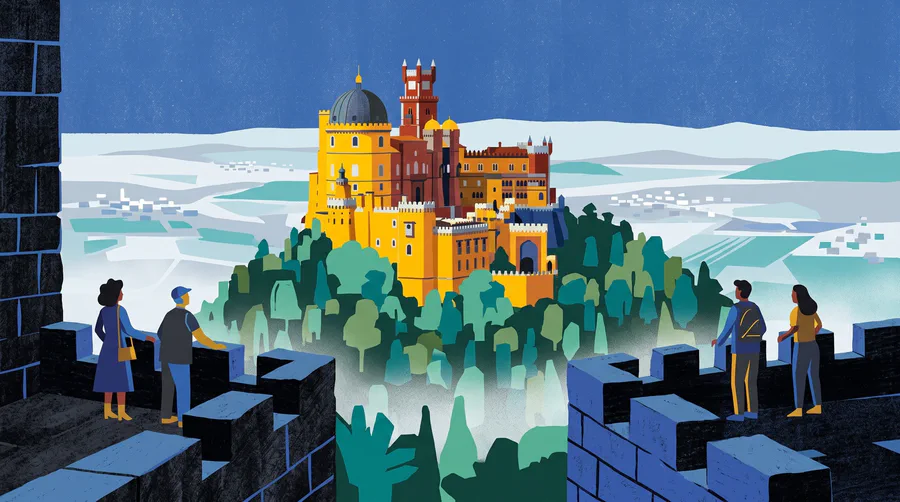
Take the suburban train from Rossio, thirty-nine minutes, 2.05 EUR with a Navegante card. From Sintra station, the 434 tourist bus is the obvious way up to Pena and the queue for it is the reason to share a tuk-tuk or a taxi instead. Book Pena’s timed entry before you travel, because the palace turns people away at the gate. Quinta da Regaleira, back down in the town, has the Initiation Well: a spiral staircase sunk nine levels into the ground with tunnels at the bottom.
12. Azulejos in the metro, since the tile museum is shut
The National Azulejo Museum has been closed for refurbishment since November 2025 with no reopening date announced, which leaves the best tilework in Lisbon underground.
Parque station is the one to see: Françoise Schein and Federica Matta covered it in blue tile carrying fragments of the Declaration of Human Rights, and it reads as a cathedral with trains in it. Olaias, built for Expo 98 by Tomás Taveira with five artists working the atrium and the platforms, is the loudest station on the network. Campo Grande has Eduardo Nery’s murals. All of it costs one journey.
13. The Gulbenkian gardens and museum
Calouste Gulbenkian left the city one of the great private collections: Egyptian, Persian, Islamic and European work through to the Impressionists, in a building that does not fight it.
The gardens around it are the other half of the argument. Modernist landscaping, shaded streams, an outdoor amphitheatre and ducks, all free to walk into. The museum closes on Tuesdays, and admission is free on Sundays after 2pm.
14. Bairro Alto or Cais do Sodré
Lisbon drinks outdoors and starts late. The two districts are not interchangeable, and the difference is the hour.
| District | What it is | When |
|---|---|---|
| 🍻 Bairro Alto | Small bars that sell you a drink through a window; the party is on the cobbles | 10pm to 1:30am |
| 🍸 Cais do Sodré | Old sailors’ bars turned into music venues and clubs, Pink Street at the centre | 1am to 5am |
Getting around
Lisbon is a walking city with lifts. Fares went up across the whole network on 1 January 2026, so anything you read quoting 1.61 EUR a ride is out of date.
| Option | Fare | Best for |
|---|---|---|
| 💳 Navegante card, zapping | 1.72 EUR a journey | Metro, buses, trams and ferries on one balance; load 10 to 15 EUR |
| 🚋 Ticket from the tram driver | 3.30 EUR | Nothing. This is what boarding without a card costs you |
| 🚢 Cacilhas ferry | 1.60 EUR with zapping | Ten minutes across the river for lunch at Ponto Final and the view back |
Bolt and Uber both work here, and they are the honest answer to the last hill of the day.
Because the neighbourhood you sleep in decides how many of those stairs you actually climb, it is worth weighing hilltop Alfama and Graça against flatter Chiado and Baixa on Booking.com before you book.
Lisbon’s free municipal lifts, the ones that save a hundred steps, are not signposted and do not appear on paper maps, so finding them is a live-data problem, and a Portugal eSIM connects through NOS or Vodafone from the airport onwards.
FAQ
How many days do you need in Lisbon?
Is Tram 28 worth the queue?
What is the best time of year to visit Lisbon?
Do you need cash in Lisbon?
Is Lisbon walkable?
Fares and entry prices checked September 2026, after the January tariff rise.
The Booking.com link above is an affiliate link. Booking through it costs you nothing extra and helps keep Atli running.