Chiang Mai rewards a slower pace than Bangkok. The old city is a walled square you can cross on foot in twenty minutes, the mountains start at the edge of town, and a very good bowl of noodles costs less than a Bangkok coffee. Three or four days covers the best things to do in Chiang Mai without rushing, and this guide sticks to the ones that earn their place.
Walk the old city temples early
The old city holds more than thirty temples inside its moat, and the trick is to go before 9am, when tour groups are still at breakfast and the light is soft.
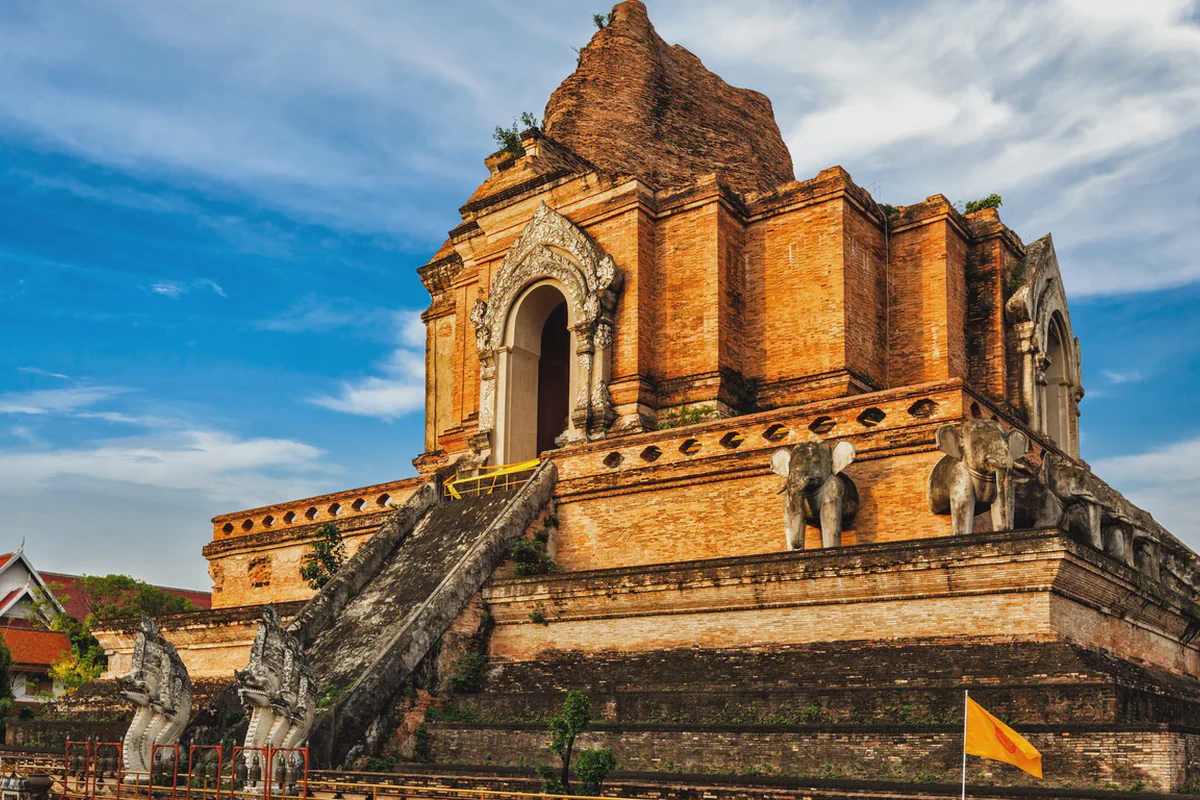
Wat Chedi Luang, in the middle of the square, is a 14th-century brick chedi that lost its top in an earthquake and never got it back. The ruin is the point. Entry is 50 baht (around $1.50) for foreign adults, 20 baht for children. Wat Phra Singh, at the west end of Ratchadamnoen Road, is the busier, gilded counterpart.
Between them, wander. Smaller compounds like Wat Umong Mahathera Chan are usually empty, and monks at several temples hold informal “monk chat” sessions in the afternoons where you can ask questions in English. Cover shoulders and knees, take your shoes off where everyone else does, and you are fine.
Hike the Monk’s Trail to Wat Pha Lat
This is the best half day in Chiang Mai and it costs almost nothing. The Monk’s Trail starts behind Chiang Mai University, near the zoo, and climbs about 2 km through forest to Wat Pha Lat, a small monastery built around a stream on the mountainside. Moss on the stonework, water running through the grounds, usually only a handful of people. The path is marked by strips of orange monks’ robe tied around trees.

You can stop there, or continue up a steeper stretch to the road and on to Wat Phra That Doi Suthep, the gold-plated temple that overlooks the city. Entry at Doi Suthep is 50 baht. Go early: by mid morning the terrace is shoulder to shoulder.
Getting back down is easy. Red songthaews (shared pickup taxis) wait outside the Doi Suthep entrance and charge a fixed 60 to 80 baht per person back to town, leaving when full. If you would rather skip the hike entirely, a songthaew or Grab runs you up the mountain from the old city.
Eat khao soi where it is cheap
Khao soi is the dish Chiang Mai is known for: egg noodles in a mild coconut curry, usually with chicken, topped with a tangle of fried noodles and served with pickled mustard greens, shallots, and lime. In the north it is lunch food, and many of the famous shops close by mid afternoon or sell out earlier.

Khao Soi Khun Yai, a plain shophouse on Sri Poom Soi 8 just inside the north moat, is the standard recommendation and deserves it. A bowl at places like this runs 50 to 80 baht ($1.50 to $2.50). The same dish at a sit-down restaurant in Nimmanhaemin costs 90 to 160 baht and is rarely better. Go before 1pm.
Do the markets properly
Chiang Mai has a market for every day and hour, and they are not interchangeable.
The Sunday Walking Street is the big one: about a kilometre of Ratchadamnoen Road, from Tha Phae Gate into the old city, closed to traffic from around 4pm to 11pm. Handmade goods, northern Thai street food in temple courtyards along the route, and serious crowds by 6pm. Go at 4:30, eat as you walk, and be out before the crush peaks.
Warorot Market (Kad Luang), near the river, is the daytime market where the city actually shops: dried fruit, sai ua (northern herb sausage), fabric, kitchenware. No entrance fee, open from early morning to about 6pm, and better for food souvenirs than anything on the walking street.
If you are not in town on a Sunday, the Saturday market on Wua Lai Road, the old silversmith street south of the moat, is a slightly smaller version of the same idea.
Spend a day with elephants, carefully
Elephant camps around Chiang Mai range from genuine rescue operations to riding camps with new signage. The safe pick is Elephant Nature Park in the Mae Taeng valley, about 90 minutes north, which pioneered the no-riding, no-bathing model. Visitors observe, feed, and learn; the elephants mostly ignore you. A single-day visit costs 2,500 baht (about $78) including hotel pickup and lunch, and it books out, so reserve at least a couple of weeks ahead.
It is a long day, much of it in a minivan, and if you expect hands-on contact you will be disappointed. Keeping your hands off is what the rescue model requires.
Take a cooking class
Chiang Mai is the best city in Thailand to learn to cook, mostly because classes are cheap and many include a farm visit. Half-day classes run about 1,000 baht, full days about 1,500 baht ($31 to $47), usually covering a market tour, five or six dishes, and enough food that you skip dinner. Thai Farm Cooking School, which teaches on its own organic farm outside town, is a reliable pick among dozens.
Get out of the city for a day
Chiang Dao, about 1.5 hours north, is a limestone massif with a cave system you can walk into, quiet guesthouses, and proper mountain scenery. It works as a day trip but is better overnight.
Doi Inthanon, Thailand’s highest mountain, is the packaged-tour classic: twin royal pagodas near the summit, waterfalls, and a short ridge walk on the Kew Mae Pan nature trail. It is a full day and you will share it with many others, but on a clear day in cool season it is worth the drive.
When to go, and when not to
November through early February is the season worth planning for: dry, sunny, and cool enough in the mornings that cafes put out blankets. This is also peak season, so book beds early, especially around the Yi Peng lantern festival in November. Location matters more than the hotel here: a room inside the moat keeps the temples and the Sunday market walkable, while Nimmanhaemin trades that for cafes, so filter by map, not just price, on Booking.com.
The part many guides soft-pedal: from roughly late February to mid April, farmers across the north burn crop stubble and the city sits under smoke. Air quality routinely passes AQI 150 and can spike past 300 on bad days; in March 2026 Chiang Mai again ranked among the world’s ten most polluted cities. Views disappear, flights get hazy, throats hurt. If those are your only free months, go to the islands instead. The air usually clears after Songkran in mid April, followed by the hot and then rainy months, which are green, cheap, and fine if you plan around afternoon storms.
Getting there and getting around
From Bangkok, the overnight sleeper train is the classic route: train no. 9 leaves Krung Thep Aphiwat station at 18:40 and arrives at 07:15, and a second-class sleeper berth costs 938 baht upper or 1,038 baht lower ($29 to $32). Book as soon as your dates are fixed, because berths sell out days or weeks ahead. Flights take about an hour and start around 800 to 1,500 baht one way if booked early.
In town, you barely need transport: the old city is flat and walkable. For longer hops, flag a red songthaew (30 to 50 baht for shared rides around town) or use Grab, which is cheap and saves the fare negotiation; a Thailand eSIM means it works the moment you arrive. Renting a scooter is popular but only sensible if you already ride and have the license to match, because insurance will not cover you otherwise.

FAQ
How many days do you need in Chiang Mai?
Is Chiang Mai worth visiting during burning season?
Chiang Mai or Chiang Rai?
Checked August 2026.
The Booking.com link above is an affiliate link. Booking through it costs you nothing extra and helps keep Atli running.