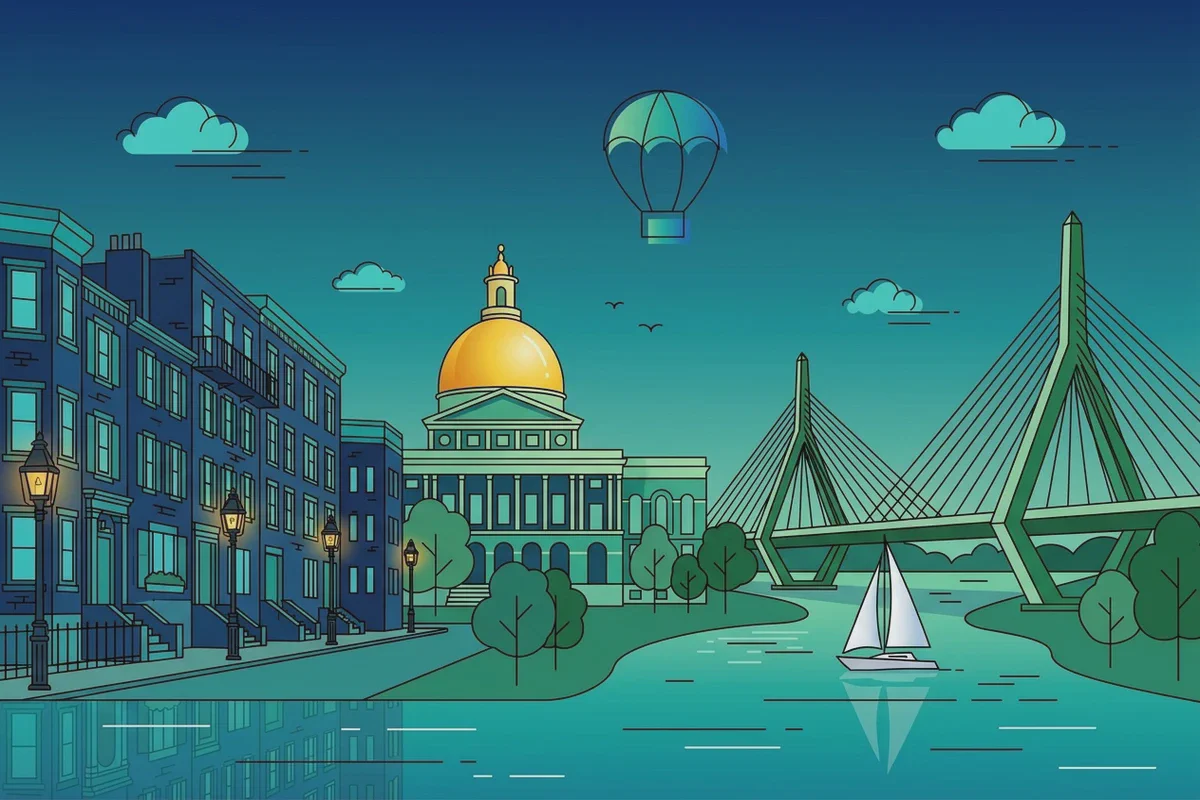
Boston was laid out in 1630 for carts and walking, and it never fully got over it. The colonial core is small enough to cross on foot in an hour, the streets ignore the grid, and a rental car mostly buys you a parking bill.
The catch is that the walkable part is the part everyone else is walking. The Freedom Trail bottlenecks by eleven, the queue outside Mike’s Pastry runs down the block on a Saturday, and there are companies charging real money to walk you along a line of bricks set into the pavement.
Fifteen things worth doing, and the version of each that residents use.
1. Walk the Freedom Trail north, then take the ferry back
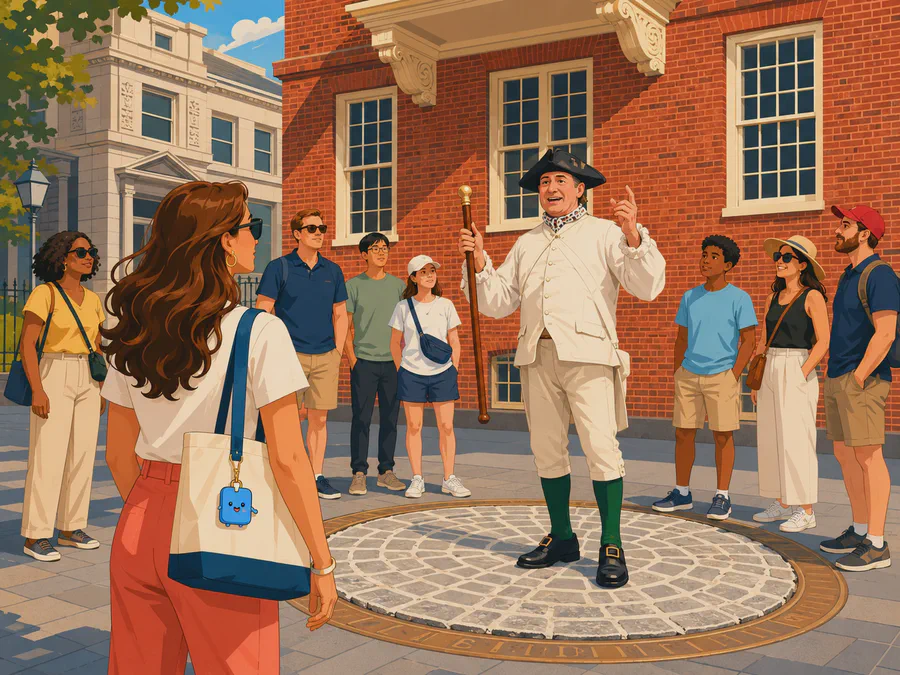
The trail is 2.5 miles and 16 sites, marked the whole way by red brick set into the pavement. A costumed tour buys you commentary and nothing else.
| Stop | Why it is worth it | What to know |
|---|---|---|
| Granary Burying Ground | Paul Revere, John Hancock and Samuel Adams are all here | Free; the Franklin family obelisk is the tallest thing in it |
| Old North Church | The lantern tower from “one if by land, two if by sea” | $10 adult, $5 youth for the self-guided pass; the bell chamber tour is $15 |
| USS Constitution | The oldest commissioned warship still afloat | Free, Tuesday to Sunday; adults need a physical government photo ID, and digital ones are refused |
| Faneuil Hall | The meeting hall itself, upstairs and free | The food stalls below are the tourist tax; eat in the North End |
Start at Boston Common in the morning and walk north to Charlestown. At the far end, do not walk back over the bridge. The MBTA ferry from the Navy Yard to Long Wharf is inner-harbour Zone 1A, so it costs $2.40, exactly the same as the subway. It is the cheapest boat ride in the city.
2. The North End, and which cannoli queue to skip
The oldest residential neighbourhood in the city, and still the one that smells of garlic at six in the evening.
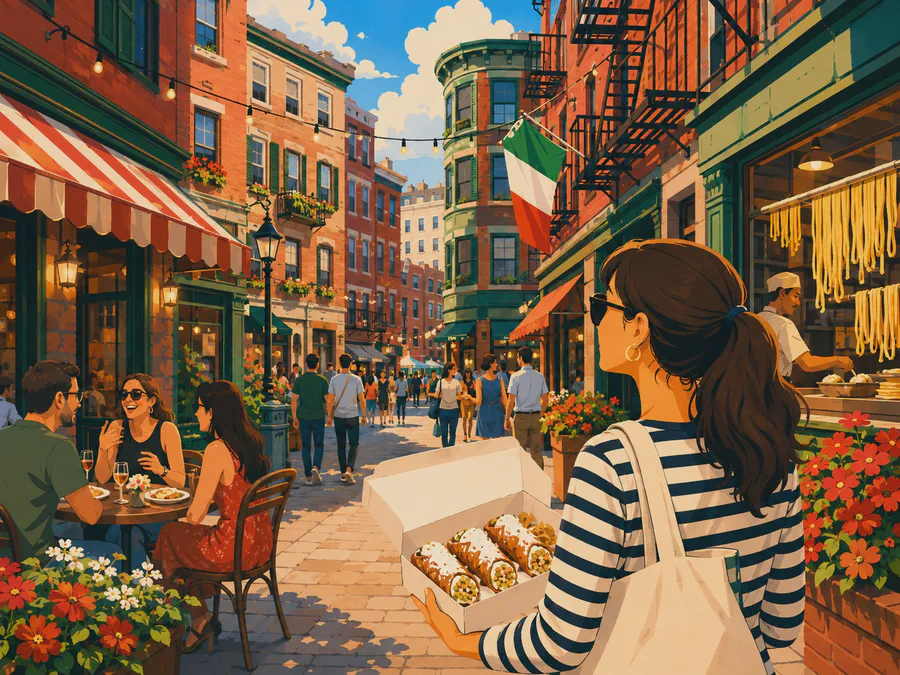
The cannoli argument settles itself on the pavement. Mike’s Pastry on Hanover Street has the longest line. Modern Pastry, across the street, and Bova’s Bakery, around the corner and open around the clock since 1926, both fill the shells to order, which is the part that matters. A shell filled in advance has already gone soft.
For lunch, Galleria Umberto does Sicilian sheet-pan pizza and arancini. It opens at 10:45am, takes cash only, and closes in the early afternoon or whenever the trays are empty, whichever comes first. Several of the older bakeries are cash only too, so carry a $20 note.
3. Beacon Hill and Acorn Street
Nineteenth-century brick row houses, gas lamps that are still gas, and cobbles that will end a pair of thin soles.
Acorn Street is the one every photograph is of. It is also somebody’s front door, so keep the group small and the voices down. Charles Street at the bottom of the hill is the working half of the neighbourhood: antique dealers, independent bookshops, and a Tatte with a queue of its own.
4. Kayak the Charles
The Esplanade is a three-mile park along the Boston bank, and the water is the better half of it.
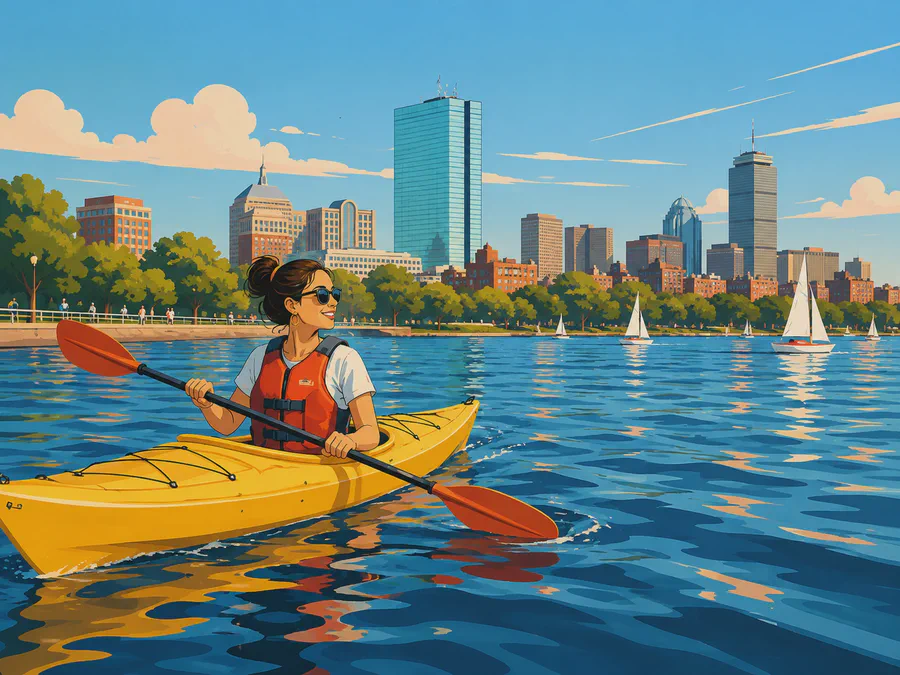
Charles River Canoe & Kayak rents a single kayak or a paddleboard for $35 for the first ninety minutes, from its docks near Kendall Square. Community Boating, further down by the Hatch Shell, charges $40 flat for the whole day and lets you go back out as many times as you like. Late afternoon is when the Harvard and MIT crews are on the water.
5. Harvard Yard and the free art museums
Ten minutes on the Red Line puts you across the river in Cambridge.
Walk in through the Johnston Gate and ignore the students selling tours in Harvard Square. The Harvard Art Museums, beside the Yard in a Renzo Piano building, hold Monet, Picasso and Van Gogh, and admission is free to everyone every day they open, which is Tuesday to Sunday. The Harvard Book Store, two minutes away, keeps its remaindered and used stock in the basement.
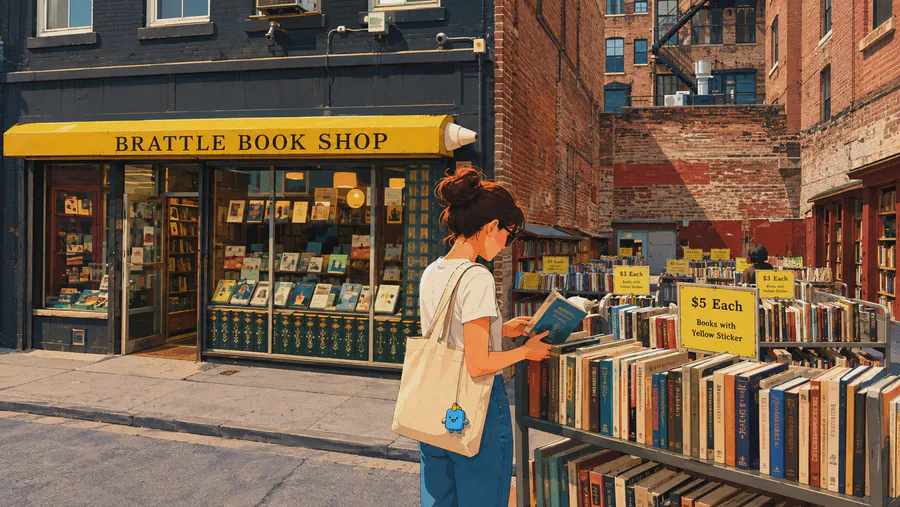
6. The outdoor carts at Brattle Book Shop
Brattle has been trading since 1825 and is one of the oldest antiquarian bookshops in the country, but the reason to go is outside.
In clear weather the shop wheels its carts into the brick lot next door, under the painted murals, and prices most of what is on them at a few dollars. The rare material is inside on three floors: first editions, maps, and a room you have to ask to be let into.
7. The Isabella Stewart Gardner Museum
The Museum of Fine Arts is bigger and the Gardner is better company. It was built as a Venetian palazzo around a glass-roofed courtyard, hung by one woman to her own taste, and left under the condition that nothing be moved.
It is also the site of the 1990 theft, still unsolved. The empty frames hang where the Rembrandt and the Vermeer used to, because moving them would break the will.
Adult tickets are $25, entry is timed, and it closes on Tuesdays. Anyone actually named Isabella gets in free for life, which is either a marketing decision or a very long joke.
8. Standing room at Fenway Park
Fenway opened in 1912 and is the oldest park in the major leagues, which mostly means the seats were built for smaller people.
Standing room is the cheap way in, but the range is wide: a midweek game against a quiet opponent starts around $15, and a weekend against a marquee team runs past $70. Prices move on the MLB Ballpark app in the hours before first pitch. If the Red Sox are away, the Bleacher Bar under the centrefield bleachers has a garage window at ground level that looks straight out at the outfield.
9. The Harborwalk and the ICA
The Seaport was working piers until recently and now holds most of the city’s new architecture.
The Harborwalk runs 43 miles in total, from East Boston to Dorchester, and the stretch from the Fort Point Channel to the ICA is the part to walk. The Institute of Contemporary Art sits out over the harbour behind a wall of glass. Admission is $20, except on Thursday evenings from 5 to 9pm, when it is free for everyone. Book ahead either way, because tickets are required even for the free nights.

10. Lobster rolls at James Hook
Skip the lobster roll in the Quincy Market food court, which is priced for people who will not be back.
James Hook & Co has been a wholesaler at the edge of the Fort Point Channel since 1925 and sells the roll over a counter, warm with butter or cold with mayonnaise, for a good deal less than a sit-down restaurant. There is nowhere to sit. Take it to the channel wall.
11. The South End and SoWa
Listed as the largest intact Victorian row house district in the country, laid out around small parks that the residents unlock and the rest of us walk past.
SoWa, on Harrison Avenue, is the converted warehouse end of it: a vintage market, a food truck lot, and open studios. On the first Friday evening of the month dozens of artists open their working studios, free, and the whole district turns into one long slow walk.
12. The ferry to the harbour islands
The Boston Harbor Islands are a national park area, and the ferries run from Long Wharf North between May and October.
Spectacle Island has swimming beaches and trails up to a view back at the skyline. Georges Island has Fort Warren, a granite coastal fort begun in the 1830s with unlit passages, so bring a torch and something with sleeves. Tickets are round-trip and untimed, about $25 for an adult, and the last boat back is earlier than you think.
13. The Boston Public Library at Copley Square
Founded in 1848, this was the first large free municipal library in the United States, and it still behaves like a public building rather than a museum of one.
Bates Hall is the reading room with the barrel vault and the green lamps, and you are allowed to sit in it. The courtyard behind it is an Italian cloister with a fountain, free Wi-Fi and no ticket, which makes it the quietest place to work in central Boston.
14. The Arnold Arboretum
Olmsted laid out 281 acres of it in Jamaica Plain, and Harvard has been growing things there ever since.
Take the Orange Line to Forest Hills and walk up Peters Hill for the view of the skyline through the trees. Entry is free, sunrise to sunset, every day of the year, which makes it the largest thing in Boston that nobody charges for.
15. View Boston, at the top of the Prudential
The observatory occupies the top three floors of the Prudential Tower: an open-air roof deck, glass on all sides out to the harbour, and a scale model of the city. Tickets start at $34 with a $3 booking fee on top, and it stays open to 10pm.
Book the timed slot for 45 minutes before sunset. You want to be up there while the light goes and the lights come on, not after.
Getting around
Do not rent a car. The street pattern is seventeenth-century, half of it is one-way, and a downtown garage runs $38 to $48 a day, though pre-booking online usually saves about ten dollars of that.
| Option | Fare | Best for |
|---|---|---|
| 🚇 Subway, the T | $2.40 | Downtown to Back Bay to Cambridge, faster than anything above ground |
| 🚢 Charlestown ferry | $2.40 | Long Wharf to the Navy Yard, and the end of the Freedom Trail |
| 🚌 Silver Line SL1 | Free from Logan | Airport terminals to South Station without a transfer |
| 🚲 Bluebikes | $3.00 a ride, $11.99 a day | The Charles River paths and the flat run through the Seaport |
Tap a credit card or a phone at any fare gate or bus reader and there is no reason to buy a CharlieCard for a short trip. Since September 2026 the MBTA has been running a fare pilot where you pay only the highest fare you incur in any two-hour window, so a subway trip followed by a bus and a ferry can cost you one fare, as long as you tap the same card each time.
Since you will be covering the city on foot and by T, it is worth comparing what is on Booking.com near a subway stop in Back Bay, Downtown or Cambridge before you book: a cheap room far from a line hands the savings back to you as commuting time.
The one thing a downloaded map will not solve is the Green Line, which splits into four branches and posts the letter on the front of the train, so live arrivals in Transit or Google Maps are worth having, and a USA eSIM connects through T-Mobile from the moment you arrive.
FAQ
How many days do you need in Boston?
Do you need a car in Boston?
Is the Freedom Trail worth paying for a guide?
When is the best time to visit Boston?
How do you get from Logan Airport into the city?
Fares and entry prices checked September 2026.
The Booking.com link above is an affiliate link. Booking through it costs you nothing extra and helps keep Atli running.