Almost every English guide to Taipei’s night markets tells you that Ningxia is thick with Michelin recommendations and that Shilin is the famous one you should skip. Both halves of that have been out of date for years, and the second half is now wrong in an interesting way.
The Michelin claim that everyone repeats
In the 2026 guide, Shilin has one Bib Gourmand stall. Raohe has none. Ningxia has none.
That inverts what you will read almost everywhere, and the reason is simple: the food blogs are quoting awards from 2018 to 2021 without dating them. In the 2022 guide there were twenty-four Bib Gourmand stalls across eight Taipei night markets, with Raohe and Linjiang holding four each. By 2026 there are eight in total, and the two most-recommended markets in every English article hold none of them.
If Michelin recognition is what you are chasing, the two markets to go to are Huaxi Street and Nanjichang, which have two current listings each and appear in almost no English guide at all.
Raohe 饒河街觀光夜市
In the first two months of 2026 Raohe drew 2.2 million visitors against Shilin’s 1.3 million, on Taiwan’s own tourism figures. That is not the ranking any English guide gives you.
Six hundred metres, one straight street, open every day from five in the afternoon until midnight. It runs from the Ciyou Temple at the western end to Bade Road at the eastern, and you cannot get lost in it.
Songshan station, green line, exit 5. The exit puts you at the temple, which is the market’s front door.
The stall to queue for is the first one you meet. 福州世祖胡椒餅, Fuzhou Shizu pepper buns, at number 249, immediately inside the temple entrance. Pork and spring onion in a bun slapped against the inside wall of a charcoal drum oven, NT$65, and the queue runs half an hour at peak. Join it anyway.
陳董藥燉排骨, stall 127, has been selling herbal ribs here for around thirty years and was the market’s first. Pork ribs simmered in a medicinal broth, served with a small dish of sauce. It closes on Tuesdays, which catches people out.
東發號 sells three things and has done since long before the market was planned: noodles in thickened broth, pork thick soup, and oily rice. It has moved to a storefront at 143 after redevelopment pushed it out from behind the temple.
Raohe is designed for walking and eating. There is almost nowhere to sit. That is the point of it.
One thing to know: the street is being bought up. A developer paid NT$240 million for two shophouses and two residential projects are underway. Raohe in five years will not be Raohe now.
Ningxia 寧夏夜市
Three hundred metres, about a hundred and eighty stalls, six in the evening to midnight, every day. It is the smallest of the three and the most compressed, and it is all food. No games, no phone cases, no claw machines.
Shuanglian station, red line, exit 1, about eight minutes on foot.
劉芋仔, stall 91, has been frying taro for around fifty years. Two things: a salted egg yolk taro cake at NT$35 and a crisp taro ball at NT$25, minimum two pieces. It held a Bib Gourmand from 2018 to 2021 and no longer does, which tells you more about Michelin than about the taro.
圓環邊蚵仔煎 has been making oyster omelettes since 1965 at number 46. NT$95. Jensen Huang has eaten here, which in Taipei is a more useful endorsement than a star, and he has been back to this market five times, most recently on a wet evening in June 2026 the night before flying to Korea.
Also here: 豬肝榮仔 at stalls 8 and 10, pork liver soup since 1950. 豆花莊 at 49 for tofu pudding with thirty-odd toppings. 雅米花生捲冰淇淋, which is ice cream and shaved peanut brittle wrapped in a thin pancake with coriander, and is better than that description suggests.
Once a year, around Chinese New Year, the market runs a banquet assembled from about twenty stalls that have each been trading fifty years or more. They call it the thousand-year feast, on the arithmetic of adding up the ages.
Shilin 士林夜市
The biggest, the most touristed, and the one in trouble.
Get off at Jiantan, not Shilin. Red line, exit 1, two minutes. The station named after the market is further from it than the one that is not, and this is the single most common mistake first-timers make.
The stall count has gone from 842 in the first half of 2023 to 731 in the second half of 2024. The historic peak was over 2,700. Prime pitches rent for NT$30,000 to 40,000 a month, there are visible vacancies, and the vendors’ own diagnosis is that rising costs have pushed prices close to restaurant levels and eroded the thing night markets sell, which is being cheap and good at the same time.
The city spent around NT$100 million renovating the basement food court, which reopened in April 2025 with thirty-five vendors, six hundred seats, air conditioning and new toilets. It is genuinely pleasant and it did not lift footfall.
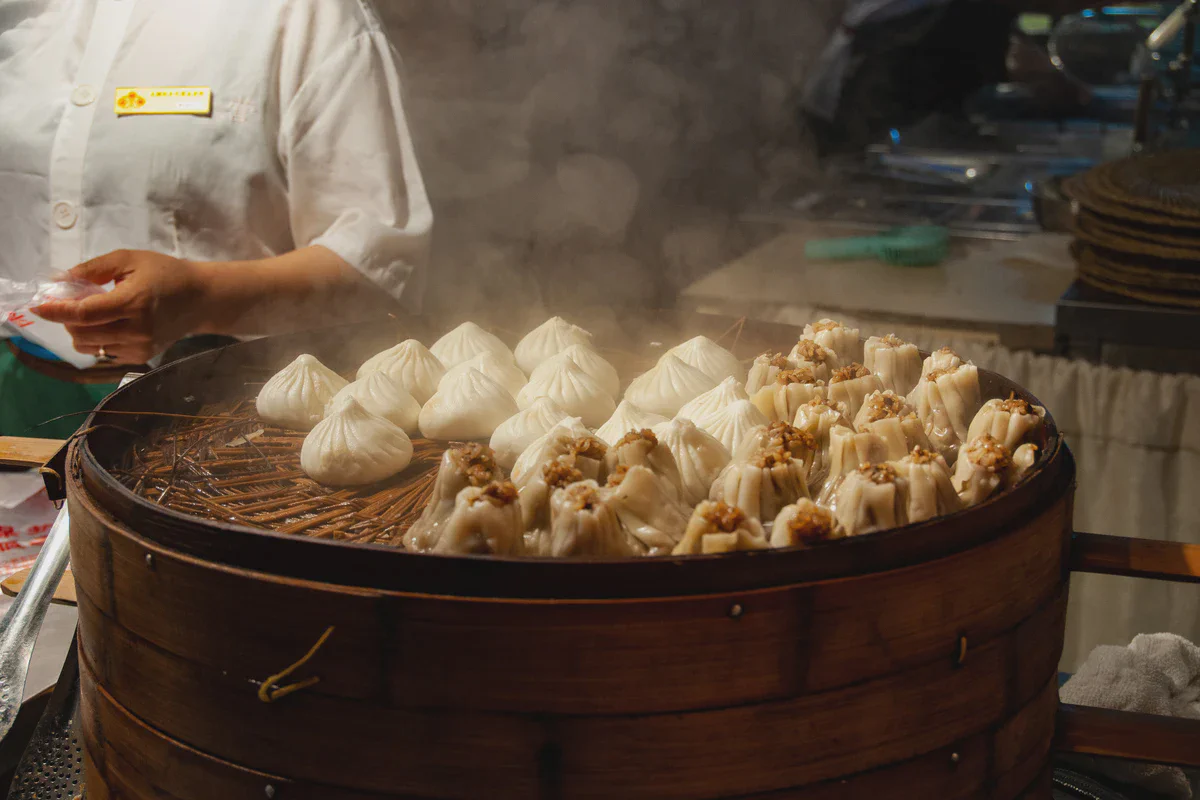
Go for 鍾家原上海生煎包 at 38 Xiaodong Street, pan-fried pork or cabbage buns at NT$20 each, closed Wednesdays. It is the only current Bib Gourmand in any of these three markets, and the queue is shorter than the one at Raohe for a bun that is arguably as good.
海友十全排骨 does a fifteen-herb rib soup simmered for ten hours, closed Tuesdays. 長林記大餅包小餅 fries a filled cake and wraps it in a crepe, NT$35. 豪大大雞排, the face-sized fried chicken, is NT$85 and is the thing everyone photographs.
The basement court is also the only proper sit-down option in any of the three markets. If you are with people who want to sit down, this is where you go.
Bring cash, and know why
Almost everything is cash. Some stalls take LINE Pay or Apple Pay, and you cannot plan around which.
The reason is not backwardness. The head of the Shilin business association has said publicly that the 2.2 per cent electronic payment fee is more than stall margins can absorb. On a NT$20 bun that is real money to the person selling it. Carry NT$100 notes and small change.
Two other things first-timers get wrong. You queue, and the length of the queue is the only rating system that matters. And you do not stand eating in front of the stall you bought from, because you are blocking the line in a lane that is already too narrow. Step aside.
Visitor numbers from Taiwan’s Tourism Administration, Michelin listings from the 2026 guide. Prices checked September 2026.