For two years Japan could not make enough chips to sell transit cards to visitors, and the internet filled up with workarounds. The cards came back. Most of the advice did not.
The cards are back
Unregistered Suica and Pasmo went back on sale on 1 March 2025, at station machines in the areas each card covers. The shortage is over.
Two things have changed recently. Pasmo Passport, the old tourist card, was discontinued in October 2024. Its replacement, Tourist Pasmo, only launched on 20 May 2026 and is sold at two airports: Haneda and Narita. At Narita it comes in one denomination, ¥2,000.
If a page tells you the cards are unavailable, or recommends Pasmo Passport, it has not been touched in two years.
Deposits and refunds
An ordinary Suica costs ¥500 as a refundable deposit on top of whatever you load. Cards are sold in fixed amounts from ¥1,000 to ¥10,000, deposit included.
When you hand it back, JR East keeps ¥220 as a handling fee and returns the rest plus your deposit. So a card with ¥1,000 left on it gives you ¥1,280 back: ¥1,000 minus the ¥220 fee, plus the ¥500 deposit. The deposit comes back in full even if the balance cannot cover the fee.
The maximum you can hold is ¥20,000, and you top up in fixed increments. One small trap: ¥4,000 is a valid purchase amount but not a valid top-up amount, which catches people out at the machine.
Cards die after ten years of no use, not ten years from purchase, so the one in your drawer from a 2019 trip is almost certainly still good.
Top-ups are cash only. You cannot load a physical Suica with a credit card at a machine, foreign or Japanese.
The tourist cards cost you the balance
Welcome Suica and Tourist Pasmo both have no deposit, which sounds better than it is.
Both expire 28 days after purchase, and neither refunds anything, ever. Not the balance, not on the last day, not at a counter. Whatever is left on the card when it expires is gone. Welcome Suica also tops up in cash only.
The arithmetic is simple. The ordinary card costs ¥500 up front and gives you ¥280 of it back along with your balance. The tourist card costs nothing up front and keeps whatever you failed to spend. If you finish a trip with more than about ¥280 unspent, which is easy, the free card was the expensive one.
Welcome Suica is sold at ten JR East locations across Tokyo and Sendai. Tourist Pasmo is sold at Haneda and Narita only.
Children’s cards expire on a date, not a birthday
Children aged 6 to 11 travel at half fare, and both cards have a child version. It is not sold from the ordinary machines. You need a staffed ticket window or an operator-assisted machine, and the card is registered to the child by name and date of birth, with identification to prove the age. A parent can buy it, but the child’s identification still has to be there. JR East’s page gives a Japanese My Number card as its example and does not say what it accepts from a visiting child, so ask at the window rather than assume a passport will do.
The expiry is what catches families. A child card does not stop on the twelfth birthday. It stops on 31 March of the year the child finishes elementary school, the end of the Japanese school year.
The school cohort decides it, so the birthday itself barely matters. A child who turns 12 in May keeps the half fare for another ten months. One born on 2 April gets almost a full extra year. One born on 1 April does not, because Japanese law counts you as reaching an age on the day before your birthday, which puts a 1 April birthday in the earlier school cohort and ends the card that same 31 March.
Take the card to a ticket window and it becomes an adult card with the balance intact. Do that before you leave the region that issued it, because the company that issued the card is the one that converts it.
Your phone, if it is an iPhone
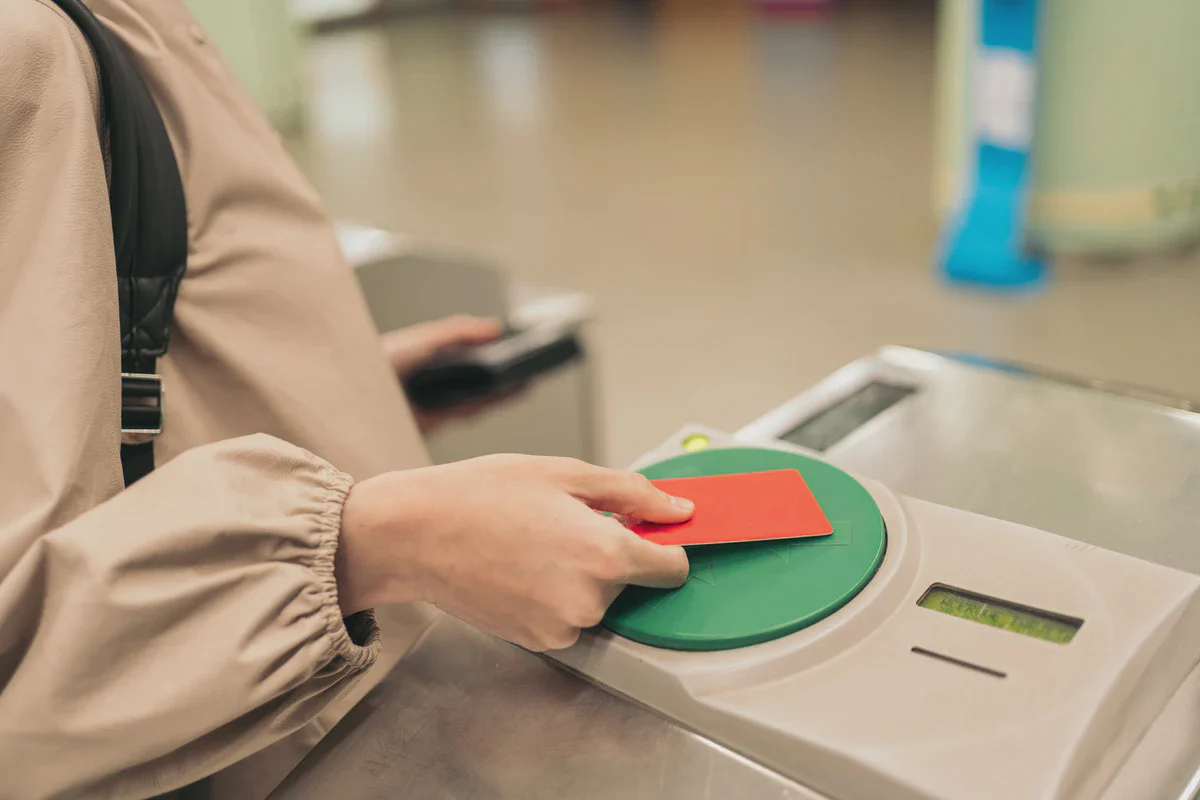
An iPhone 7 or newer can hold a Suica in Apple Wallet with no physical card, no deposit and no counter. Add a card through Wallet, top it up from a card already in Apple Pay, and tap through the gate.
For Pasmo the phone’s region must be set to Japan. Apple publishes no such requirement for Suica.
There is a catch to know before you rely on it. JR East’s own Mobile Suica app refuses foreign payment cards outright, in its own words: cards issued overseas cannot in principle be registered. Apple Wallet is a separate route and generally does work, though Visa was historically the fragile one and only became reliable with iOS 17.2.
Since March 2025 there is also Welcome Suica Mobile, an English app aimed squarely at visitors: no deposit, valid 180 days rather than 28, and you can issue it before you arrive if you are travelling from South Korea, Taiwan, Malaysia, Singapore, Australia or Vietnam. Everyone else issues it after arriving in Japan.

Android bought outside Japan does not work
This is the part that gets fudged everywhere, so here it is plainly. If you bought your Android phone outside Japan, you cannot put a Suica or Pasmo on it. Not with the app, not with Google Wallet, not with a workaround.
You do not have to take that on trust or argue about chips. In April 2026 JR East announced that it is working to make Welcome Suica Mobile available on Samsung Galaxy phones sold overseas, targeting the first half of 2027 and models released from 2027 onwards. A company does not announce a 2027 project to enable something that already works.
Google’s own help pages list Suica and Pasmo only under Japan, and its watch guidance says outright that the device must have been purchased in Japan.
There is one workaround, and it is officially supported: a Pixel Watch or Galaxy Watch bought in Japan can hold a Suica even when paired to a non-Japanese Android phone. That is a narrow answer to a narrow problem, but it is a real one.
If you are on Android from abroad, buy the plastic card. It is the whole reason the plastic card matters again.
Where they stop working
The card covers a region, not the country. You cannot ride from Tokyo to Sendai on stored value, because those are two different Suica areas and the system will not let you cross between them. Buy a paper ticket for journeys like that.
JR East is merging its areas in spring 2027, which will fix this for the north. Until then it is a live restriction and it catches people on long regional trips.
Ten card brands work interchangeably across the country, so an Icoca bought in Osaka works in Tokyo and vice versa. The exceptions are small enough not to plan around, with one to know: Pitapa is not part of the shopping side of that arrangement.
One more thing to ignore. You will read that the ¥20,000 limit is rising to ¥300,000. It is not. That figure belongs to a separate payment service launching alongside the card, on its own balance. The transit card’s ceiling stays at ¥20,000.
Fares, fees and dates from JR East and Pasmo’s own pages, September 2026.