Some travellers skip Phnom Penh and fly straight from Siem Reap to the coast, put off by the traffic, the heat and the history. Those who stop find a riverfront capital with cheap rooftop bars and some of the best food in Cambodia. Two days covers the main sights. The genocide sites need a whole morning, so give them the first one, and leave the markets, the palace and the museum for the rest.
Day one, morning: Tuol Sleng and Choeung Ek
Tuol Sleng, S-21, is the high school the Khmer Rouge turned into an interrogation prison; of roughly 18,000 people processed through it, a handful survived. It opens at 8am, entry is $5, and the audio guide costs $5 more. Take it: survivors and researchers explain each room, and without it the building gives little context. Pay in cash, and allow two hours.
Choeung Ek, the killing field where most of S-21’s prisoners were killed, lies about 17 km south, 45 minutes to an hour by tuk-tuk; drivers ask $15 to $20 for the round trip with waiting time, or around $20 covering both sites from your hotel. Entry is $6 with the audio guide included. At its centre is a memorial stupa holding the skulls of victims. Visit S-21 first, since the prisoners held there were taken on to Choeung Ek.
Plan something easy for the afternoon. The sites advise against bringing young children.
Day one, afternoon: the market and the river
The Russian Market, Phsar Toul Tom Poung, is named after the Soviet expatriates who shopped there in the 1980s. It sells handicrafts, silk, carvings and brand-name factory overruns in a maze of stalls, with a food corner grilling skewers at lunch prices. Haggling is expected, and a third off the first price is common. It closes around 5pm, and stalls start packing up from 4pm. The quay is about 15 to 20 minutes away by tuk-tuk, and the sunset cruises leave around 5pm, so leave the market by about 4.30.
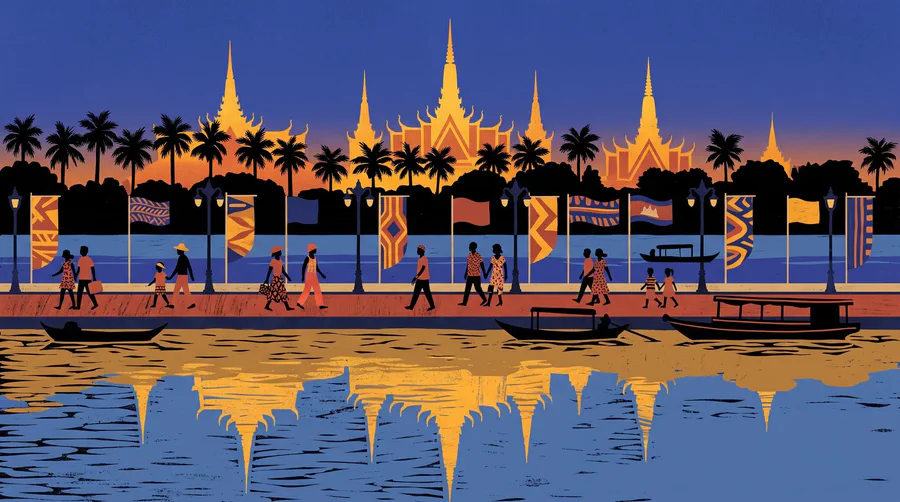
End on Sisowath Quay, the riverfront promenade where the Tonle Sap meets the Mekong. At sunset it fills with aerobics classes, monks, families and street food, and the group sunset cruises leaving from the quay cost from about $8, or $17 to $19 with drinks, for about 80 minutes on the water.
Day two: palace, museum, market
The Royal Palace opens 8 to 11am and again 2 to 5pm, and the $10 ticket includes the Silver Pagoda with its floor of silver tiles. Go at 8, before the heat and the tour groups. Shoulders and knees must be covered, and staff check at the gate. The compound can close without notice for royal ceremonies, so keep a back-up plan for the morning.
The National Museum next door holds one of the largest collections of Khmer sculpture, much of it from Angkor-era sites, in a red building around a garden courtyard. Entry is $10, and an hour here puts the temples in context. Central Market, Phsar Thmei, is a 1937 art deco building shaped like a cross under a central dome, with gold and jewellery stalls in the middle. Wat Phnom, the hill temple the city is named after, costs $1 and takes about ten minutes.
Evenings: Bassac Lane
Street 308 and the Bassac Lane alleys are lined with small bars, some only a few metres wide, from $1 beer to cocktail bars, all within a short walk of each other. Expats and young Cambodians drink here more than on the riverside strip.
For a place to stay, the riverside is central and noisy, while BKK1 and the Bassac area are quieter and closer to the evening bars; the map view on Booking.com shows where each hotel sits.
Getting around
Tuk-tuks booked through Grab or PassApp cost $1 to $2 for most trips in the centre. The new Techo International Airport, open since September 2025, sits about 20 km south of the centre: apps and taxis run $10 to $20 and up to an hour in traffic, the Airport Express bus costs 1,500 riel and takes 75 to 90 minutes, and hotels arrange transfers at hotel prices. If you are also going to Angkor, the Siem Reap guide covers the temples.
FAQ
Is Phnom Penh worth visiting?
Are Tuol Sleng and Choeung Ek too disturbing to visit?
Is Phnom Penh safe for tourists?
Do I need a data plan for two days?
Entry fees checked September 2026, against official sites where they exist. Tuk-tuk and cruise prices are typical, agreed before boarding.
The Booking.com link above is an affiliate link. Booking through it costs you nothing extra and helps keep Atli running.