Korea’s autumn colour lasts about six weeks. It begins in the high mountains of the northeast in early October and ends in the low hills of the southwest in the second week of November. Seoul’s peak comes at the end of October and the start of November.
The dates are forecast every year and they are usually close. This guide has the 2026 forecast by region, the bus from Seoul to Seoraksan, and what to do if you arrive before or after the leaves have turned.
When is peak foliage in Korea in 2026?
Korean forecasts give two dates for each mountain. First foliage (첫단풍) is when about 20 percent of the mountain has turned. Peak (절정) is about 80 percent, and it comes roughly two weeks later. Peak is the date to plan around. Many guides quote the first one.
| Where | First colour | Peak |
|---|---|---|
| Seoraksan, Odaesan | 3 October | 16 to 25 October |
| Seoul and the centre | 10 to 27 October | 31 October to 5 November |
| Jirisan and the south | 22 October to 5 November | 5 to 13 November |
The forecaster WeatherEye published these dates on 5 September. The Korea Forest Service uses more data and issues its own map later in September. If your dates are still open, wait for it.
2026 is a late year. September and October are forecast warmer than usual, which pushes both dates back. Guides written for a typical Korean autumn will be a few days early.
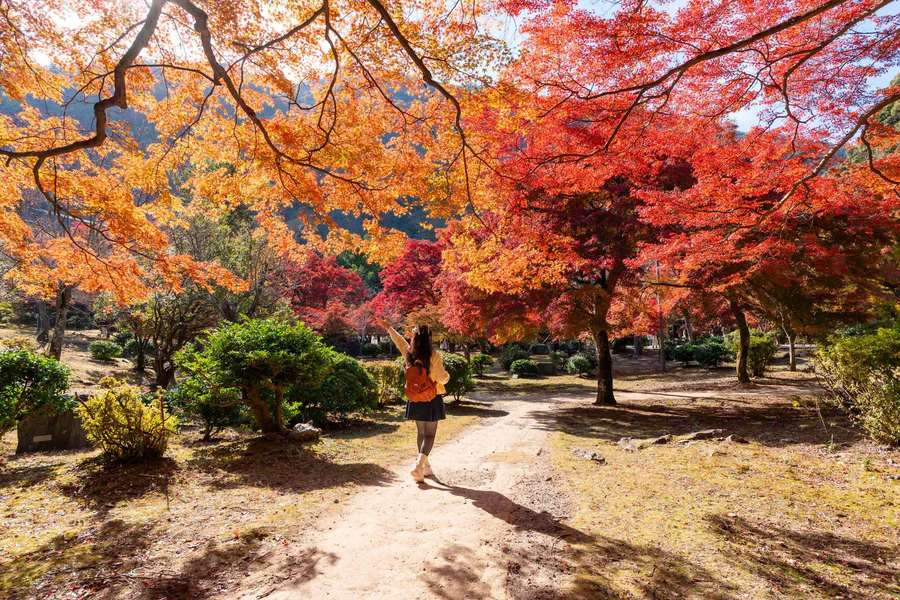
Seoraksan
Peak: 16 to 25 October
Seoraksan and Odaesan are the first mountains to turn. Seoraksan’s colour is also the shortest-lived and runs from first colour in early October to the end of peak around the 25th. It is also one of the most popular parks in the country, and the main trails are crowded on October weekends. Go on a weekday if you can.
Buses leave Seoul Express Bus Terminal for Sokcho about 40 times a day between 06:00 and 23:30 and take around 2 hours 20 minutes. A standard seat costs 16,400 won and a wider deluxe (우등) seat 21,300 won. From Sokcho, a local bus or a taxi takes you to the park entrance.
There is no entrance fee. The temple admission fee once collected for Sinheungsa at the park gate was abolished on 4 May 2023 together with the fees at 64 other temples. Some older guides still mention it.
Sokcho is a fishing port, and the central market is the place to eat after the hike. It is known for fried chicken and for stuffed squid sliced into rounds.
Seoul
Peak: 31 October to 5 November
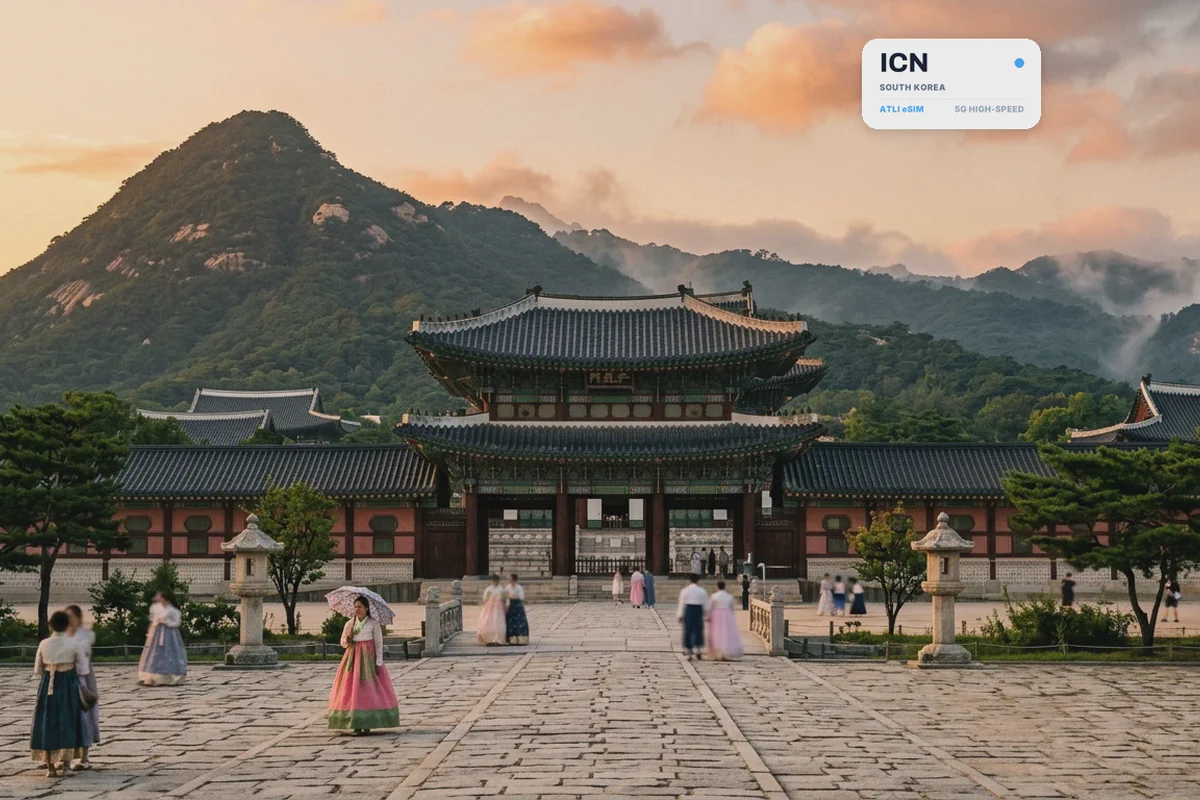
Seoul turns after the mountains, which makes it the safer choice if your dates cannot move. Namsan, the palace walls and the ginkgo avenues are the places to see it. The ginkgos turn bright yellow and drop their leaves within about four days, so the yellow week is short.
Jirisan
Peak: 5 to 13 November
Jirisan is high but far to the south, and it holds its colour longer than the forecast suggests. It is the best choice for the first half of November.
Naejangsan
Peak: second week of November
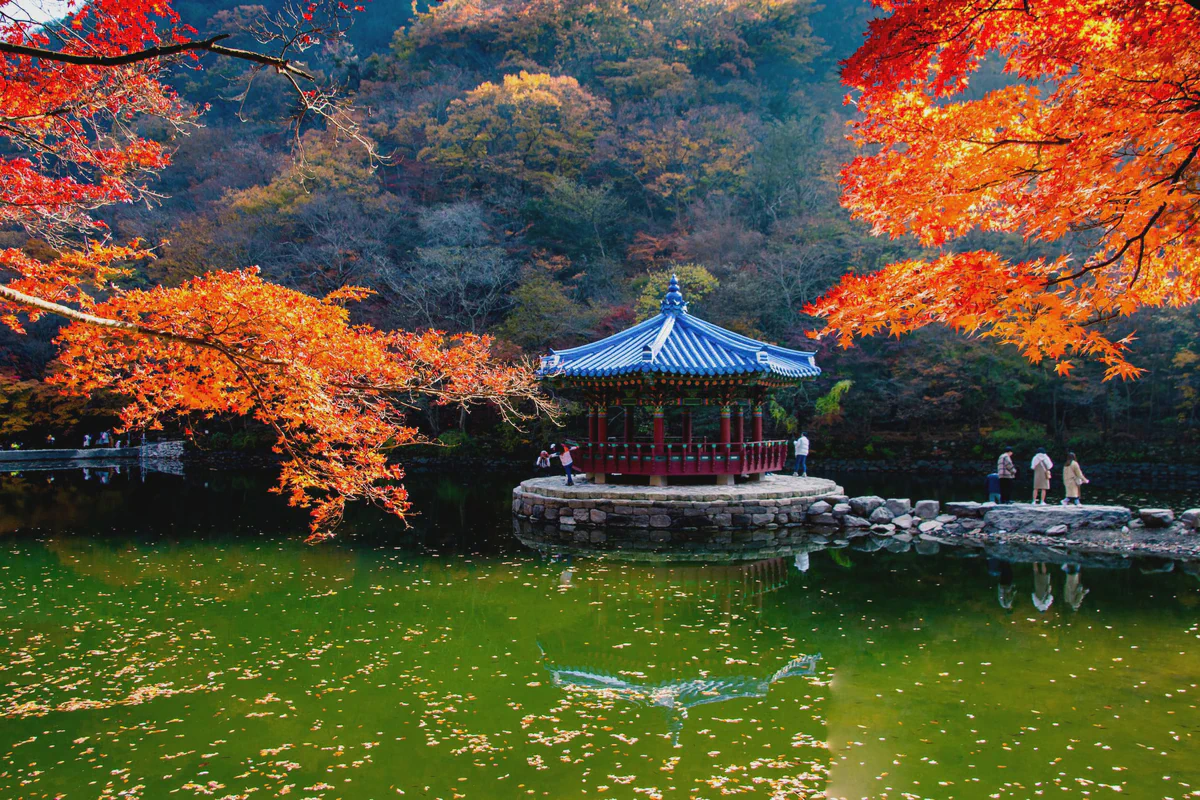
Naejangsan is low and far to the southwest, and it is the last major park to turn each year. The maples around Uhwajeong pavilion and its pond are the best-known view. If November is the only month you have, this is where to go.
If your timing is off
Colour moves down a mountain at roughly 30 to 50 metres of elevation a day. Arrive early and the higher trails will have turned before the valley. Arrive late and the slopes near the car park are often still good a week after the ridge has finished. In both cases, changing altitude does more than moving to another region.
Foliage dates from the WeatherEye forecast of 5 September 2026; bus fares from Seoul Express Bus Terminal schedules. Forecasts are revised through the season, so check again before you travel.