Winter in Japan depends on how far north you go and which coast you are on. Tokyo averages 4 cm of snow in January and a high of 9.8°C, with more sunshine than most of the year. Sapporo gets 116 cm in February, and its average daytime high is 0.4°C. The mountains of Nagano, Gunma, Yamagata and Gifu are where the monkeys sit in hot springs and the onsen towns look the way they do on posters.
How cold it gets
The official normals give the gap. In January, Tokyo averages 9.8°C at its warmest and 1.2°C at night, and Nagano 3.8°C and minus 3.9°C. Sapporo in February averages 0.4°C and minus 6.2°C, with snow on 25 days of the month. The sun sets there at about 16:50 in early February, so the afternoon is short.
Pavements turn to ice. Sapporo’s fire service counted about 2,060 ambulance trips for falls on snowy roads last winter, and its advice is short steps with the whole sole flat on the ground. Shoes with grooved winter soles help, and slip-on grips cost about ¥1,000 at convenience stores and station kiosks.
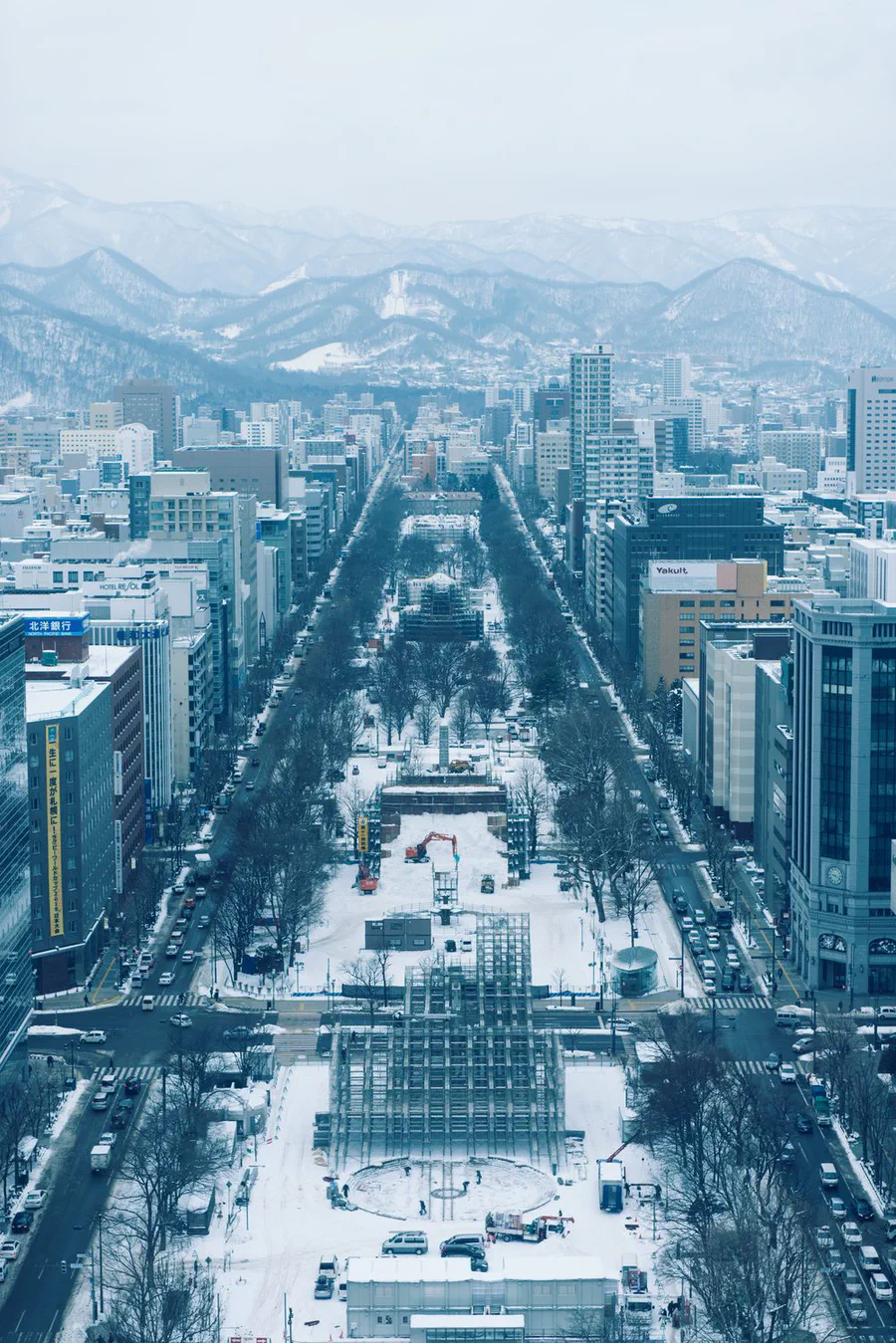
The Sapporo Snow Festival
The 77th festival runs from Thursday 4 February to Thursday 11 February 2027 on three sites, and entry to all of them is free. Odori Park, a strip of park through the city centre, holds the large snow sculptures across eleven blocks. It is open at all hours and lit until 22:00. Susukino, the nightlife district, holds the ice sculptures, lit until 23:00. Tsudome, a sports dome outside the centre, adds an indoor hall with a heated rest area, open from 10:00 to 16:00.
The 2026 festival counted about 2.5 million visits at Odori and Tsudome. Susukino keeps its own count, which was 1.4 million. The festival publishes its 2027 details in mid-December, so check the hours then.
From New Chitose Airport, the Rapid Airport train reaches Sapporo in 37 minutes for ¥1,230, six times an hour through the day. Otaru, a short train ride west, lines its canal with candles for the Snow Light Path from 6 to 13 February.
The snow monkeys at Jigokudani
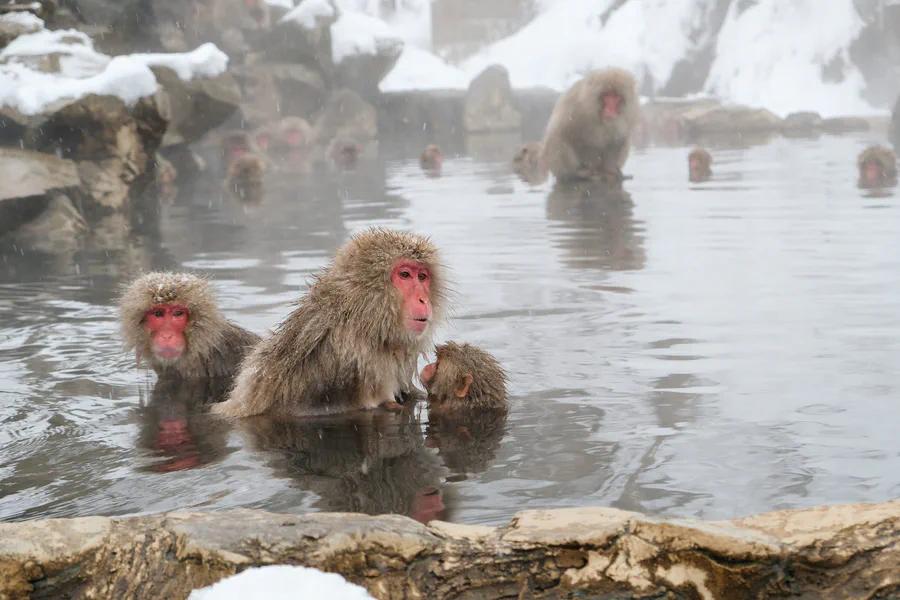
Jigokudani Yaen-koen, the monkey park in the mountains above Yudanaka, is the place where Japanese macaques sit in a hot spring in the snow. The park says December to March is the season for it, and that the monkeys do not bathe all the time; on some days none come down.
The last stretch is a 2 km walk on an unpaved forest trail, about 30 minutes each way, and the park recommends snow boots and light crampons. The road in from Shibu Onsen is closed in winter. The park is open from 9:00 to 16:00 in winter, entry is ¥800 for adults, and it asks visitors to arrive at least 30 minutes before closing.
From Tokyo, the Hokuriku Shinkansen reaches Nagano in about 1 hour 20 minutes, and the Japan Rail Pass covers it. From Nagano, the private Nagaden line runs to Yudanaka in about 45 minutes for ¥1,660 plus a ¥100 express fee, and a bus goes on to the trailhead. Last winter an express bus also ran from Nagano’s east exit for ¥3,000.
Onsen towns in the snow
Ginzan Onsen in Yamagata, with its wooden inns along a river, has become so popular that it now manages winter crowds. Last winter, from 20 December 2025 to 1 March 2026, day visitors’ cars were banned between 9:00 and 20:00. Day visitors parked at the Taisho Roman-kan and took a shuttle bus, and the evening hours needed a ticket booked in advance, with numbers capped. The rules for 2026 to 2027 had not been published by September, so check before planning an evening there.
Nozawa Onsen in Nagano holds its fire festival every year on 15 January. In 2026, entry was for villagers and guests staying in the village only. The village also averages 366 cm of snowfall in January.
Kusatsu in Gunma is built around the yubatake, a hot spring that pours out 4,000 litres a minute through wooden channels in the middle of town. Nights there average minus 7.8°C in January. A JR bus from Naganohara-Kusatsuguchi station takes about 25 minutes.
Zao in Yamagata is known for its snow monsters, fir trees coated in rime ice by the wind. They grow through January and are at their fullest in February.
Shirakawa-go’s four evenings
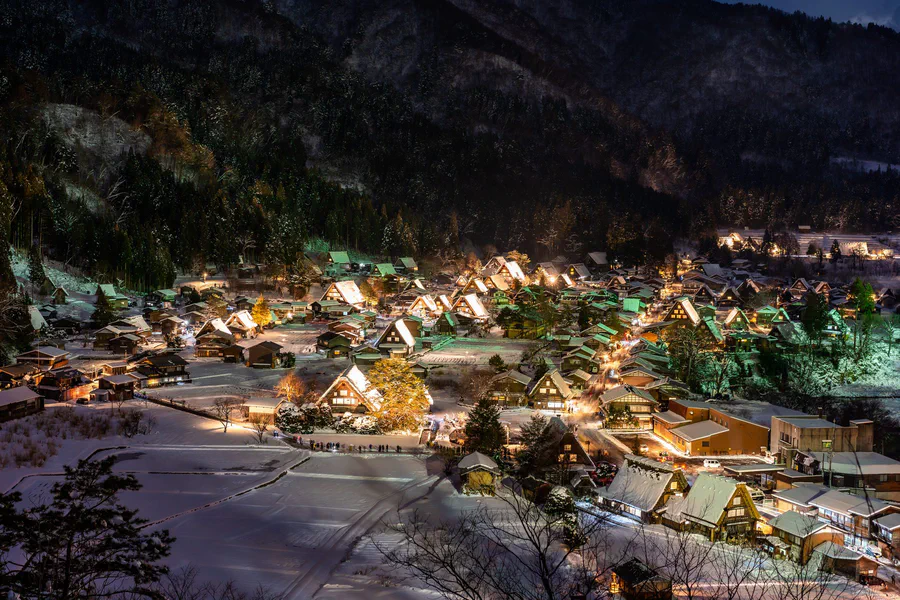
The thatched village of Shirakawa-go lights up on four evenings in January 2027: the 11th, 17th, 24th and 31st, from 17:30 to 19:30. Every visitor needs a reservation. From 15:30 a gate closes the village to anyone without a ticket.
The first round of car-park reservations opened on 10 September and sold out. A second round opens on 1 December. Rooms in the village go by lottery, with applications during October and results on 10 November. Nohi Bus tours from Takayama cost ¥13,000 to ¥16,000 and go on sale online between 13 October and 2 November, depending on the evening.
Passes and planning
A 7-day Japan Rail Pass costs ¥50,000, rising to ¥53,000 when bought through an overseas agent from 1 October 2026. It covers the Shinkansen to Nagano and trains within Hokkaido, but not the Nagaden line or the buses to the monkey park. Is the Japan Rail Pass worth it works out whether a winter route adds up. For Hokkaido alone, JR Hokkaido’s Rail Pass costs ¥22,000 for five days bought in advance.
Tokyo makes an easy base between trips north, and where to stay in Tokyo covers the neighbourhoods.
Dates, hours and fares from festival, park, operator and JMA pages, September 2026. Some 2027 details were not yet published.