Japan’s autumn foliage season lasts nearly three months if you count from the alpine summits of Hokkaido down to the southern valleys of Kyushu. For most travelers visiting Tokyo and Kyoto, the window is narrower and easier to miscalculate.
General advice often repeats that mid-November is prime foliage time across the country. In 2026, following another record-hot summer and a warm early autumn, that advice only works for higher elevations. The official Japan Meteorological Corporation forecast issued in October shows a split country. Tokyo’s red maples will arrive right on historical schedule at the end of November, but Kyoto and Osaka will stretch into the second week of December.
The 2026 forecast splits Tokyo from Kansai
Japanese autumn color involves two distinct tree species that react as autumn temperatures fall. Deciduous maples (momiji) turn crimson with the arrival of sustained cold nights. Ginkgo trees (icho) turn golden yellow slightly earlier and handle urban warmth better.
The Japan Meteorological Corporation forecast tracks both species across dozens of benchmark locations:
| City | 2026 Red Maple Forecast | 2026 Yellow Ginkgo Forecast |
|---|---|---|
| Sapporo | November 4 | November 3 |
| Sendai | November 24 | November 29 |
| Tokyo | November 28 | November 26 |
| Osaka | December 4 | November 24 |
| Kyoto | December 11 | November 27 |
| Fukuoka | December 7 | November 28 |
These forecast dates are estimates based on when most leaves on reference trees turn, rather than guaranteed peak dates for every individual temple garden or city park. Tokyo’s red maple forecast matches its historical average of November 28, while persistent autumn warmth across western Japan shifted colors later into the season. Kyoto’s peak around December 11 is roughly six days later than its long-term average, giving travelers visiting in early December prime foliage.
Ginkgo turns first and drops fast
Ginkgos provide the golden canopy that fills city parks in late November. Their window is shorter than the maples. Once ginkgo leaves turn fully yellow, they drop relatively quickly, especially when autumn rainstorms or sharp wind gusts sweep through.
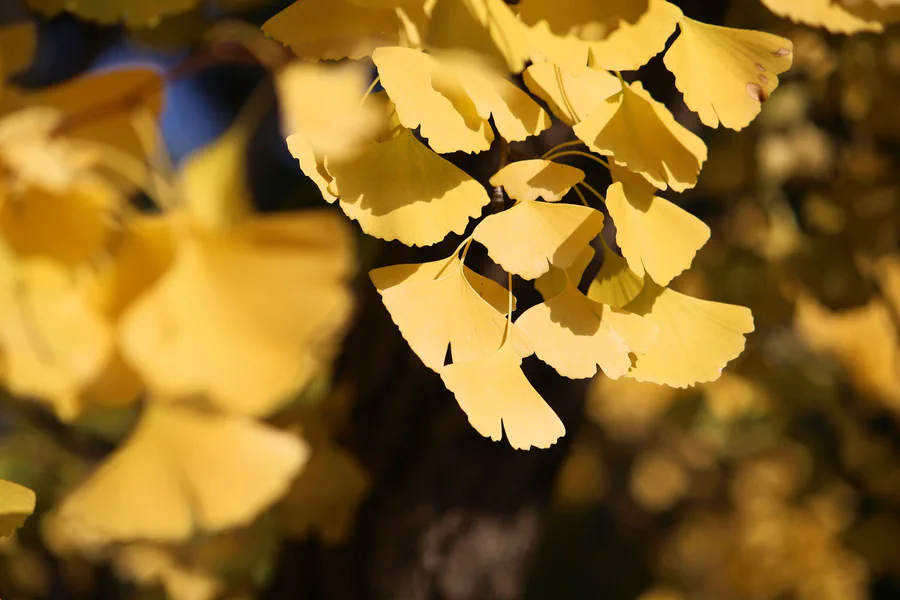
In Tokyo, the benchmark spot is the Meiji Jingu Gaien ginkgo avenue in Aoyama. Four rows of 146 meticulously pruned trees create a 300-meter golden tunnel. Peak color usually arrives between November 25 and December 2. Other reliable Tokyo ginkgo spots include the University of Tokyo Hongo campus and the sweeping lawns of Showa Kinen Park in Tachikawa, which turns roughly one week earlier than central Tokyo.
In Kyoto, the massive 400-year-old ginkgo tree at Nishi Hongan-ji temple forms a golden carpet across the temple gravel around late November.
Where to see autumn leaves in October
If your flights land in October, looking for autumn color in Tokyo, Kyoto or Osaka will be premature. City parks remain mostly green, with peak foliage still several weeks away.
Early autumn travelers must gain altitude:
- Nikko (Tochigi): Lake Chuzenji, Senjogahara marshland, and the Ryuzu waterfall peak between October 10 and October 22. By early November, the color moves down the mountain switchbacks (Irohazaka) to the historic Toshogu shrine.
- Kamikochi (Nagano): The Japanese Alps turn vibrant shades of yellow and larch gold between October 12 and October 25. Taisho Pond and the Kappa Bridge offer mountain backdrops with zero city noise.
- Fuji Five Lakes (Yamanashi): The Momiji Tunnel on the northern shore of Lake Kawaguchiko begins turning in late October and peaks around November 5 to 15, framing Mount Fuji in red leaves.
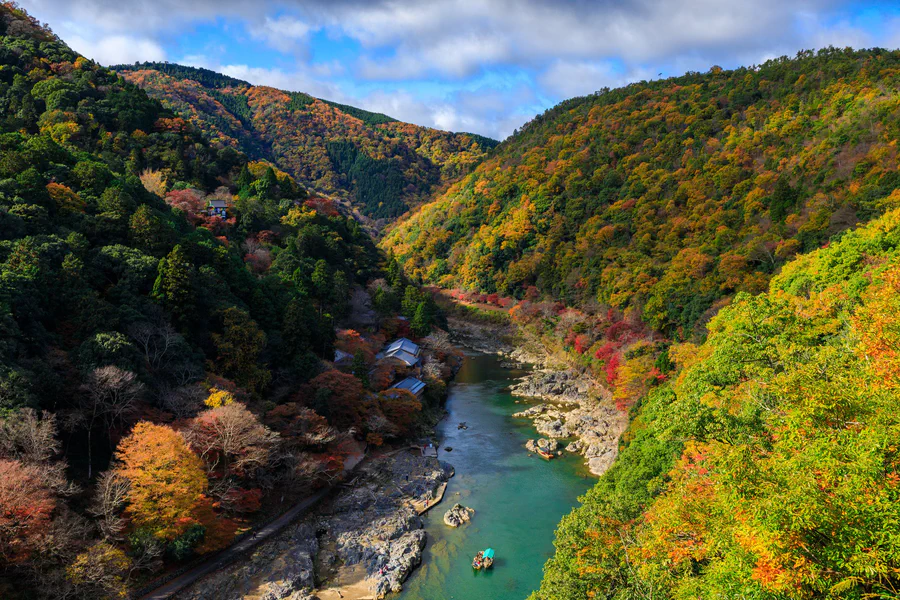
Kyoto peaks in December and crowds peak with it
Because Kyoto’s maple peak is forecast for December 11, travelers visiting in mid-November will see early color and yellow-green canopies rather than deep crimson. Those arriving in early to mid-December will catch peak red foliage across the temples. If your travels extend deeper into December, our guide to Japan in winter outlines snow destinations, mountain passes, and winter transit connections across the country.
The classic temple viewing spots in Kyoto draw intense crowds:
- Tofuku-ji: The view from the Tsutenkyo bridge over a sea of red Japanese maples is famous nationwide. Expect substantial queues and crowded walkways when crossing the bridge between 09:30 and 15:00.
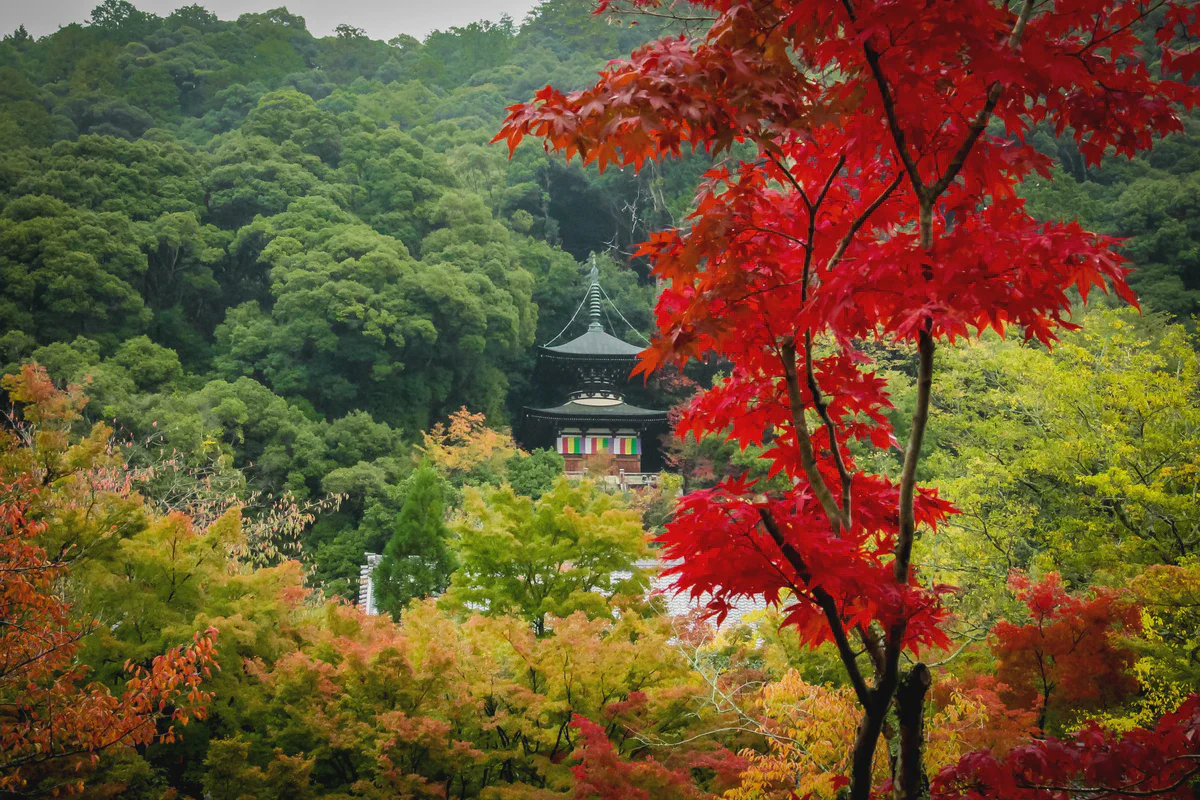
- Eikando (Zenrin-ji): Known since the Heian period as the premier temple for maples, featuring over 3,000 trees clustered around a hillside pagoda and koi pond.
- Kiyomizu-dera: The main wooden stage overlooks a hillside valley of maples that glow under the afternoon sun.
- Arashiyama: The forested slopes lining the Hozu River turn in late November, with Tenryu-ji’s pond garden holding color well into December.
Shinkansen bookings and getting between viewing spots
The Tokaido Shinkansen connects Tokyo and Kyoto in 2 hours 15 minutes on the fastest Nozomi trains. Peak autumn weekends see heavy domestic travel demand.
Booking your bullet train tickets one to two weeks in advance using the official SmartEX app or website is recommended for popular autumn weekends. If you travel with oversized baggage (total dimensions over 160 cm and up to 250 cm), you need a seat reservation that includes dedicated baggage space, such as the area behind the rearmost row or an oversized baggage compartment. An unreserved ticket risks leaving you standing in the aisle on a crowded morning train.
In Kyoto, do not rely on city buses during peak foliage weeks. Traffic on Higashioji-dori and around Arashiyama stalls completely, turning a 20-minute bus ride into an hour of stop-and-go gridlock. Take the subway (Karasuma and Tozai lines) or private rail lines (Keihan for eastern Kyoto, Hankyu or JR San-in for Arashiyama) and walk the remaining distance.
To navigate transit connections without getting stranded, carry an active mobile data connection. A Japan eSIM connects directly to supported Japanese mobile networks upon arrival, letting you check live train platform departures, translate temple signage, and track walking routes without roaming fees.
Early mornings and evening temple illuminations
One practical way to explore Kyoto during peak season is splitting your day into early mornings and after-dark visits.
As explored in our guide to visiting Kyoto before eight in the morning, temples with open grounds like Nanzen-ji allow you to walk through the massive Sanmon gate and along the historic brick aqueduct around 07:00 when morning mist hangs over the grounds and tour groups have yet to arrive.
In the evening, several prominent Kyoto temples reopen their gates for night illuminations (yakan haikan). Specially positioned spotlights light up maple trees from beneath, reflecting intense reds across temple ponds. Eikando, Kodai-ji, and Kiyomizu-dera host the most dramatic night viewings. At Eikando, the 2026 autumn illumination runs from November 20 through December 6, with nighttime admission starting at 17:30 for ¥1,000. Last entry is at 20:30, and the grounds close at 21:00. Because Kyoto’s citywide foliage peak around December 11 falls after Eikando’s illumination finishes, travelers who want nighttime light-ups should plan their visits for late November or the first week of December. Lines form well before entry starts, so arriving 20 to 30 minutes before the gates open at 17:30 is recommended.
Before finalizing your trip dates, check hotel room rates and availability on Booking.com. Central Kyoto hotels book out months ahead for late November and early December, making nearby Osaka or Otsu in Shiga practical alternatives connected by direct 15-minute trains.
When is peak autumn foliage in Tokyo in 2026?
Why is Kyoto's autumn foliage later than Tokyo in 2026?
What is the difference between momiji and icho?
Where can you see autumn leaves in Japan in October?
Do you need reservations for Kyoto autumn temple visits?
What is the best way to travel between Tokyo and Kyoto for foliage?
Foliage forecast dates and transport details checked October 2026.
The Booking.com link above is an affiliate link. Booking through it costs you nothing extra and helps keep Atli running.