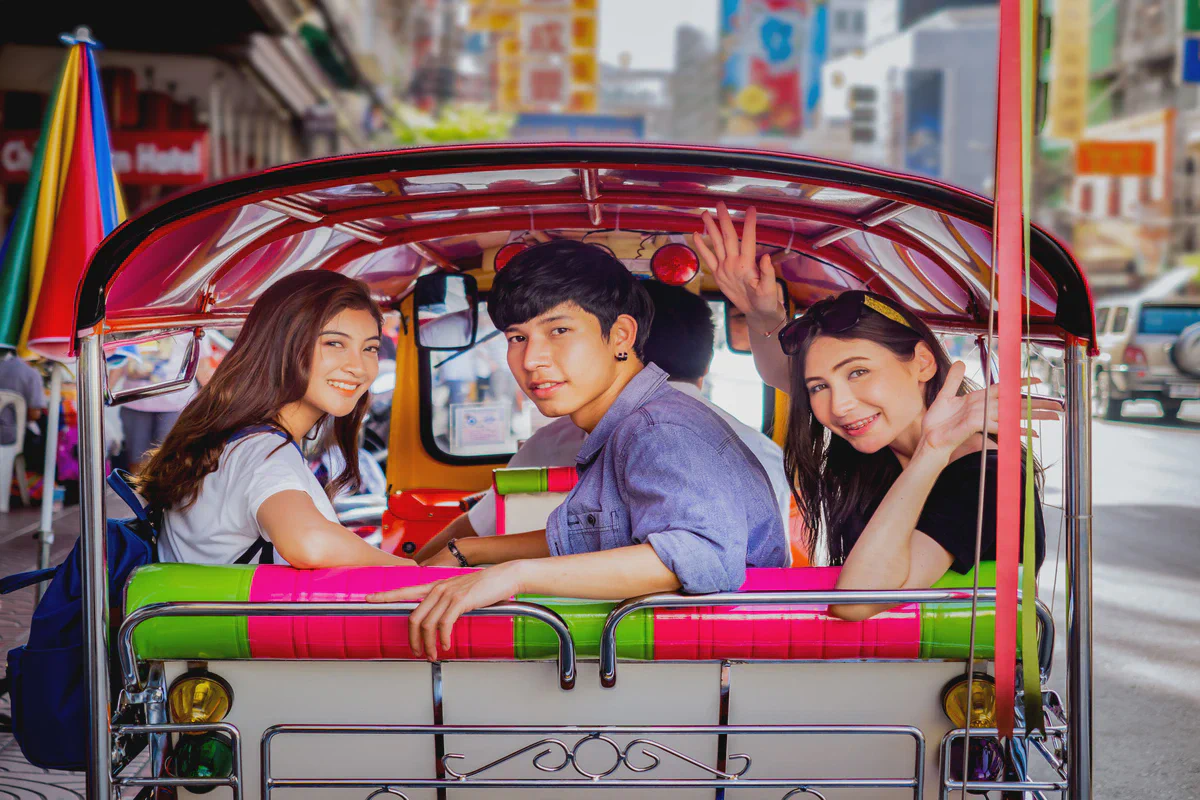
Bangkok is one of the most visited capitals in the world and one of the least physically dangerous for the people visiting it. Violent street crime against foreigners is uncommon enough to be news when it happens, and you can eat at a night market at one in the morning surrounded by people doing exactly the same thing.
What Bangkok has instead is a dense, well-practised economy of small extraction: the friendly stranger outside a temple, the driver who will not use the meter, the boat tout at the pier. None of it will hurt you. Most of it will cost you an afternoon and a few thousand baht if you have not heard the script before.
Where the risk sits
| Category | Level | What it looks like |
|---|---|---|
| Violent crime | Very low | Robbery or assault against tourists is rare, including late at night |
| Scams and touts | High | The closed-temple story, gem shops, tuk-tuk tours, pier boat pricing |
| Traffic | Moderate to high | Motorcycles use pavements, pedestrian right of way is not observed |
| Solo female travel | Low risk, high comfort | Widely rated as one of Asia’s easier solo cities; cover shoulders and knees at temples |
The four scripts you will hear
Every one of these begins with someone pleasant approaching you first. That is the tell, and it is the only one you need.
| The approach | How it works | What to do |
|---|---|---|
| “The Grand Palace is closed” | A well-dressed man near the gate says there is a Buddhist ceremony today, and offers an alternative itinerary | It is open, daily, 8.30am to 3.30pm, 500 baht. It closes only for royal ceremonies. Walk to the gate and look |
| The 50 baht tuk-tuk tour | A whole-city tour for a price that cannot cover the fuel | The gap is made up by commission stops at tailors and gem shops. Decline, or accept and lose two hours |
| The gem export sale | Today is the last day of a government tax exemption on rubies | There is no such exemption. The stones are near worthless and unreturnable once you are home |
| The private longtail tour | Pier touts quote 1,500 to 2,500 baht a head for a canal trip | The public express boats run the same river for under 25 baht a trip |
Getting around, and what it costs
| Option | Fare | Best for |
|---|---|---|
| 🚇 BTS and MRT | 17 to 65 baht a trip on the BTS, 17 to 45 on the MRT Blue Line | Anything that would otherwise cross traffic at rush hour |
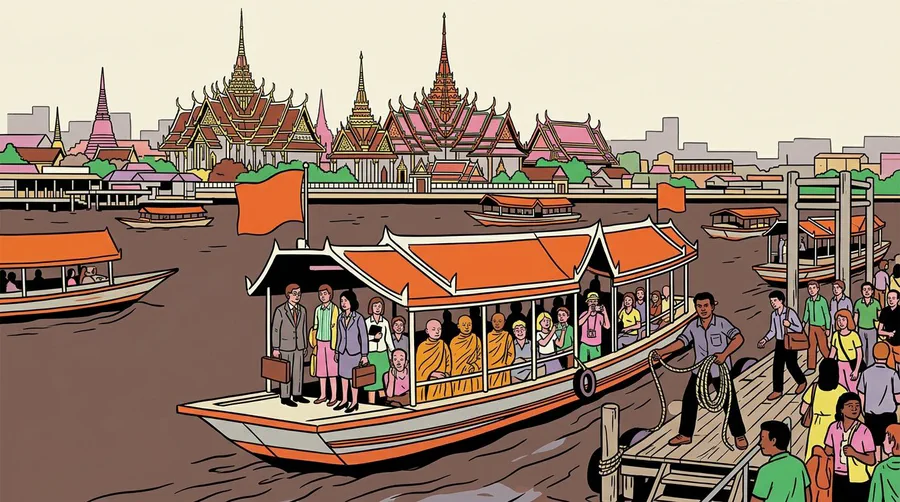
| 🚤 Chao Phraya express boats | Yellow flag 23 baht, orange flag 18 baht, tourist blue flag 40 baht or 150 for the day | Riverside temples, the Grand Palace, Wat Arun |
| 🚕 Metered taxi | 35 baht flagfall, 6.50 a kilometre, 3 baht a minute when stationary | Late nights, luggage, three or more people |
| 🛵 Motorcycle taxi | From about 20 baht for a short hop | Getting to the far end of a long soi in five minutes |
Two notes on that table. The flat 20-baht fare you may have read about for Bangkok’s electric trains applies to registered Thai nationals only; visitors pay the normal distance-based fare. And the flags on the river matter: the orange flag boat now runs weekday rush hours only, and between roughly 8am and 4pm on weekdays, and all day at weekends and on public holidays, the daytime service is the yellow flag boat at 23 baht. If you are going to the Grand Palace at eleven on a Sunday, the yellow flag is the boat you want.
Meter refusals. Outside Khao San Road, Sukhumvit Soi 11 and Silom, drivers will decline the meter and name a flat 300 or 400 baht for a ride the meter would price near 70. This is not negotiable and it is not worth arguing about. Step back to the main road and flag a moving taxi, which almost always uses the meter, or open Grab or Bolt.
Motorcycle taxis. The riders wearing numbered vests at the mouth of each soi are licensed, and the vest carries the district and the rider’s number. They are the fastest way through gridlock and the most likely thing on this page to injure you. Wear the passenger helmet, keep your knees in, and do not take one onto an expressway.
Grab and Bolt both need a live connection to book, and a Thailand eSIM connects through AIS from the moment you arrive at Suvarnabhumi or Don Mueang, which is one less thing to arrange in an arrivals hall.
Crossing the road. Pedestrian crossings are decoration. Cross with a group of locals, watch for motorcycles coming the wrong way up the inside, and use the pedestrian bridges where they exist.
Street food, ice and water
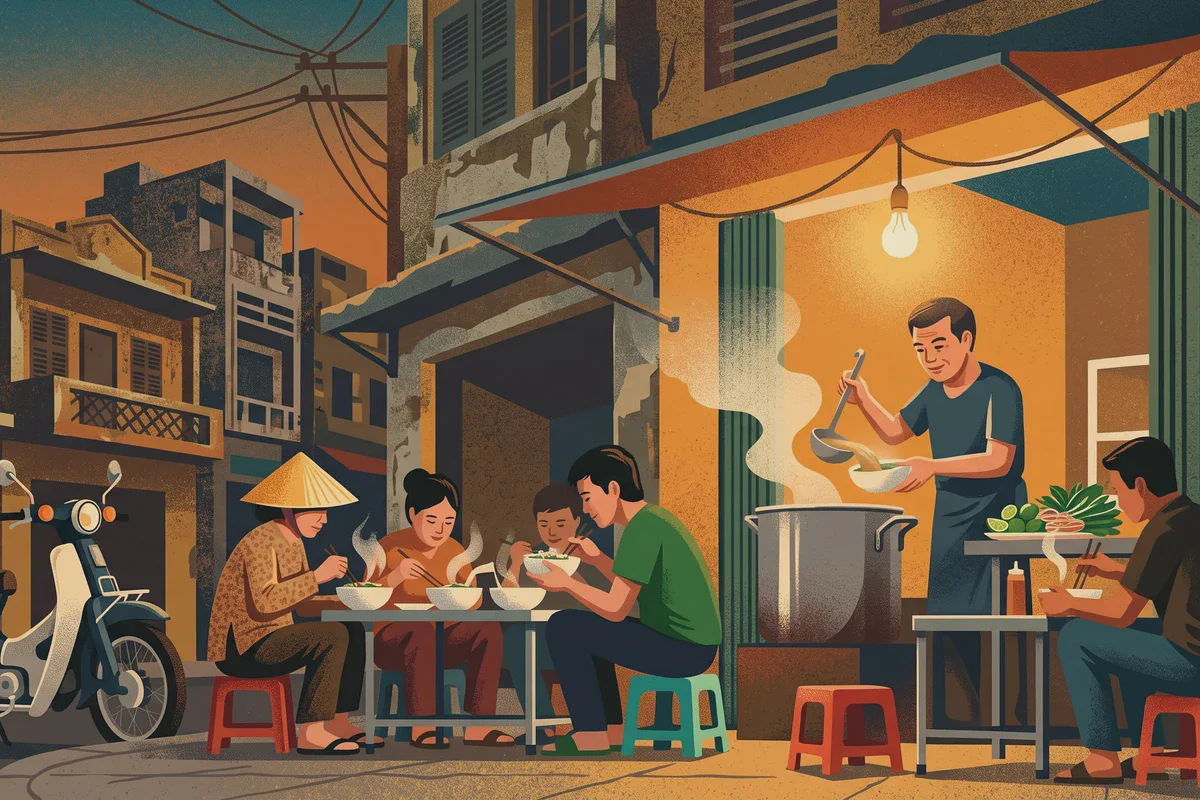
Eating from carts is not the risk people imagine, provided you use the same filter locals do.
Go where there is a queue of office workers. Turnover is the whole safety mechanism: a stall selling out twice a day is cooking fresh, and a stall with untouched trays in the humidity is not. Ice is fine, and Bangkok’s is delivered daily by commercial factories; the cylinders with a hole through the middle are factory ice, while a hand-sawn block on the pavement is worth skipping. Tap water is not for drinking, and not for your toothbrush either.
Numbers worth saving
- 1155, tourist police, English-speaking, 24 hours, and the number to call first
- 191, general emergency police
- 1669, ambulance and medical emergency
- 199, fire
Calls to all four are free and connect without credit. Tourist police handle the specific situations this page describes, scams, disputes with drivers, harassment, and unlike the general lines they are staffed for English.
Bangkok will not hurt you. It will charge you the tourist rate for as long as you are willing to pay it, and the whole defence is knowing what things cost.
FAQ
Is Bangkok safe for solo female travellers?
Are tuk-tuks safe, or are they all a scam?
What do I do if a Bangkok taxi refuses the meter?
Is Bangkok street food safe to eat?
What is the tourist police number in Thailand?
Fares and emergency numbers checked September 2026; confirm before you travel.