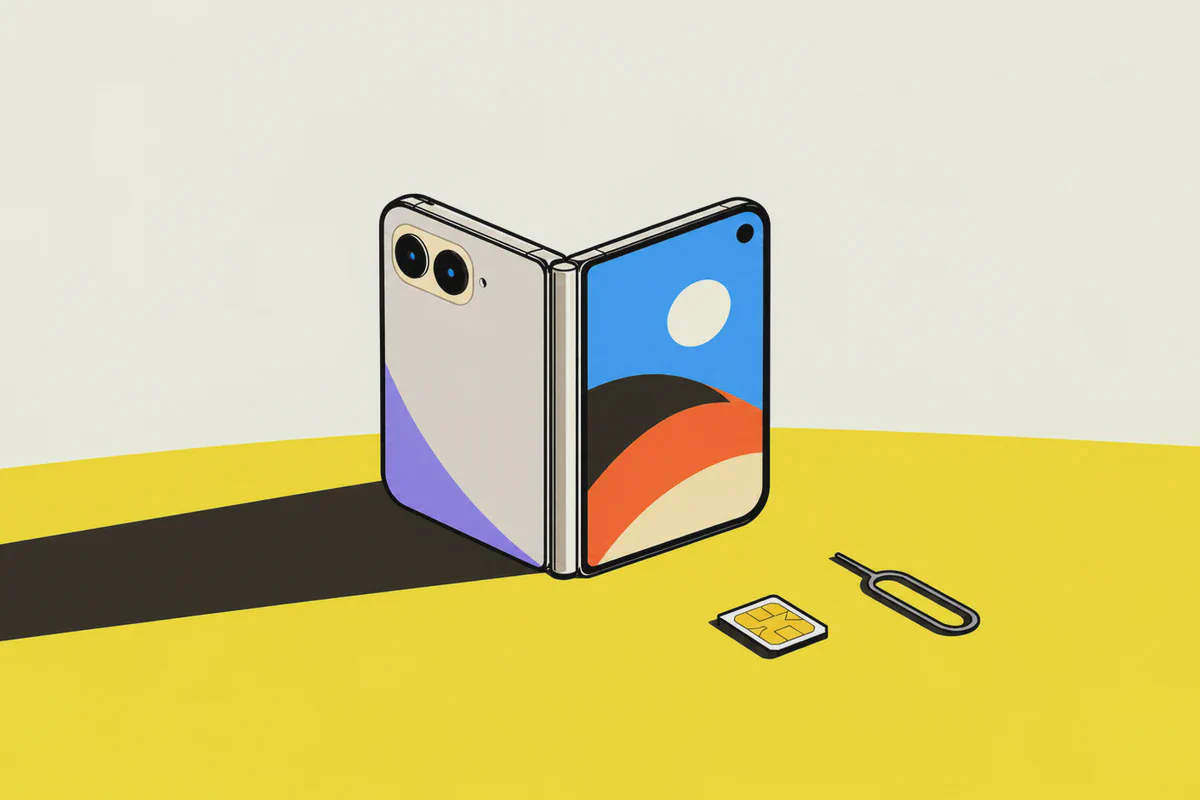
The iPhone 18 Pro and iPhone 18 Pro Max have no SIM tray in twelve countries and a nano SIM slot everywhere else. The iPhone Duo, the foldable Apple announced on the same day, has no tray in any market.
What Apple announced
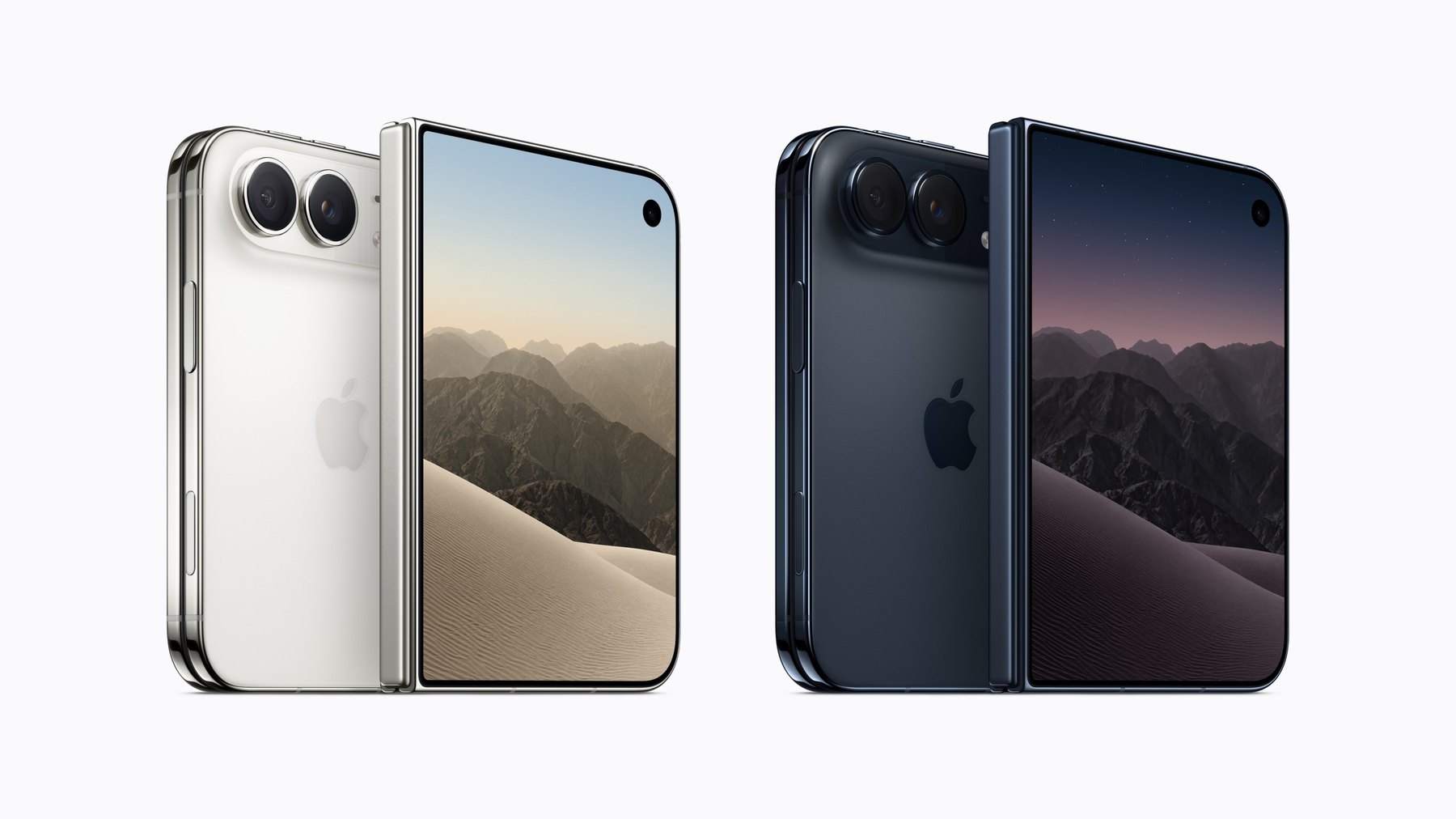
Apple announced three phones on 9 September 2026, in press releases for iPhone 18 Pro and iPhone Duo.
| Model | From | Pre-order | On sale |
|---|---|---|---|
| iPhone 18 Pro | $1,199 | 12 September | 18 September |
| iPhone 18 Pro Max | $1,299 | 12 September | 18 September |
| iPhone Duo | $1,999 | 16 October | 23 October |
All three run the A20 Pro chip. The Pro models carry Apple’s C2 modem and come in 256 GB, 512 GB, 1 TB and 2 TB. The Duo opens to a 7.6 inch inner display and folds to a 5.4 inch outer one. Twenty more countries get the Pro models on 25 September, and twenty-eight more get the Duo on 30 October.
Where the iPhone 18 Pro has no SIM tray
Twelve countries and territories, and the list has not changed since the iPhone 17:
Bahrain, Canada, Guam, Japan, Kuwait, Mexico, Oman, Qatar, Saudi Arabia, the United Arab Emirates, the United States, and the United States Virgin Islands.
What matters is where the phone was bought, not where you live or where you are going. A Pro bought in Germany keeps its tray when you carry it to Japan. A Pro bought in Tokyo has no tray when you carry it to Berlin.
The iPhone Duo has no tray anywhere
Apple’s wording leaves no room: “iPhone Duo features an eSIM-only design worldwide that saves internal space to maximize battery capacity.”
There is no market where the foldable ships with a slot. If you buy one, every line on it is an eSIM.
The tray became battery
Apple is explicit about the trade. On the eSIM-only Pro models, “these models feature an even larger battery, taking advantage of the space formerly occupied by the physical SIM to provide two additional hours of video playback”.
That puts the eSIM-only iPhone 18 Pro at up to 36 hours of video playback and the Pro Max at up to 45. The same phone with a tray gives up those two hours to a slot most travellers now use once a year.
What this changes when you travel
The airport SIM counter stops being a fallback. On a phone with no tray you cannot buy the local card, so the decision moves to before you land rather than after.
Two eSIMs still give you two numbers. Your home line stays reachable for the bank code and the messaging app while a travel plan carries the data, which is the dual SIM arrangement most people want. Nothing about that requires a tray.
Apple attaches one condition: “Use of an eSIM requires a carrier that supports eSIM and a wireless service plan.” The phone being eSIM-only does not give you service. It gives you a slot you can fill in software, and you still have to buy something to put in it.
Atli sells 1 GB for seven days and 3 GB for thirty in every country it covers, which is the shape that suits a trip rather than a contract. If you are not sure your current phone can take one, is my phone eSIM compatible covers the older models too.
Setting up an eSIM before you fly
Install it at home on wifi and leave it switched off until you arrive. Installing an eSIM on an iPhone walks through the screens, and what to do before you fly covers the order of operations, which is the part people get wrong.
Either way, check your data usage from the network rather than the phone’s own counter, because the two measure different things and drift apart over a trip.
Models, prices, dates and the eSIM-only country list are quoted from Apple’s press releases of 9 September 2026, linked above. Apple’s support page listing SIM types by model had not yet been updated for the iPhone 18 at the time of writing.