Coffee in Italy is a quick daily pit stop rather than a seated afternoon event. Locals step inside a neighborhood bar, drink an espresso standing up in under two minutes, exchange a few words with the barista, and walk back into the street.
Traditional Italian coffee bars operate differently from international coffee chains. The menu is shorter, the portions smaller, and the whole exchange can take less than two minutes. Knowing a few basic customs keeps you from overpaying or standing awkwardly while regulars get served ahead of you.
What happens when you order un caffè
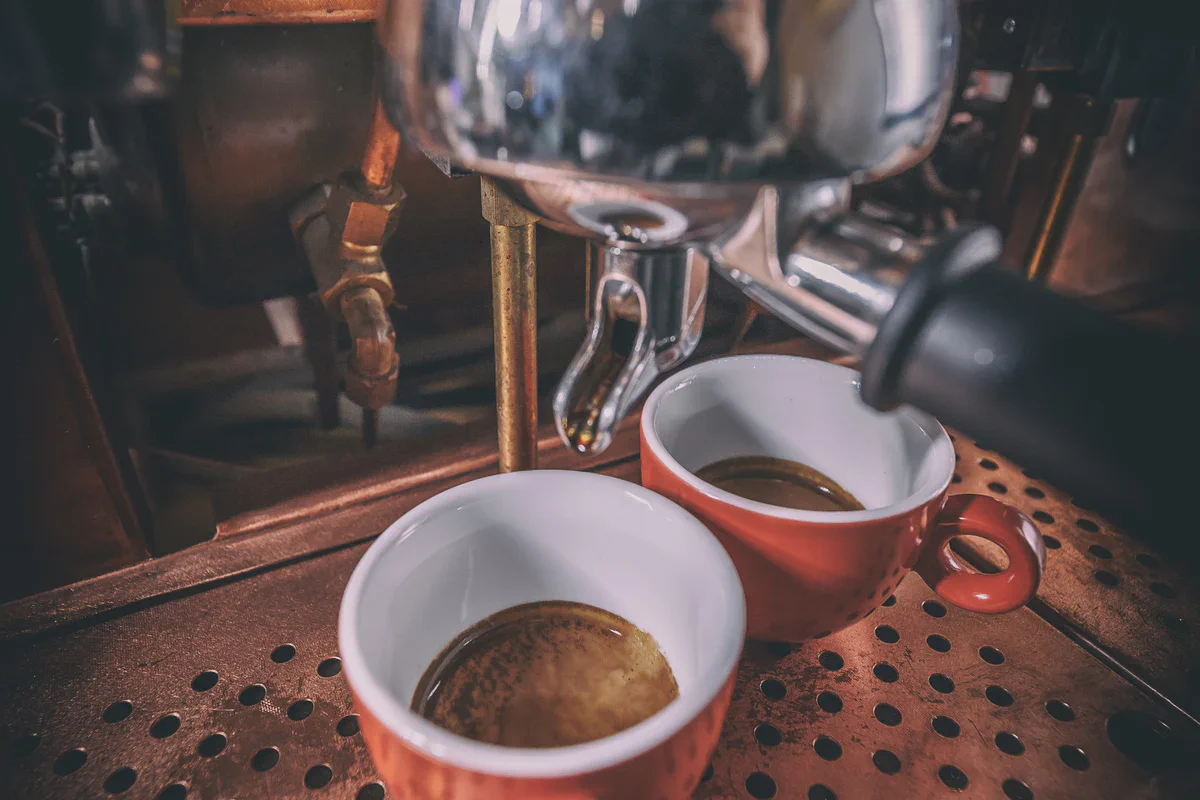
In an Italian bar, asking for “un caffè” gets you a single shot of espresso. Nobody says “un espresso.” The word simply means coffee here.
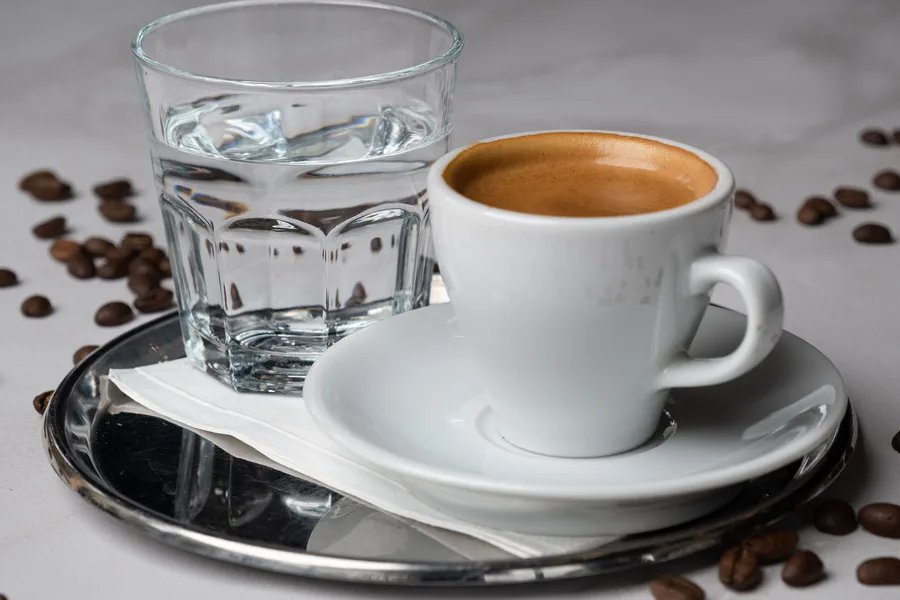
It arrives hot in a thick ceramic cup with a compact layer of golden-brown crema on top. Some Italian bars serve a small glass of water (un bicchierino d’acqua) alongside espresso. Traditionally, you drink it first to clear your palate, although plenty of people drink it afterward. There is no need to worry about offending the barista.
If you want a double shot, ask for un caffè doppio. Locals rarely order doubles; they prefer returning to the bar for two separate single coffees across the morning.
Standing at the counter versus sitting at a table
The most expensive mistake travelers make in Italy is sitting down without looking at the price list.
Italian bars operate under two separate price structures: al banco (at the counter) and al tavolo (at a table). Counter prices are legally posted on the listino prezzi wall chart and remain modest across the country. An espresso at the counter costs around €1.30 on average in 2026, although prices vary by city and café.
Table service does not always mean higher prices, as some neighborhood cafés charge identical rates everywhere. However, table service charges are common in busy districts, and prices must be clearly disclosed before ordering. Sitting at an outdoor table in a famous tourist square can increase the bill noticeably compared to the counter.
Pay at the register first or order from the barista
Italian bars handle payments in one of two ways, and the system varies depending on foot traffic and location.
At busy bars, you may need to pay at the register (la cassa) first and take your receipt (lo scontrino) to the counter. Tell the cashier what you want, pay, and place the receipt flat where the barista can see it.
At smaller neighborhood cafés, you can often order first and pay afterward on your way out. Watch what other customers do when they walk through the door, or simply ask the barista.
The cappuccino timing habit
Italians traditionally drink cappuccino at breakfast, often alongside a cornetto. After lunch or dinner, espresso is more common because warm frothed milk is considered heavy after a substantial meal.
You can order a cappuccino in the afternoon or after dinner. It may be less common among locals, but there is no rule against it.
Common Italian coffee drinks decoded
Italian coffee menus have their own vocabulary. Knowing the names makes ordering easier:
- Caffè macchiato: An espresso “stained” with a spoonful of hot, foamy milk. Ask for macchiato caldo for warm froth, or macchiato freddo for a drop of cold milk.
- Caffè lungo: An espresso brewed with more water running through the grounds, resulting in a slightly weaker, larger shot.
- Caffè ristretto: A shorter espresso extraction made with less water, producing a smaller, more concentrated drink.
- Caffè americano: An espresso served with hot water on the side or diluted in a larger cup.
- Caffè corretto: An espresso “corrected” with a splash of liquor, traditionally grappa, sambuca, or brandy.
- Caffè shakerato: Fresh espresso shaken over ice with simple syrup in a cocktail shaker until cold and frothy, popular throughout the summer months.
- Latte macchiato: A tall glass of steamed milk marked with a shot of espresso on top.
If you order “un latte” at an Italian counter, the barista will hand you a glass of plain cold or warm milk. If you want coffee with milk in a glass, ask for a caffè latte.
What locals eat for breakfast
Italian breakfast (la prima colazione) is sweet, fast, and consumed standing at the same counter.
The standard pairing is a coffee and a cornetto. A cornetto looks similar to a French croissant, but the pastry dough includes eggs, sugar, and often a touch of citrus zest. It has a brioche-like texture rather than crisp, flaky butter layers. You can order it semplice (plain), alla crema (pastry cream), alla marmellata (apricot or blackberry jam), al cioccolato, or al pistacchio.
Regional breakfasts offer distinct local specialties. In Milan and the north, the pastry is usually called a brioche. In Rome, look for a maritozzo, an airy sweet bun split down the middle and stuffed with fresh whipped cream. In Naples, the morning choice is a warm sfogliatella, either riccia with crisp flaky pastry or frolla with shortcrust dough, filled with sweet ricotta and candied orange peel.
If you are looking for a neighborhood café away from the tourist streets, an Italy eSIM can help you check maps, opening hours, and nearby bakeries without relying on your home carrier’s roaming plan.
Useful Italian phrases for the bar
You do not need fluent Italian to order at the counter. A few polite words make the interaction smooth:
- Buongiorno! (Good morning greeting)
- Un caffè per favore. (One espresso, please.)
- Un cappuccino e un cornetto alla crema. (A cappuccino and a custard croissant.)
- Posso pagare? (May I pay?)
- Al banco, per favore. (At the counter, please.)
- Grazie, arrivederci! (Thank you, goodbye!)
Tipping is not expected when ordering coffee at the counter. Some customers leave a little spare change, but there is no need to calculate a percentage.
Can you get coffee to go in Italy?
How much does a coffee cost in Italy?
Why is water served with coffee in Italy?
Can you pay by card at an Italian coffee bar?
Coffee customs, average counter prices, and service conventions verified as of October 2026.