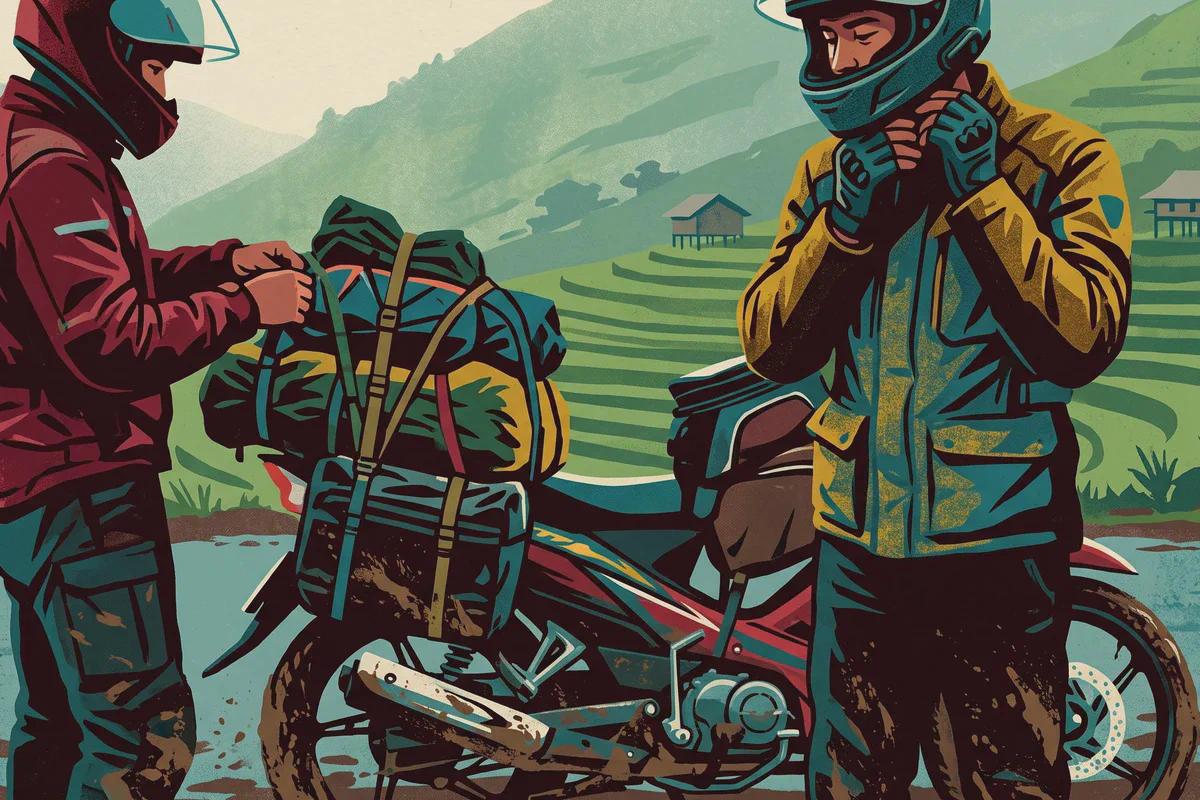
The Ha Giang loop is a circuit of about 350 kilometres through the karst mountains along Vietnam’s border with China, and many backpackers now plan their Vietnam route around it. The road climbs through limestone peaks and long runs of switchbacks, and crosses the Ma Pi Leng pass high above the Nho Que river. Most people do it by motorbike, so the first decision is who rides the bike: a local driver or you.
Getting to Ha Giang
Ha Giang is 300 km north of Hanoi: six to seven hours by sleeper bus or limousine van, 250,000 to 650,000 dong, most tickets 300,000 to 450,000. Night buses leave Hanoi between about 7 and 11pm and arrive in the small hours or early morning, and most 3-day loops start that morning.
Easy rider, self-drive or van
Easy rider. You ride behind a local driver-guide. All-inclusive means the bike, fuel, helmet, rain gear, homestays and every meal, plus a guide who orders the food and translates at the homestays. Drivers expect tips of $10 to $20 a day. Operators travellers often mention include QT Motorbikes, known for well-kept bikes, Jasmine, which runs large group convoys, and Ha Giang Epic and the hostel-run tours, which are the most social. Booking platforms resell the same tours at up to $300; booking direct is cheaper.
Self-drive. Semi-automatic 110 to 125cc bikes rent for 180,000 to 250,000 dong a day, a Honda Winner for about $14, proper trail bikes $20 to $30, against a deposit of two to five million dong or a passport (leave cash, not the passport). You set your own pace and stops. Most visitors do not hold the motorcycle licence that makes riding legal, and without it travel insurance usually does not cover the bike.
The van. Operators also run the loop by car or minivan, with the same stops and views, for people who do not want to ride.
Licences and insurance
Vietnam recognises 1968-convention IDPs when paired with the corresponding home licence and motorcycle entitlement. UK riders can obtain a 1968 IDP and use it with the correct UK licence category. U.S. and New Zealand-issued IDPs are 1949-convention permits and are not recognised in Vietnam. Australian licences and Australian-issued IDPs are not accepted either, so American, New Zealand and Australian travellers all need a valid Vietnamese licence to ride legally. Riding without one risks a fine of 2 to 4 million dong on a bike up to 125cc, 6 to 8 million on a larger one, and the bike being impounded. Travel insurance usually excludes unlicensed riding, so after a crash the evacuation, the treatment and the flight home are yours to pay. Serious accidents happen on the loop every year, more often in the rainy season. If you do hold the right licence, a nomad policy such as SafetyWing can cover motorbike riding; check its conditions before you ride.
The loop also crosses border areas that require a permit, US$10 a person, about 260,000 dong. Ha Giang became part of Tuyen Quang province in July 2025, so the permit is now issued by the Tuyen Quang police immigration office in Ha Giang, though in practice whoever you book with arranges it.
Three days or four
The standard 3-day loop runs Ha Giang to Dong Van via the Quan Ba pass and Yen Minh, with the Hmong king’s palace on the way; then the big second day over Lung Cu flag tower at the Chinese border, the Ma Pi Leng pass and down to the Nho Que river for the boat through Tu San canyon, sleeping in Meo Vac; then back via Du Gia or the direct road. The boat costs roughly 100,000 to 150,000 dong a head, less on shared boats.
A fourth day adds a night in Du Gia village, which has a waterfall you can swim in, and splits the ride back to Ha Giang into two shorter days.
Homestays run 100,000 to 150,000 dong for a dorm mattress under a mosquito net, 300,000 to 600,000 for a private room, with dinner shared at one table.

When to go
March to May and September to November are the windows. October and November add flowering buckwheat to the karst, September and October the ripe rice terraces on the way in. December and January are cold, 8 to 15 C by day and near freezing at altitude, and valley fog can hide the views. June to August is the rainy season, when landslides can block the road.
If you have not ridden in Vietnam before, read the traffic section of the Vietnam safety guide first.
Costs compared
| 3-day easy rider | 4-day easy rider | 3-day self-drive | |
|---|---|---|---|
| Tour or rental | $170 to $220 | $215 to $285 | $20 to $90 bike |
| Also budget | tips $10 to $20/day | tips | fuel, rooms, meals, permit |
| Legal for most visitors | Yes | Yes | Usually not |
| Insurance holds | Yes | Yes | Usually not if unlicensed |
FAQ
Do you need a licence for the Ha Giang loop?
Is the Ha Giang loop dangerous?
Can you do the loop without a motorbike?
How fit do you need to be to ride pillion?
Is there phone signal on the loop?
Tour and rental prices and permit cost checked September 2026. Licence rules checked against current official UK, U.S., Australian and New Zealand guidance.
The SafetyWing link above is an affiliate link. Signing up through it costs you nothing extra and helps keep Atli running.