Strasbourg’s market FAQ names Mondays, Tuesdays and mornings as the calmest times, and Wednesday afternoons, Friday evenings and weekends are the busiest. The same market that is a shuffle at six on a Saturday is a walk at noon on a Tuesday. Most of the difference between a good market trip and a tiring one comes from that choice, and from picking towns close enough to see two in a day.
When the crowds thin
Strasbourg drew about three million visitors in 2025, and the city says half of them were locals from the metropolitan area. They come after work and at weekends, which is why a Tuesday morning feels like a different market. Basel reports the same pattern: more than a million visitors last season, busiest at weekends and in the evenings after work, with about a quarter of day visitors coming from abroad.
Colmar goes further and publishes a forecast in two-hour slots for the whole 2026 season, on a four-step scale from light to very high. Every Saturday in Advent is very high from midday. The Monday to Wednesday stretches of 23 to 25 November and 14 to 16 December are light in almost every slot. The forecast is on the Colmar Christmas site. Check it before you book a hotel night.

Strasbourg, Colmar and Basel in one trip
These three sit on one railway line. Direct regional trains run between Strasbourg and Colmar about every half hour and take 30 minutes. Colmar to Basel takes 45 minutes, and Strasbourg to Basel 1 hour 17.
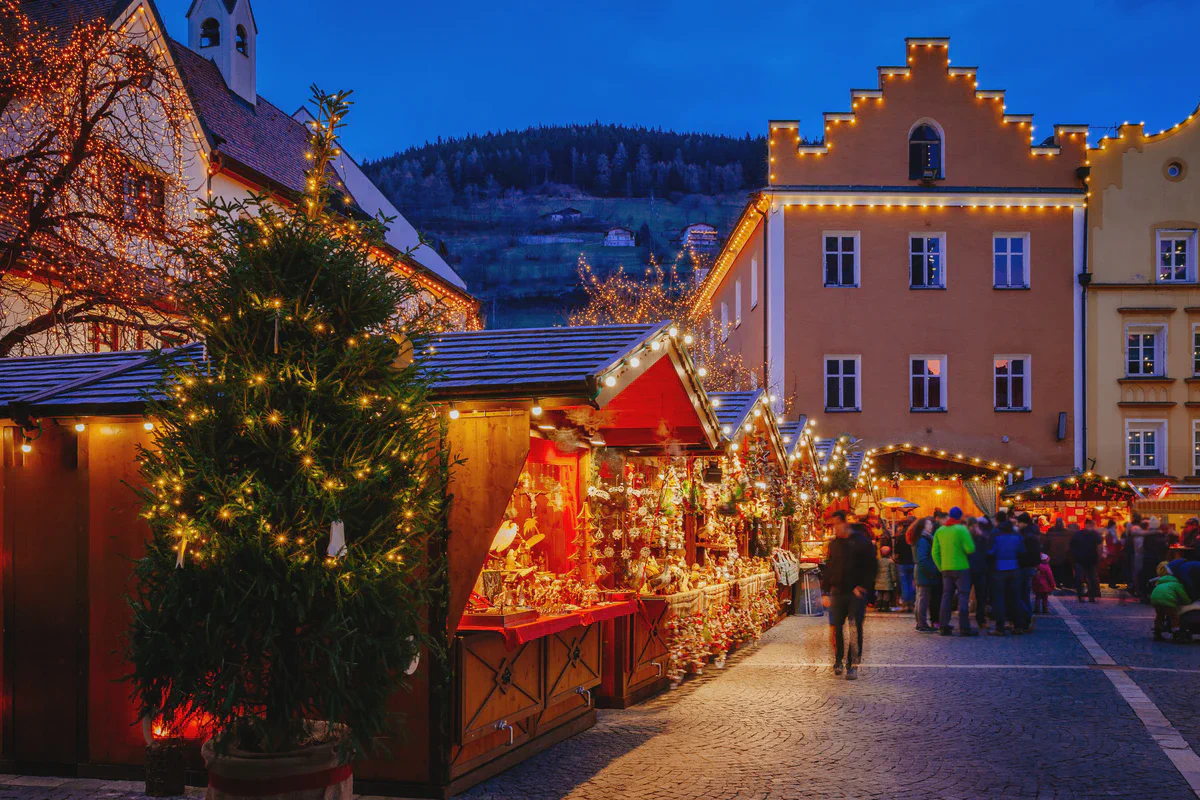
Strasbourg runs from 27 November to 24 December 2026, daily from 11:30 to 21:00 (from 14:00 on opening day), and closes at 18:00 on Christmas Eve. Cars are kept off the Grande Île, the island at the centre, during market hours, and there are checks at the bridges into it. Hot drinks come in a cup with a €1 deposit, which any drinks stall refunds.
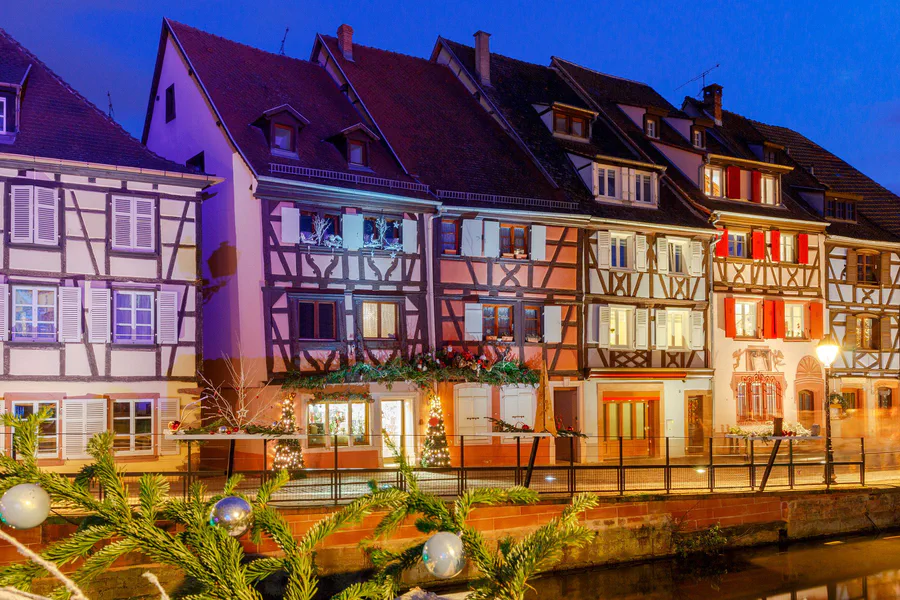
Colmar runs from 23 November to 29 December 2026, from 11:00 to 19:00 Monday to Thursday and 10:00 to 20:00 Friday to Sunday. It is one of the few markets open on Christmas Day and Boxing Day. Stalls close at the stated time, not a few minutes after.
Basel runs from 26 November to 23 December, daily from 11:00 to 20:30. The city has planned a third site on Theaterplatz for 2026 to take pressure off the two squares, still awaiting its permits in late May.
Nuremberg and the Franconian towns
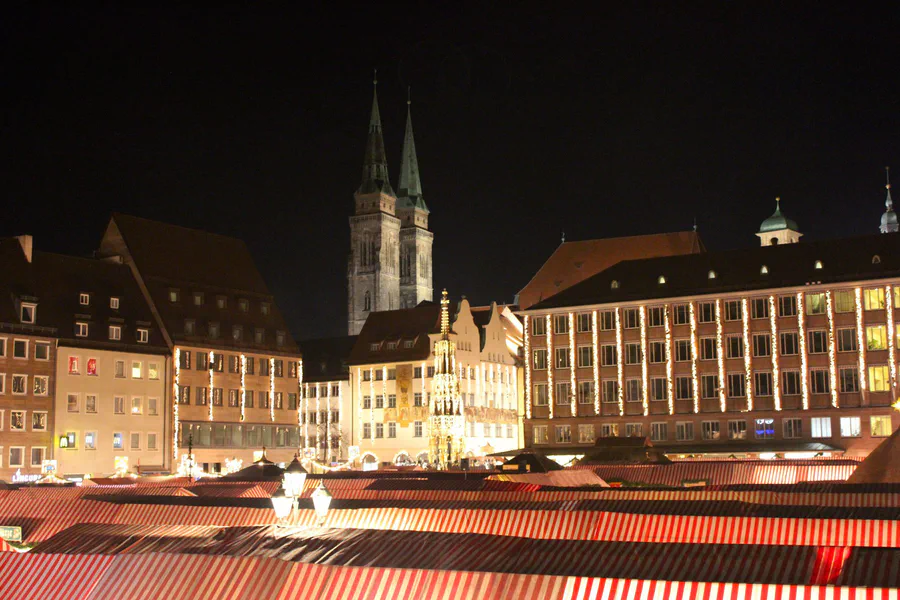
Nuremberg’s Christkindlesmarkt runs from 27 November to 24 December 2026, daily from 10:00 to 21:00, and until 14:00 on Christmas Eve. It drew more than two million people in 2025. The things to eat are Lebkuchen, the local gingerbread, small Rostbratwurst sausages served three in a roll, and Zwetschgenmännle, little figures made from dried prunes. The mulled wine sellers share one mug design, new each year.
Bamberg is 34 minutes away by ICE, a good afternoon trip. Rothenburg ob der Tauber runs its Reiterlesmarkt from 20 November to 23 December, closed on 22 November, and is about 1 hour 15 from Nuremberg with two changes. Heading south, timetables show the Nuremberg to Munich ICE taking about 1 hour 50 minutes until 12 December because of works on the fast line, instead of the usual 1 hour 10.
Cologne and Vienna: one city, several markets
Cologne has more than one market, and they keep different calendars. The market under the cathedral runs from 16 November to 23 December, closed on 22 November for Totensonntag, the Protestant day of remembrance for the dead, and more than 90% of its food and drink has been certified organic since 2010. Heinzels Wintermärchen on the Heumarkt runs until 10 January 2027 but closes on 24 and 25 December. Aachen’s market is 33 minutes away by ICE.
Vienna says its markets draw more than three million visits a year. The big one on Rathausplatz, in front of the city hall, runs from 13 November to 26 December, daily from 10:00 to 22:00. Spittelberg, in narrow lanes behind the museum quarter, runs from 13 November to 23 December and opens at 14:00 on weekdays, so it is an evening stop. Schönbrunn, in front of the palace, runs from 6 November to 6 January. Bratislava’s old town is 56 minutes away on an hourly regional train, and Budapest just under three hours.
Prague, Budapest, Tallinn and Copenhagen
Prague’s Old Town Square market runs from 28 November 2026 to 6 January 2027, daily from 10:00 to 22:00, with a second market on Wenceslas Square on the same dates. In Budapest, the Vörösmarty tér market runs from 13 November to 31 December 2026, and the Advent Basilica market outside St Stephen’s stays open until 1 January 2027.
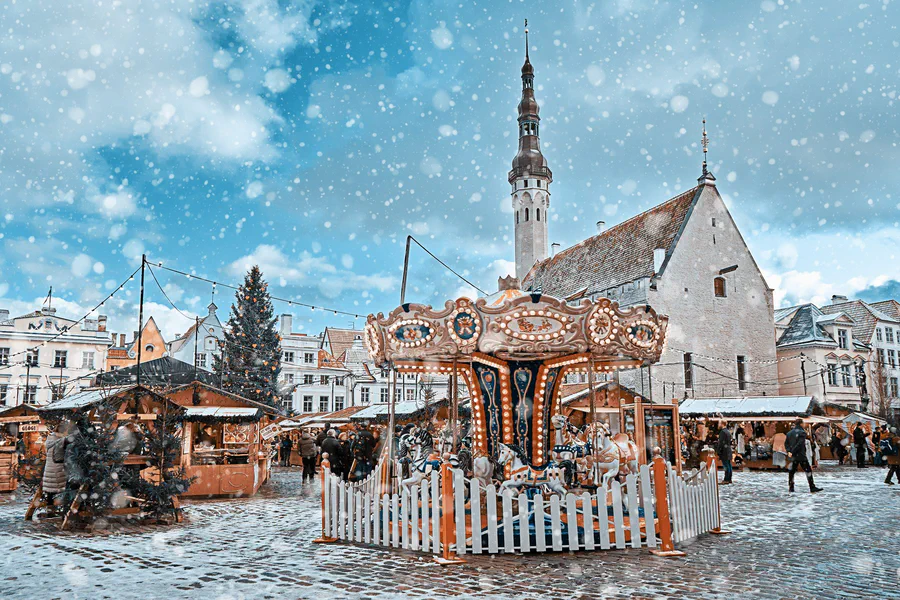
Tallinn’s Town Hall Square market runs from 20 November 2026 to 6 January 2027, from 10:00 to 20:00, with hot drinks served until 22:00 and later at weekends. Plates and mugs carry a €2 deposit. The city claims the first public Christmas tree in Europe, in 1441, a claim Riga disputes. Copenhagen’s Christmas season at Tivoli runs from 13 November to 3 January, with entry from 210 kroner for anyone aged eight and over.
Smaller towns
Esslingen, a short train ride from Stuttgart, runs a medieval market alongside its Christmas market from 24 November to 22 December, 180 stalls in all. In Gengenbach in the Black Forest, the town hall becomes an Advent calendar: from 30 November to 23 December one of its 24 windows is unveiled each evening at 18:00, and the market around it runs from 27 November to 23 December. Monschau, near Aachen, opens only at weekends, from 27 November to 20 December, so every visit falls on the busy days.
Christmas Eve and after
Most markets close early on 24 December or finish before it: Strasbourg closes at 18:00, Nuremberg at 14:00, Basel and Cologne’s cathedral market on 23 December. Colmar stays open on 25 and 26 December, Vienna’s Rathausplatz runs to 26 December, and Prague, Tallinn, Schönbrunn, Tivoli and Cologne’s Heinzels carry on into January. A trip between Christmas and New Year works best built around those.
Dates, hours and deposits from each market’s or city’s own site, updated October 2026.