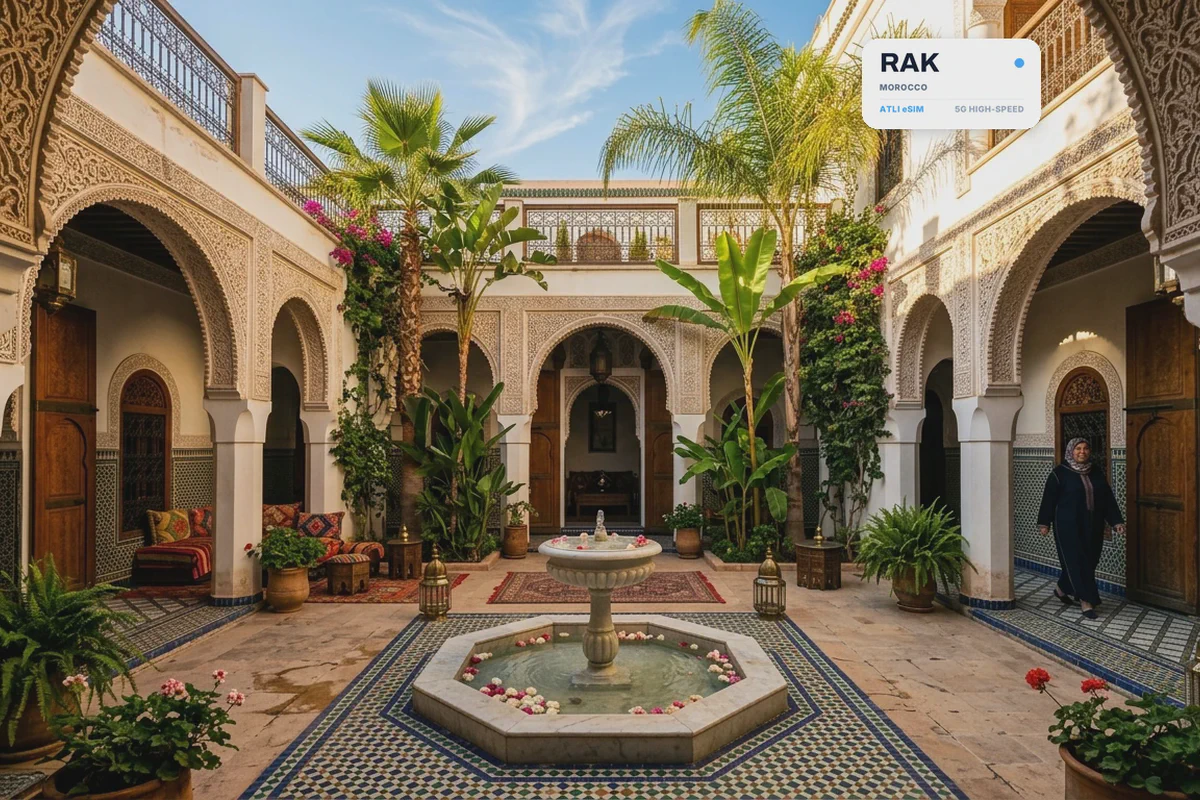
GPS pins drift easily between the high walls of Marrakech and Fes medinas, where navigation often comes down to messaging your riad host to meet you at a designated city gate. Beyond the old quarters, mobile data handles ONCF train schedules and CTM regional bus routes.
Atli is data-only. It does not provide a Moroccan phone number, SMS or cellular voice calls. WhatsApp, iMessage, FaceTime, Telegram, maps and other internet-based services work through the data connection.
Atli eSIM plans for Morocco
| Data | Validity | Atli price | Good for |
|---|---|---|---|
| 1 GB | 7 days | $5.99 | A short trip with light maps and messaging |
| 3 GB | 30 days | $10.99 | Around a week of normal travel use |
| 5 GB | 30 days | $16.99 | One to two weeks with regular social use |
| 10 GB | 30 days | $30.99 | Longer trips, video calls or some hotspot use |
| 20 GB | 30 days | $59.99 | Remote work, streaming or frequent hotspot use |
| Unlimited | 5 days | $24.99 | A short trip with heavy data use |
| Unlimited | 10 days | $44.99 | A longer trip without tracking each gigabyte |
These prices were checked in August 2026. Plans and prices can change.
Three gigabytes covers many week-long trips if you use your phone for Google Maps, WhatsApp, restaurant searches and occasional social posts. Choose 5 GB if you upload photos and video regularly. Consider 10 GB or unlimited data if you will stream, work from a laptop or use your phone as a hotspot.
For a closer estimate, see how much data a trip really uses.
What coverage to expect in Morocco
Atli’s partner in Morocco is Orange Maroc (Meditel), with 2G, 3G and LTE. There is no 5G, so this guide does not promise 5G service.
In cities such as Marrakech, Casablanca, Rabat, Fes and Tangier, you are within established mobile-network areas. Buildings, crowded streets and the narrow lanes of a medina can still affect the signal.
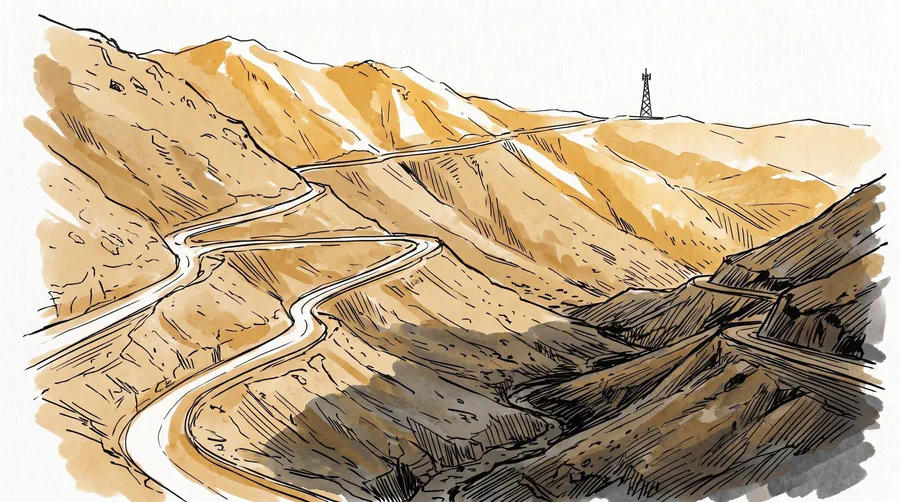
Coverage is harder to predict in the Atlas Mountains and the Sahara. Towns such as Merzouga and Erfoud may have service, but that does not mean you will have a continuous signal on mountain roads or deep in the desert. Download your hotel details, tickets and offline maps before leaving a town.
Using mobile data in Marrakech
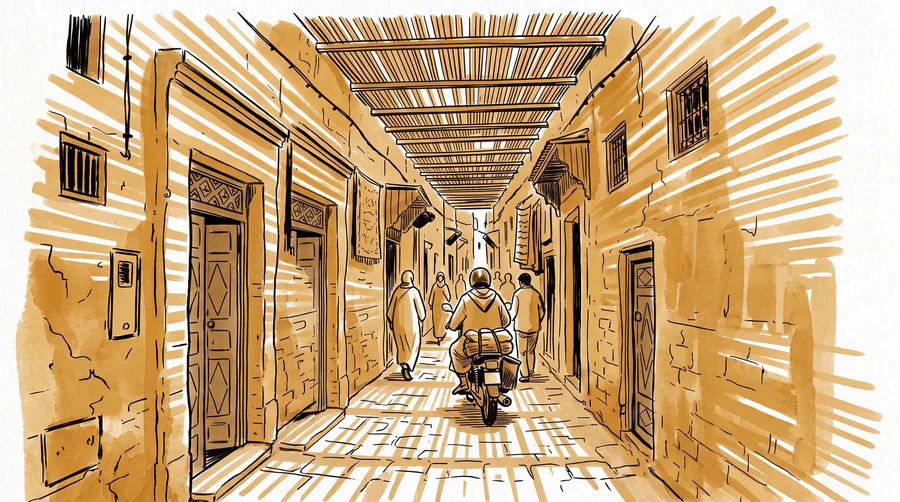
Mobile data helps with accommodation messages, restaurant searches and navigation. Google Maps is useful, but location pins can be less precise inside narrow or covered sections of the medina. Save your riad’s location and download the surrounding area for offline use.
WhatsApp is commonly used by accommodation hosts, drivers and tour operators. Google Translate can help with French and Arabic text. App availability for taxis and private rides varies, so check what operates in the city instead of relying on one service throughout Morocco.
For practical advice on routes, taxis and common street hassles, read the Marrakech Medina survival guide.
When choosing a riad, check the map pin and recent arrival notes on Booking.com. Inside the medina, a short straight-line distance can still mean several turns through narrow or covered lanes.
Keep your normal SIM for your phone number
On a compatible dual-SIM phone, your home SIM and Atli eSIM can have separate jobs: your own number stays on your home SIM for calls and texts, and mobile data in Morocco comes from your Atli eSIM.
On a dual-SIM phone, set Atli as the cellular-data line and keep your primary SIM active for calls and texts. Turn off data roaming on your primary SIM to avoid unintended roaming data charges. If your carrier supports roaming, verification texts can still arrive on your primary SIM.
Read the dual-SIM travel guide for the settings to check before departure.
Morocco-only plan or Africa regional plan?
A local Morocco plan costs less when the whole trip stays inside the country. It stops working at the border.
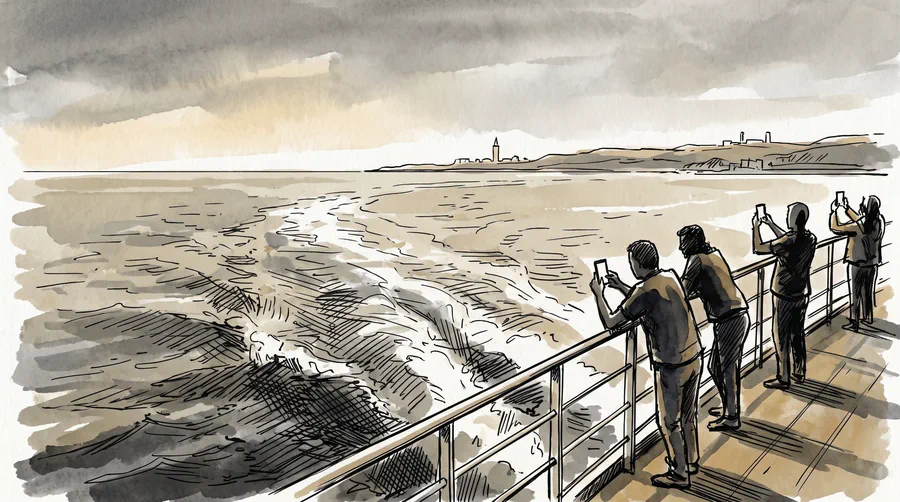
Atli’s Africa regional plan covers 10 countries, including Morocco, Tunisia, Egypt, Kenya and South Africa. At current prices, 3 GB for 30 days costs $28.99 on the regional plan, compared with $10.99 on the Morocco-only plan. For most Morocco trips the local plan is the better value, since the regional plan only pays off if the route genuinely reaches another country on that list. Spain is not one of them, so a trip that crosses the strait needs data arranged separately for each side.
See the regional eSIM guide if your itinerary covers several countries.
Travel eSIM or local Moroccan SIM?
A travel eSIM is convenient when you want data arranged before arrival. A local SIM or eSIM may suit a longer stay, heavy data use or anyone who needs a Moroccan phone number.
Orange Maroc sells prepaid SIM and eSIM service, while Maroc Telecom offers eSIM service. Those are separate local products. Maroc Telecom is not an Atli partner network.
Local registration requirements and included services depend on the operator and plan. Check the official offer before buying rather than assuming every local SIM includes the same data, calls or registration process.
For a broader comparison, see eSIM vs airport SIM vs pocket WiFi.
How to set up an Atli eSIM for Morocco
Install the eSIM at home before you travel, while you still have reliable WiFi. Do not wait until you arrive: airport WiFi may be slow, require a login or fail when you need it. Check first that your phone supports eSIM and is carrier-unlocked.
Installing the eSIM does not start the plan. It starts when your phone first connects to a network at the destination. You have up to 30 days after purchase to make that first connection; after that, the plan starts automatically.
After arrival:
- Turn on the Atli eSIM.
- Select Atli as the cellular-data line.
- Turn on data roaming for that line.
- Leave your home SIM off for mobile data if you want to avoid home-carrier roaming charges.
Keep the Atli eSIM installed after the data plan expires. You need only this one eSIM profile: if you buy another plan later, it is added to the same eSIM automatically. There is nothing new to install. Switching a line off is different from removing its profile, so turn the eSIM off rather than deleting it. Data plans expire; the eSIM itself stays on your phone.
FAQ
Does Atli work in Morocco?
Does an Atli Morocco eSIM include a phone number?
Can I keep my normal phone number while using Atli?
Can I receive bank verification codes?
Will WhatsApp keep my normal number?
Will I have signal in the Sahara?
Will a Morocco plan work in Spain or Tunisia?
Can I use hotspot in Morocco?
Do I need a passport to activate Atli?
Do I need a new eSIM when I buy another plan?
Checked against Atli’s current prices and networks and official Moroccan operator information, August 2026.
The Booking.com link above is an affiliate link. Booking through it costs you nothing extra and helps keep Atli running.